A Symphony of Fragmented Form
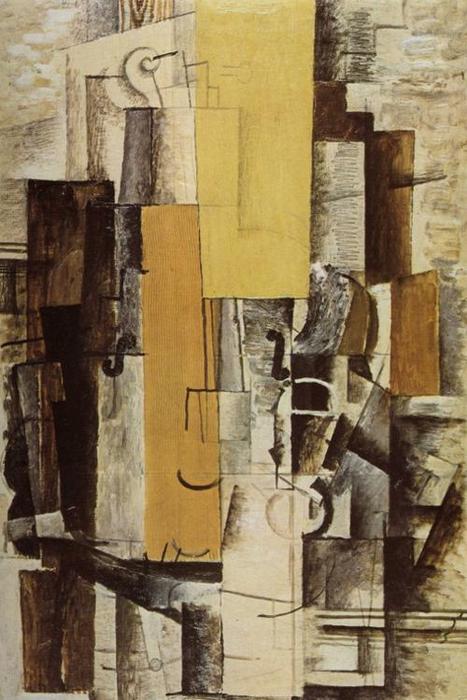
In the quiet revolution of early twentieth-century modernism, few works capture the intellectual depth and tactile beauty of Georges Braque’s Violin And Glass as profoundly as this masterpiece from 1913. This painting is not merely a depiction of objects; it is a carefully constructed puzzle that invites the viewer to reconsider the very nature of visual reality. As a cornerstone of Synthetic Cubism, the work moves beyond the mere dissection of form to embrace a more expansive, layered strategy of reconstruction. Braque does not simply show us a violin and a glass; he orchestrates a complex interplay of light, texture, and perspective that challenges the eye to find harmony within fragmentation.
The composition serves as a mesmerizing dance of geometric planes and overlapping elements. At its heart lies the violin, an enduring symbol of musical artistry and refined emotion, representing the pursuit of beauty and the resonance of human feeling. This central subject is juxtaposed against the transparency and reflective qualities of a glass pane, creating a tension between what is solid and what is ephemeral. The presence of subtle details—a hint of a figure on the periphery or the delicate suggestion of a bird near the upper corner—adds layers of narrative intrigue, transforming a still life into a living, breathing exploration of space and memory.
The Mastery of Texture and Technique
What distinguishes this work for the discerning collector is Braque’s revolutionary use of technique, specifically his pioneering role in papier collé. Moving away from the rigid analytical approach of his earlier years, Braque began to incorporate elements that mimicked reality through texture rather than mere imitation. In this piece, he skillfully employs fragments of wood-patterned wallpaper alongside charcoal and oil paint, a method that introduces a tactile dimension to the canvas. This deliberate fusion of disparate visual cues creates an illusion of depth that feels both modern and grounded in craftsmanship.
For those looking to integrate such a profound piece into a curated interior, the painting offers an unparalleled sense of sophistication. The muted, earthy palette is punctuated by strategic shifts in light, making it a versatile centerpiece for high-end decor. Whether placed in a minimalist contemporary gallery or a classic study, the artwork’s ability to command attention through its structural complexity ensures it remains a focal point of conversation. Owning a high-quality reproduction of this work allows one to bring the transformative energy of the Cubist movement into a personal space, offering daily inspiration through its masterful balance of chaos and order.