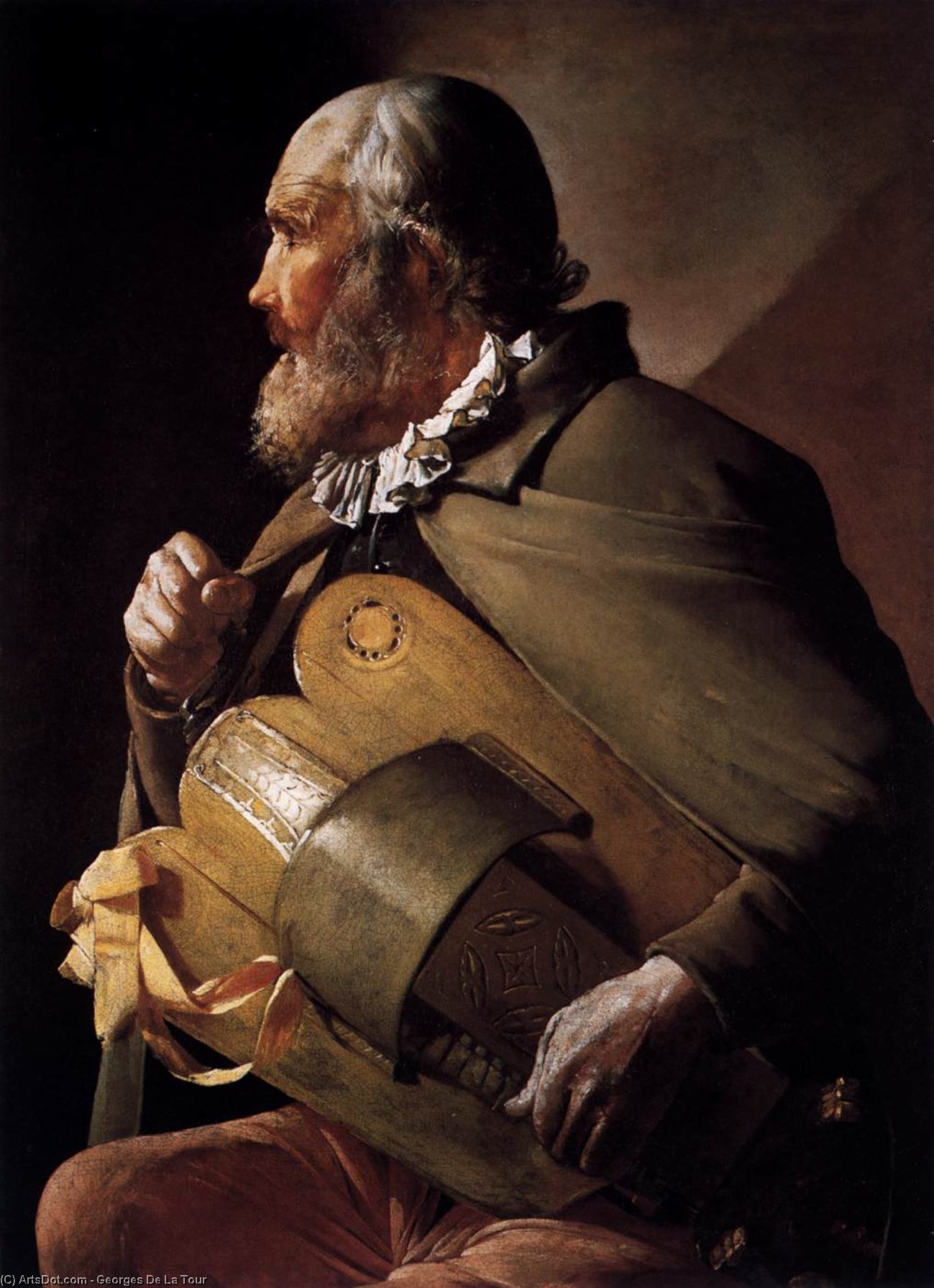
Georges de La Tour: A Master of Shadow and Light
Georges de La Tour (1593-1652) stands as a singular figure within the French Baroque, an artist who eschewed grand narratives for intimate portrayals imbued with profound spiritual contemplation. Unlike many contemporaries preoccupied with opulent commissions celebrating royal power or mythological grandeur, De La Tour focused on scenes of domestic piety and biblical narratives rendered with unparalleled subtlety—a deliberate choice that cemented his reputation as one of the most emotionally resonant painters of his era.
The Dramatic Chiaroscuro Technique
De La Tour’s distinctive style hinged upon a masterful manipulation of chiaroscuro, the technique of stark contrast between light and dark. He achieved this breathtaking effect not through elaborate brushstrokes or vibrant pigments—though he employed them skillfully—but rather by exploiting the natural illumination of candle flames within his interiors. This painstaking process demanded meticulous observation and an understanding of how light interacts with surfaces, resulting in images that seem to pulsate with inner radiance. The artist’s studio was transformed into a laboratory of perception, where every detail was carefully considered to heighten the sense of drama and evoke feelings of solemn reverence.
A Window Into Religious Devotion
His subjects—often depictions of saints, biblical figures, or scenes from everyday life imbued with spiritual significance—were presented not as heroic triumphs but as humble expressions of faith. Consider “The Fortune Teller,” housed in the Museo del Prado, where a woman bathed in candlelight gazes intently at a young boy, seemingly mesmerized by her prophetic pronouncements. The muted palette—dominated by browns and reds—further underscores the scene’s solemn atmosphere, emphasizing the quiet dignity of piety rather than flamboyant spectacle.
Symbolism Rooted in Protestant Morality
De La Tour's artistic vision was deeply influenced by the Protestant Reformation, which shaped the moral sensibilities of France during his lifetime. Unlike Catholic artists who often idealized saints and embellished biblical narratives with elaborate ornamentation, De La Tour sought to convey a sense of spiritual truth through understated realism. The flickering candlelight symbolizes divine illumination—the guiding light of faith—while the figures themselves embody humility and devotion. These elements resonate powerfully across centuries, reflecting a timeless preoccupation with matters of conscience and moral responsibility.
Legacy and Enduring Emotional Impact
Georges de La Tour’s influence extends far beyond his own time, inspiring artists throughout the Romantic period and continuing to captivate viewers today. His ability to capture the essence of human emotion—particularly compassion and piety—within a framework of exquisite visual artistry remains unparalleled. Reproductions of his paintings offer an opportunity to experience firsthand the transformative power of light and shadow, inviting contemplation on themes of faith, morality, and the beauty inherent in simplicity.