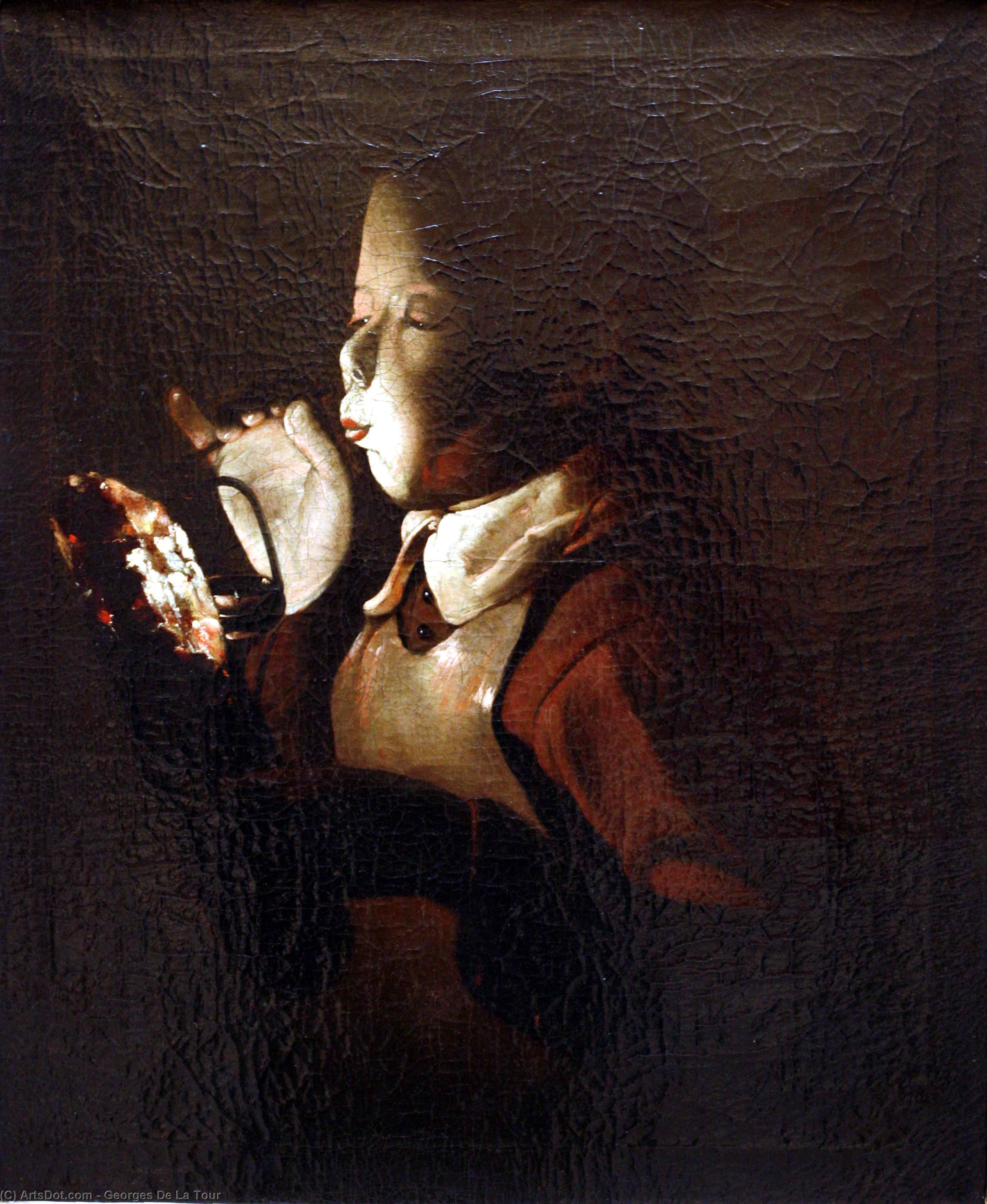
A Dance of Shadow and Light
In the quiet, contemplative realm of the French Baroque, few moments capture the ephemeral nature of existence as poignantly as Georges de La Tour’s Boy Blowing at a Lamp. This masterpiece serves as a profound meditation on the fragility of life, rendered through the masterful technique of tenebrism. As we gaze upon the young subject, we are not merely observing a child at play, but witnessing a dramatic interplay between the visible and the unseen. The boy, positioned with a delicate tension, leans toward the singular source of light, his breath poised to extinguish or perhaps nurture the flickering flame. This single, focused illumination carooned by the artist creates a world where the darkness is not merely an absence of light, but a heavy, velvety presence that wraps around the subject, pulling the viewer into an intimate, hushed encounter.
The technical brilliance of De La Tour lies in his ability to manipulate oil on canvas to achieve a sculptural depth. The texture of the painting allows the light to seem as though it is physically radiating from the center of the composition, casting soft, warm glows upon the boy's features while leaving much of the periphery to the mystery of deep shadow. This stark contrast—the hallmark of the Caravaggesque tradition—serves to heighten the emotional stakes of the scene. Every detail, from the subtle curve of the boy's lips to the way the light catches the edge of his clothing, is rendered with a precision that feels both hyper-realistic and dreamlike. For the collector or interior designer, this piece offers a sophisticated focal point, bringing a sense of quiet drama and historical weight to any curated space.
Symbolism and the Baroque Soul
Beyond its visual splendor, Boy Blowing at a Lamp is steeped in the symbolic language of the 17th century. During this era, the candle or lamp often served as a metaphor for the human soul or the fleeting nature of time. The act of blowing at the flame introduces an element of profound vulnerability; it is a gesture that holds the power to end the light entirely, mirroring the precariousness of life itself. There is a haunting beauty in this tension, a reminder of the transient moments that define our existence. De La Tour invites us to contemplate the balance between preservation and destruction, making the painting much more than a portrait—it is a philosophical inquiry captured in pigment.
For those seeking to integrate fine art into a modern or classical interior, this reproduction offers an unparalleled opportunity to evoke atmosphere. The muted palette and dramatic chiaroscuro provide a timeless elegance that complements both minimalist settings and richly decorated rooms. It is a piece that demands a slow gaze, rewarding the observer with new layers of meaning and emotional resonance each time it is encountered. To possess such a work is to hold a fragment of history, a window into a period where light was used not just to see, but to feel.