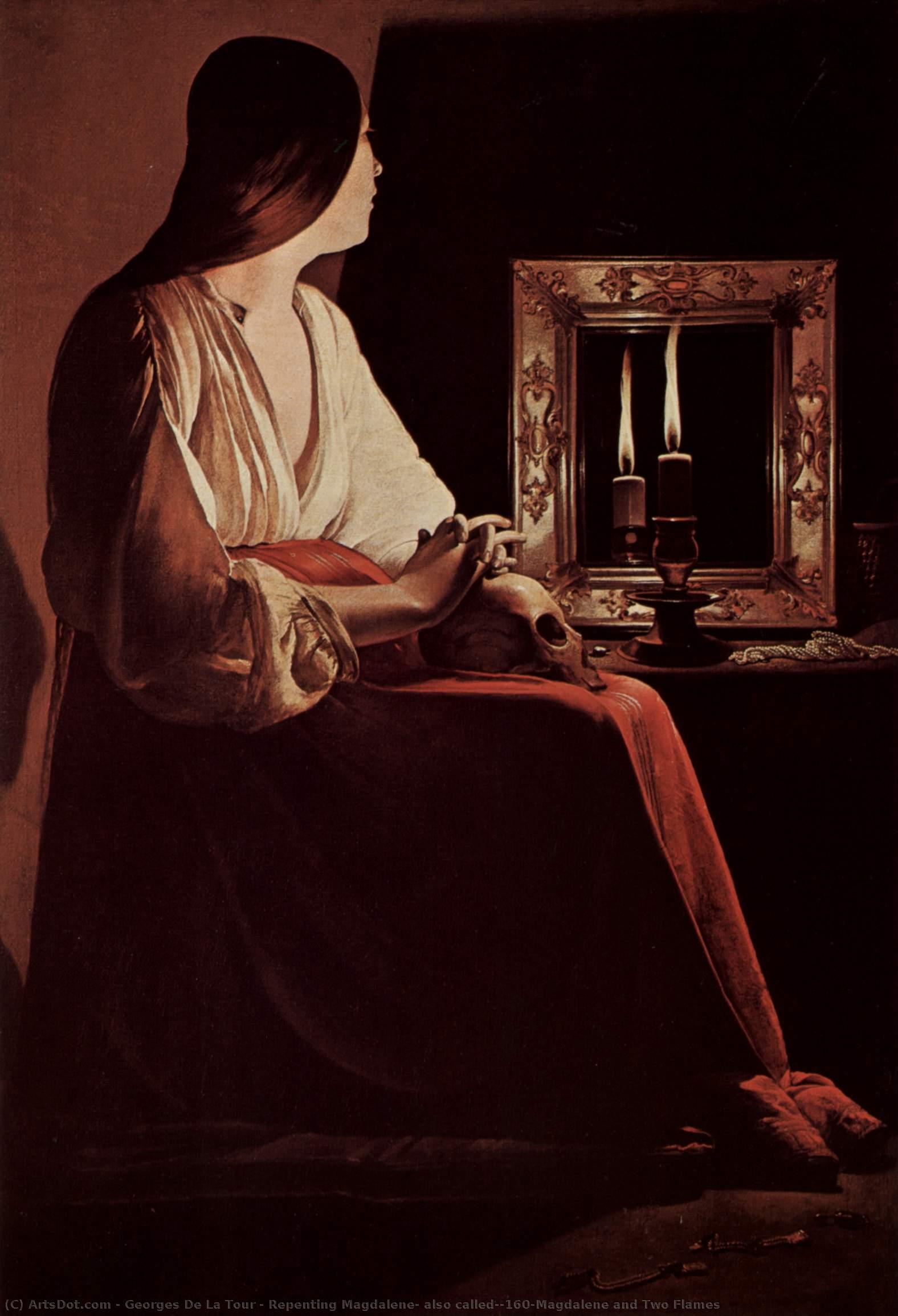
Repenting Magdalene: A Study in Shadow and Reflection
Georges de la Tour’s “Repenting Magdalene,” also known as “Magdalene and Two Flames,” is not merely a depiction of a biblical scene; it's an intensely personal meditation on repentance, mortality, and the enduring power of faith. Painted in 1643, this haunting work transcends its religious subject matter to become a profound exploration of human emotion rendered with de la Tour’s signature mastery of light and shadow – a technique he honed during his time in the Duchy of Lorraine, a region that blended French, Germanic, and Italian artistic influences.
The painting immediately draws the viewer into a dimly lit interior, dominated by a sense of quiet contemplation. A woman, identified as Mary Magdalene, sits before a mirror, her posture suggesting both vulnerability and resolve. The composition is strikingly simple yet deeply layered. She holds a skull in her hand – a potent symbol of death and judgment – while simultaneously gazing at her own reflection. Two flickering candles flank her, casting dramatic pools of light that illuminate her face and the surrounding objects: a red table, a chair, and a book open to scripture. This careful arrangement isn’t haphazard; it's meticulously constructed to guide the viewer’s eye and amplify the painting’s emotional resonance.
The Baroque Masterclass: Light, Shadow, and Symbolism
De la Tour was a master of *chiaroscuro*, a technique that dramatically contrasts light and dark. He didn't simply use light to illuminate; he used it to sculpt form, create atmosphere, and evoke specific emotions. Notice how the candlelight doesn’t flood the scene but rather pools in strategic areas, highlighting Magdalene’s face and hands while leaving much of the background shrouded in darkness. This deliberate obscurity contributes to the painting’s sense of mystery and introspection.
The skull itself is a crucial element. It represents not just physical death but also spiritual judgment – the consequences of past actions. The mirror reflects Magdalene's image, forcing her to confront her own mortality and the weight of her sins. The inclusion of the book, open to scripture, suggests a path towards redemption through faith and repentance. The red table and chair add a touch of earthly color, grounding the scene in reality while simultaneously hinting at passion and perhaps even regret.
A Figure of Faith and Penance
Mary Magdalene’s story is one of profound transformation. Traditionally depicted as a repentant prostitute who witnessed Christ's crucifixion and devoted her life to his service, she embodies both shame and redemption. De la Tour doesn’t offer a simplistic portrayal; instead, he presents a complex figure wrestling with her past and seeking solace in faith. The subtle sadness in Magdalene’s eyes, combined with the gesture of holding the skull, speaks volumes about her internal struggle.
Considering the broader context of 17th-century religious art, “Repenting Magdalene” reflects the Counter-Reformation's emphasis on personal piety and the importance of repentance. The painting aligns with a trend in Baroque art to depict saints as relatable figures grappling with human emotions – not idealized deities but individuals undergoing spiritual journeys. The influence of Caravaggio is undeniable, particularly in de la Tour’s use of dramatic lighting and his focus on capturing fleeting moments of emotion.
A Reproduction for the Soul
ArtsDot offers meticulously crafted hand-painted reproductions of “Repenting Magdalene,” allowing you to bring this powerful work into your home or office. Our skilled artists replicate de la Tour’s masterful technique with exceptional detail, ensuring that every nuance of light and shadow is faithfully reproduced. Whether you are an art enthusiast, a collector seeking a significant piece for your collection, or simply someone drawn to the painting's evocative beauty, our reproduction provides a stunning and authentic representation of this iconic masterpiece. The size 93 x 133 cm offers a substantial presence, while the rich colors and textures will transform any space into a sanctuary of contemplation.