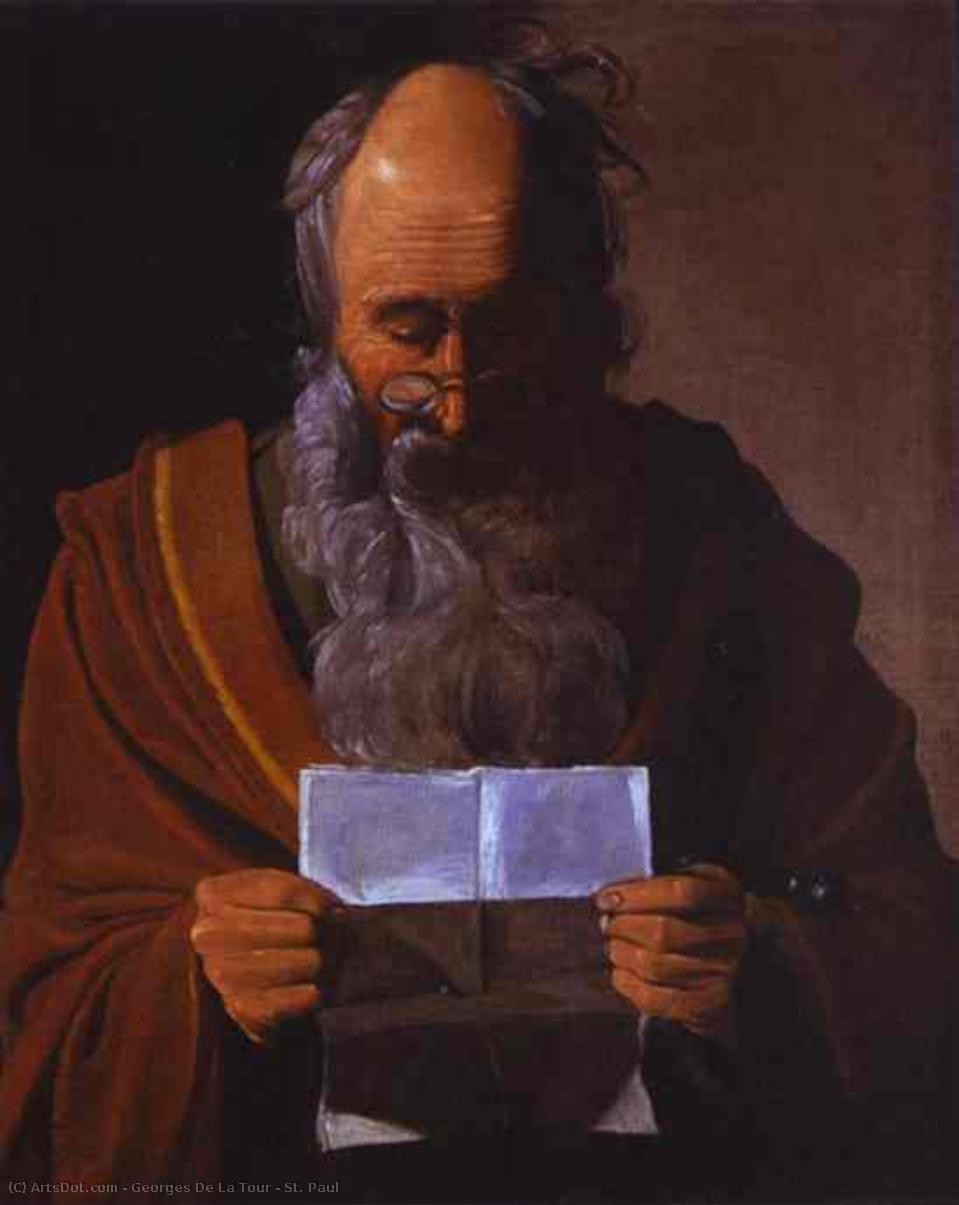
Georges de La Tour: A Master of Shadow and Light – Exploring “St. Paul”
Georges de La Tour (1593-1652) stands as an enigmatic figure within the Baroque landscape, a painter whose oeuvre transcends mere representation to delve into profound spiritual contemplation. Born in Vic-sur-Seille, Lorraine, his artistic journey was marked by both personal hardship and unwavering devotion—a duality that finds its most poignant expression in works like “St. Paul,” a captivating depiction of Saint Paul holding a sheet of paper, executed around 1620. This painting isn’t simply a portrait; it's an invitation to consider the complexities of faith and the transformative power of inner illumination.
- Subject Matter & Composition: The central figure—Saint Paul—dominates the canvas with quiet dignity, his gaze directed upwards as if seeking divine guidance. Accompanying him is a simple sheet of paper, a subtle emblem of contemplation and perhaps the vessel for divine revelation. La Tour’s masterful composition utilizes chiaroscuro – dramatic contrasts between light and dark – to sculpt the form of Paul and imbue the scene with an atmosphere of solemn reverence.
- Style & Technique: De La Tour's signature style is undeniably Baroque, characterized by its meticulous attention to detail and its profound exploration of psychological realism. He employed oil paint on canvas with painstaking precision, layering translucent glazes to achieve a velvety texture and capturing the subtle nuances of light—a technique that elevates the painting beyond mere visual accuracy into an embodiment of spiritual experience.
Historical Context: Lorraine Under Habsburg Rule & The Protestant Reformation’s Shadow
La Tour's artistic output flourished during a turbulent period in European history. Lorraine, under Habsburg rule, experienced considerable religious upheaval as the Protestant Reformation challenged Catholic orthodoxy. This context profoundly influenced La Tour’s worldview and informed his artistic sensibilities. His paintings frequently depict biblical scenes imbued with moral seriousness—a reflection of the anxieties and aspirations of his time. The pervasive darkness within “St. Paul” isn't merely stylistic; it symbolizes spiritual obscurity, the struggle for faith amidst doubt, mirroring the broader societal tensions of the era.
- Symbolism: The sheet of paper itself carries significant symbolic weight. Traditionally interpreted as representing God’s Word—the Gospels—it underscores Paul's role as a messenger of divine truth. Furthermore, La Tour’s masterful use of light – emanating from an unseen source – symbolizes spiritual enlightenment and divine grace, guiding the viewer’s eye towards contemplation.
- Emotional Impact: Viewing “St. Paul” evokes a palpable sense of serenity and introspection. The subdued palette—dominated by browns and ochres—contributes to this mood, fostering a feeling of quiet solemnity. La Tour's ability to convey profound emotion through minimal visual elements speaks volumes about his artistic genius – he captures the essence of faith not through grand gestures but through subtle expressions of inner peace.
Legacy & Influence: A Pioneer of Dramatic Light
Georges de La Tour’s influence extends far beyond his immediate contemporaries. He is considered a precursor to Caravaggio and Rembrandt, artists who similarly embraced chiaroscuro as a primary expressive tool. His innovative approach to depicting religious subjects established him as one of the foremost painters of his generation—a testament to his unwavering commitment to artistic integrity and spiritual contemplation. Reproductions of “St. Paul” continue to inspire collectors and interior designers alike, offering a glimpse into the timeless beauty of Baroque art and its enduring capacity to provoke reflection.