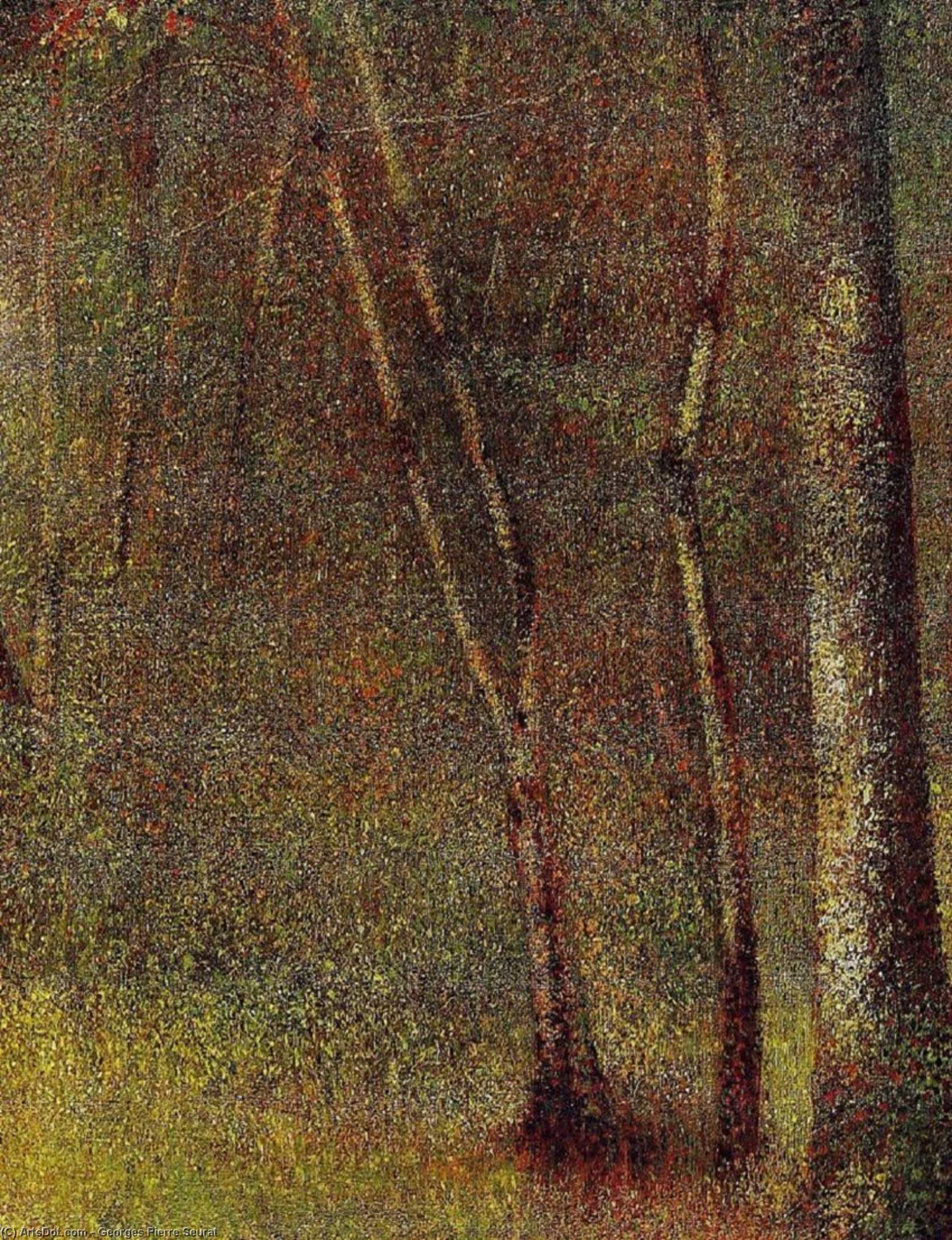
In the Woods at Pontaubert: A Study in Light and Texture
Georges Pierre Seurat's "In the Woods at Pontaubert," created in 1881, is a captivating example of early pointillist technique and a serene exploration of nature. Currently residing within the esteemed collection of the Metropolitan Museum of Art in New York City, this painting offers a glimpse into the artist’s developing style before his full embrace of divisionism.
Composition and Subject Matter
The artwork presents a dense and atmospheric depiction of a forest scene at dusk or dawn. It’s characterized by vertical lines representing the trunks of numerous trees, densely packed together to create a feeling of claustrophobia and depth. The composition is largely dominated by these vertical elements, which converge towards an unseen point in the distance, creating a strong sense of perspective. The color palette is predominantly muted browns, greens, and ochres, contributing to a somber and mysterious mood. Texture is heavily emphasized through the use of small, closely-packed brushstrokes that create a granular, almost impasto effect across the entire surface. Lighting appears to be diffuse and low, casting long shadows and obscuring details within the undergrowth. The style leans towards realism with an impressionistic treatment, prioritizing atmosphere and texture over precise representation. The technique involves layering of paint to build up the density and depth of the forest. There’s a subtle suggestion of a ground plane at the bottom, but it's largely obscured by foliage.
Technique: A Precursor to Pointillism
While "In the Woods at Pontaubert" predates Seurat's fully realized pointillist style, it demonstrates his experimentation with optical mixing. Rather than blending colors on a palette, Seurat applied small dots of pure color directly onto the canvas, relying on the viewer’s eye to blend them optically from a distance. This technique, which would later become known as divisionism or neo-impressionism, aimed to create a more vibrant and luminous effect than traditional mixing methods. The painting showcases an early stage in this development, with the dots being less distinct than in his later works like "A Sunday on La Grande Jatte," but still evident in their contribution to the overall texture and color harmony.
Historical Context and Influences
Seurat spent the summer and early autumn of 1881 in Pontaubert, a village known as a destination for landscape artists. This painting reflects his interest in capturing natural scenes with precision and detail, influenced by earlier landscape painters but diverging through his unique approach to color and technique. Seurat was deeply interested in scientific theories of color, particularly the work of Michel Eugène Chevreul on simultaneous contrast and optical mixing. He sought to apply these principles to create a more accurate and vibrant representation of light and color than traditional methods allowed.
Symbolism and Emotional Impact
Beyond its technical innovations, "In the Woods at Pontaubert" evokes a sense of quiet contemplation and solitude. The dense forest setting creates an atmosphere of mystery and enclosure, inviting viewers to immerse themselves in the scene. The muted color palette and diffuse lighting contribute to a somber yet peaceful mood. Symbolically, the painting can be interpreted as representing the power and beauty of nature, while also hinting at the complexities and hidden depths within it. The lack of clear focal points further contributes to this feeling, drawing the viewer into the immersive experience of being enveloped by the forest.