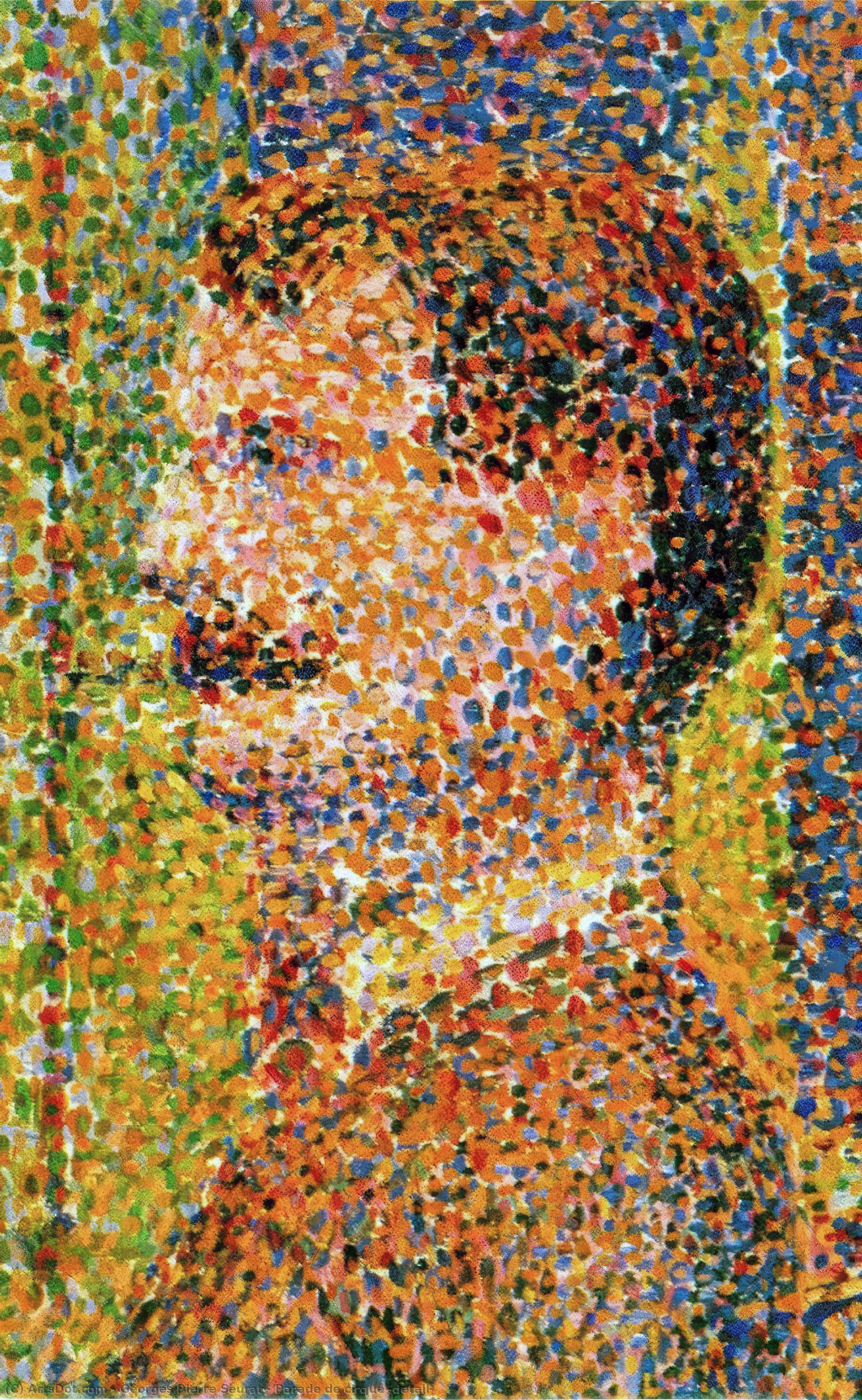
Discover Georges Seurat’s vibrant 1888 'Parade de cirque (detail)', a stunning Pointillist masterpiece. Own a high-quality hand-painted reproduction of this iconic Post-Impressionist artwork, perfect for art lovers and collectors.
A Luminous Night in Paris: The Magic of Seurat’s Pointillism
To step into Georges Seurat’s Parade de cirque is to be transported to the electric, flickering atmosphere of a late 19th-century Parisian night. This captivating detail from his monumental masterpiece offers more than just a glimpse of a circus sideshow; it provides an immersive sensory experience. As the artificial lights of the Circus Corvi illuminate the darkness, the viewer is drawn into a world where the boundaries between reality and light begin to dissolve. The scene captures the vibrant energy of the parade—the outdoor spectacle designed to entice passersby—and elevates a moment of popular urban entertainment into a profound study of light and human connection.
The brilliance of this work lies in Seurat’s revolutionary application of Pointillism, a technique that forever altered the course of modern art. Rather than traditional brushstrokes that blend colors on a palette, Seurat meticulously placed countless tiny, distinct dots of pure pigment directly onto the canvas. This scientific approach to chromoluminarism relies on the viewer’s own eye to perform the optical blending. When you gaze upon this piece, the contrasting violets, oranges, and greens seem to shimmer and vibrate with an internal life, creating a luminous texture that feels as though it is breathing. For the collector or interior designer, this technique offers a unique visual depth that changes subtly depending on the light in the room, making it a dynamic centerpiece for any sophisticated space.
Historical Resonance and Artistic Innovation
Created between 1887 and 1888, Parade de cirque represents a pivotal departure from the daylight-focused Impressionism of Seurat’s predecessors. It marks his first bold exploration of nocturnal subjects, proving that the scientific precision of Pointillism could capture the mysterious, atmospheric qualities of artificial light at night. By choosing to depict the everyday festivities of the working class and the bustling energy of the Gingerbread Fair, Seurat bridged the gap between high art and modern life. This focus on contemporary, popular culture laid the essential groundwork for future movements, including Fauvism, Cubism, and Futurism.
Beyond its technical mastery, the artwork possesses a profound emotional resonance. There is a rhythmic, almost hypnotic quality to the composition, where geometric precision meets a sense of quiet introspection. The interplay of light and shadow evokes a feeling of nostalgia and wonder, inviting the observer to contemplate the fleeting nature of spectacle and the enduring beauty of the modern moment. Whether displayed in a grand gallery or as a refined accent in a contemporary home, this reproduction serves as a testament to Seurat’s ability to find mathematical order within the chaotic beauty of human joy.