A Glimpse into Modern Life: Decoding Seurat’s *Study for The Chahut*
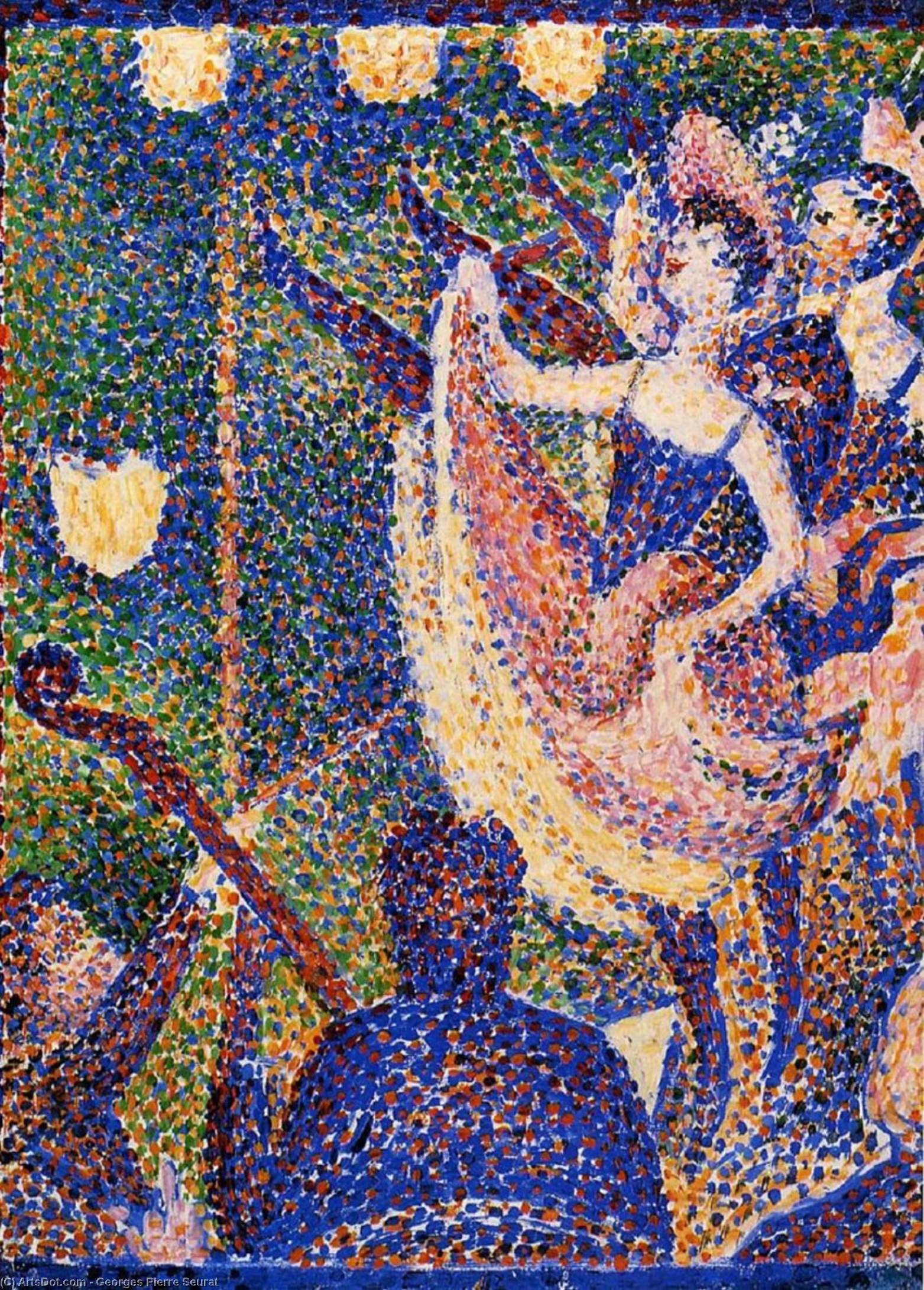
Georges Pierre Seurat's *Study for The Chahut*, painted in 1890, offers a captivating window into the burgeoning modern world and the revolutionary artistic techniques that sought to capture its energy. Measuring just 21 x 15 cm, this small-scale work is not merely a preparatory sketch but a vibrant composition brimming with innovation and insight – a microcosm of the larger, unfinished painting it precedes.
Subject & Composition: A Dance of Light and Form
The artwork depicts figures engaged in a lively dance, likely within a garden or entertainment venue—the “chahut” itself referring to a boisterous cabaret or dance hall popular in late 19th-century Paris. The composition is densely packed with intertwined bodies and foliage, creating a dynamic sense of movement. Unlike traditional depictions of social gatherings, Seurat doesn’t focus on individual portraits; instead, he presents a collective experience, emphasizing the *feeling* of energy and excitement over precise representation.
The Pointillist Revolution: A Technique Defined
*Study for The Chahut* is a prime example of
Pointillism, a technique pioneered by Seurat himself. This method involves applying countless tiny, distinct dots of pure color to the canvas, relying on the viewer’s eye and optical mixing to create the final image. The labor-intensive process results in an incredibly textured surface that shimmers with light and vibrancy. It's not simply about *what* is depicted but *how* it is perceived – a deliberate exploration of color theory and visual perception.
Historical Context: Bridging Impressionism & Modernity
Seurat’s work emerged during a period of significant artistic transition, bridging the gap between
Impressionism and the burgeoning movements of early modernity. While influenced by the Impressionists' focus on light and contemporary life, Seurat rejected their spontaneous brushwork in favor of a more scientific and calculated approach. He sought to create a new visual language that could capture the complexities of modern experience with precision and intellectual rigor.
Symbolism & Emotional Impact: Capturing Fleeting Moments
The use of light in *Study for The Chahut* is particularly significant. Scattered highlights illuminate the dancers, suggesting joy, vitality, and perhaps the fleeting nature of these moments of celebration. The flattened perspective and ambiguous spatial relationships contribute to a sense of detachment, mirroring the increasingly fragmented experience of modern life. While seemingly joyful, there’s an underlying current of observation – Seurat isn't simply celebrating; he is *studying* this scene, dissecting it into its component parts of color and light.
Interior Design & Collectibility
This artwork, or a high-quality reproduction, would be a striking addition to any interior space. Its vibrant colors and dynamic composition lend themselves well to modern and contemporary settings. The Pointillist technique adds textural interest, making it a captivating focal point. As a pivotal work by a foundational figure in modern art, *Study for The Chahut* represents not only aesthetic beauty but also a significant investment in artistic history.
- Style: Post-Impressionism, Pointillism, Neo-Impressionism
- Medium: Oil on canvas
- Dimensions: 21 x 15 cm
- Year: 1890