A Study in Tranquil Domesticity
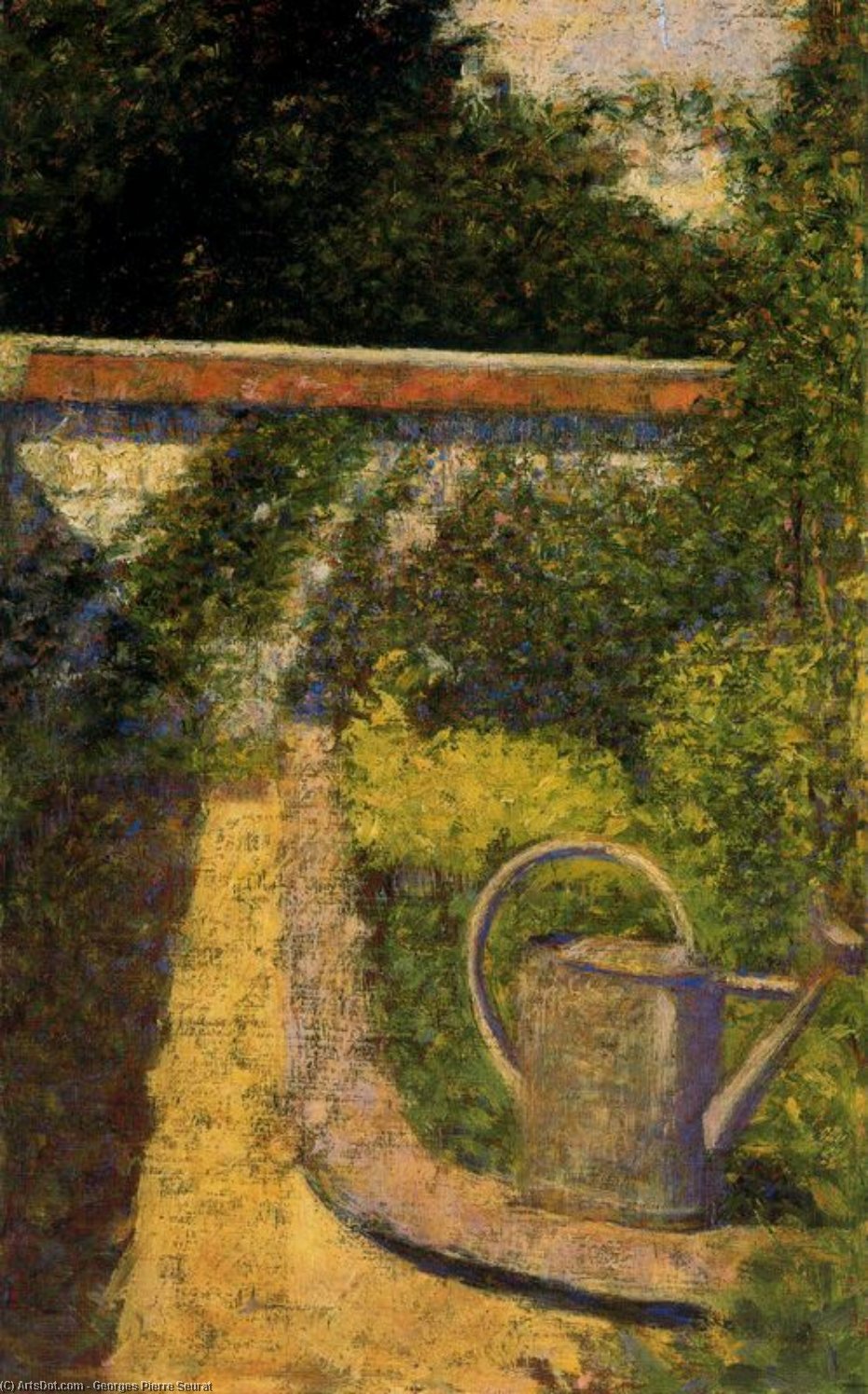
This captivating scene transports the viewer directly into the heart of a sun-dappled garden, an idyllic tableau brimming with quiet life. At the very center of our gaze rests the watering can, an object imbued with simple utility yet elevated to the status of art. It anchors the composition, nestled upon the earth near a gentle bridge that suggests passage and connection. The surrounding lush greenery speaks of careful cultivation and natural abundance, while the presence of two potted plants—one in the foreground, another receding into the background—frames the view, inviting the eye deeper into the verdant embrace.
The Human Element and Atmosphere
What truly breathes life into this composition are the figures scattered throughout the scene. They are not merely decorative accents; they are participants in a shared moment of repose or gentle industry. Whether tending to blooms or simply enjoying the peaceful atmosphere, these people lend a palpable sense of community and ongoing activity. The overall ambiance is one of profound serenity—a momentary pause from the rush of modern life, captured forever under an imagined perfect sky. It speaks to the timeless human need for beauty, nurture, and connection found within nature's embrace.
Artistic Echoes and Technique
While the specific hand that painted this piece is not detailed here, its subject matter resonates deeply with the late 19th-century fascination with leisure and the domestic sphere. The careful rendering of light filtering through foliage, combined with the meticulous placement of every element—from the curve of the watering can to the texture of the leaves—suggests a mastery of capturing ephemeral moments. For those drawn to the luminous quality often associated with masters like Georges Seurat, this work echoes that dedication to observing and structuring light, even within a more traditionally rendered garden setting. It invites contemplation on how everyday objects become monumental when viewed through an artist's discerning eye.
Symbolism of Growth and Renewal
The garden itself is perhaps the most potent symbol at play. Gardens have always represented the human spirit’s attempt to impose order, beauty, and life upon wildness. The watering can, therefore, becomes a subtle emblem of care, nurturing, and the necessary effort required for growth—both in flora and in personal experience. It suggests that beauty is not accidental; it requires attention. This piece offers a visual meditation on patience, reminding us that the most vibrant moments are often those sustained by quiet, consistent acts of devotion.
Bringing the Garden Home
For the collector or designer seeking to infuse a space with warmth and cultured elegance, this reproduction serves as more than mere decoration; it is an emotional anchor. Imagine this scene gracing your wall, transforming a room into a sanctuary. It promises not just the visual pleasure of lush color, but the feeling of stepping out onto a quiet afternoon path, breathing deeply, and letting the gentle rhythm of life wash over you.