Discover Gerard David (c. 1460-1523), a Flemish Renaissance master renowned for vibrant colors, detailed religious scenes, and innovative landscapes. Explore his influence on Early Netherlandish painting.
Explore European art from the 13th-19th centuries at London's National Gallery! Discover masterpieces by Van Gogh, Rembrandt & more – free entry!
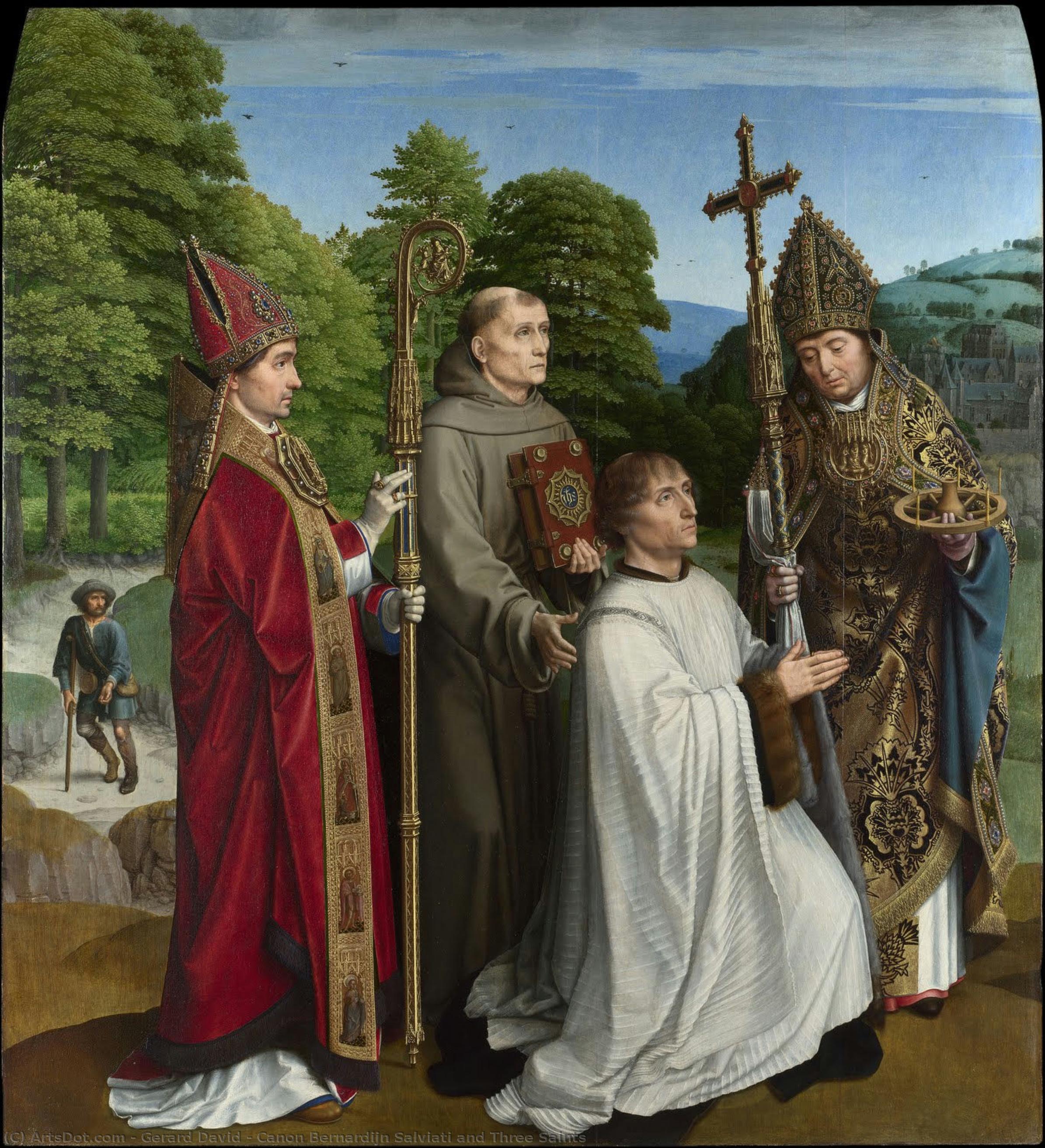
Canon Bernardijn Salviati and Three Saints – A Testament to Flemish Devotion
Gerard David’s “Canon Bernardijn Salviati and Three Saints,” painted in 1501, is more than just a religious scene; it's a profound meditation on faith, humility, and the enduring power of devotion within the heart of the early Renaissance. Measuring 103 x 94 cm, this meticulously crafted oil painting offers a rare glimpse into the spiritual life of the period, showcasing David’s mastery of light, composition, and psychological realism – hallmarks that would later secure his place as a pivotal figure in Northern European art.
- Subject Matter: The scene depicts a moment of intense piety. Canon Bernardijn Salviati kneels in prayer, his posture conveying deep reverence, while three figures—likely fellow monks or clerics—stand vigil around him. The inclusion of a cross held aloft by one of the standing men underscores the central role of Christ’s sacrifice and salvation.
- The Artist's Hand: David’s meticulous attention to detail is immediately apparent in the rendering of the figures’ clothing, the textures of their robes, and the subtle play of light across their faces. This level of realism was revolutionary for its time, moving beyond purely symbolic representations towards a more humanistic approach.
A Window into 16th-Century Flemish Life
Painted in Bruges, a thriving center of commerce and artistic innovation during the early 16th century, “Canon Bernardijn Salviati and Three Saints” reflects the profound religious influence that permeated daily life. The painting’s style aligns with the prevailing trends of the Flemish Primitives – characterized by their sophisticated use of oil paint, their ability to create incredibly lifelike figures, and their deep understanding of human emotion. David's work was commissioned for wealthy patrons, often members of the clergy or nobility, reflecting the importance of religious patronage during this era.
- Historical Context: The painting’s creation coincides with a period of intense religious fervor in Europe, fueled by the ongoing Reformation and the Catholic Church's efforts to combat its spread. Works like this served not only as devotional objects but also as statements of faith and allegiance.
- Workshop Influence: David was known for managing workshops, suggesting a collaborative process involved in the creation of this piece, further enriching its artistic complexity.
Symbolism and Emotional Resonance
Beyond its literal depiction, “Canon Bernardijn Salviati and Three Saints” is rich with symbolic meaning. The kneeling figure represents humility and submission to God’s will, while the standing figures embody support and guidance in faith. The inclusion of birds – one near the top left corner and another towards the bottom right – could symbolize spiritual aspiration or messengers from heaven. The solemn atmosphere, achieved through David's masterful use of light and shadow, evokes a sense of reverence and contemplation, inviting viewers to share in the scene’s profound emotional impact.
- Color Palette: The muted tones of earth and deep reds – typical of Flemish painting – contribute to the overall solemnity and spiritual atmosphere.
- Compositional Balance: David expertly employs compositional techniques, such as pyramidal arrangements, to create a sense of stability and harmony, reinforcing the painting’s devotional message.
A Timeless Masterpiece – Recreated for Today
ArtsDot offers meticulously crafted hand-painted reproductions of “Canon Bernardijn Salviati and Three Saints,” allowing you to bring this exceptional work of art into your home or office. Each reproduction is created using the same techniques employed by Gerard David himself, ensuring an authentic representation of this iconic masterpiece. Whether you are a seasoned collector, an admirer of Flemish art, or simply seeking a stunning piece for interior design, our hand-painted reproductions offer a unique opportunity to own a tangible connection to one of the most significant works in the Northern Renaissance.