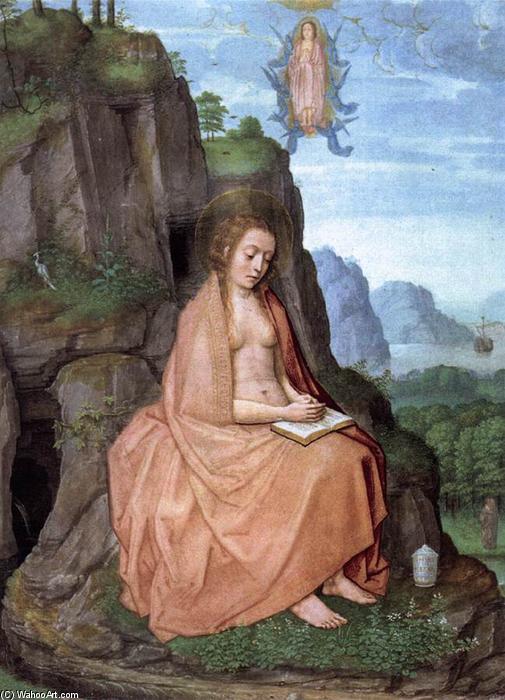
Gerard David’s serene *Grimani Breviary*, depicting Mary Magdalene's penitence amidst luminous woodland landscapes, exemplifies Renaissance light and humanist observation—a masterpiece from 1490 that invites you to explore the profound beauty of Flemish art.
Discover Gerard David (c. 1460-1523), a Flemish Renaissance master renowned for vibrant colors, detailed religious scenes, and innovative landscapes. Explore his influence on Early Netherlandish painting.
Explore the Biblioteca Marciana, Venice's Renaissance masterpiece! Admire Sansovino’s architecture, Titian’s frescoes & discover Venetian history through its extraordinary manuscript collection.
Grimani Breviary: Mary Magdalen Penitent – Gerard David
Gerard David’s *Grimani Breviary: Mary Magdalen Penitent*, created around 1490, stands as a testament to the burgeoning Renaissance spirit within Flemish art. More than just an illuminated manuscript page, it embodies a profound meditation on faith and repentance—a subject deeply resonant with humanist ideals gaining traction across Europe at the time. This exquisite depiction captures Mary Magdalene in a moment of quiet contemplation, seated upon the earth amidst a serene woodland landscape.
- Subject Matter: The artwork centers around Mary Magdalene, depicted as she emerges from her ordeal—a poignant portrayal of spiritual renewal and humility.
- Style: David’s style exemplifies the stylistic convergence between Gothic tradition and Renaissance innovation. While retaining elements of medieval artistic conventions, he skillfully incorporates naturalistic observation and atmospheric perspective characteristic of the new aesthetic.
- Technique: Executed in tempera on parchment, *Grimani Breviary* showcases David's mastery of color and detail. The meticulous layering of pigments—primarily reds, blues, and greens—creates a luminous surface that captures the dappled light filtering through the trees, conveying an unparalleled sense of realism.
The landscape surrounding Mary Magdalene is not merely decorative; it serves as a powerful symbol of purification and rebirth. The dense foliage represents the challenges faced by the soul on its journey toward redemption, while the open space beneath symbolizes hope and spiritual liberation. David’s careful attention to botanical accuracy reflects the humanist fascination with observation and understanding the natural world—a cornerstone of Renaissance scholarship.
Historical Context: Produced during a period marked by intellectual ferment and artistic experimentation, *Grimani Breviary* reflects the broader cultural shift toward humanism. The revival of classical ideals challenged medieval dogma, fostering a renewed interest in earthly beauty and moral contemplation. David’s work aligns seamlessly with this movement, demonstrating its influence on visual culture.
Emotional Impact: Viewing *Grimani Breviary* evokes feelings of serenity and introspection. Mary Magdalene's posture conveys vulnerability yet unwavering devotion—a timeless depiction of spiritual resilience. The luminous colors and atmospheric perspective contribute to an immersive experience that transports the viewer into a tranquil woodland setting, fostering contemplation on themes of faith, repentance, and divine grace.
- Provenance: Currently housed in the Biblioteca Nazionale Marciana in Venice, Italy
- Dimensions: 280 x 195 cm
David’s *Grimani Breviary* remains a cornerstone of Early Netherlandish painting—a masterpiece that continues to inspire admiration for its artistic brilliance and profound spiritual significance. Its enduring appeal testifies to the artist's ability to capture not only visual beauty but also the essence of human experience.
© ArtsDot.com — All Rights Reserved