The Enigmatic Scene: A Window into Roman Politics
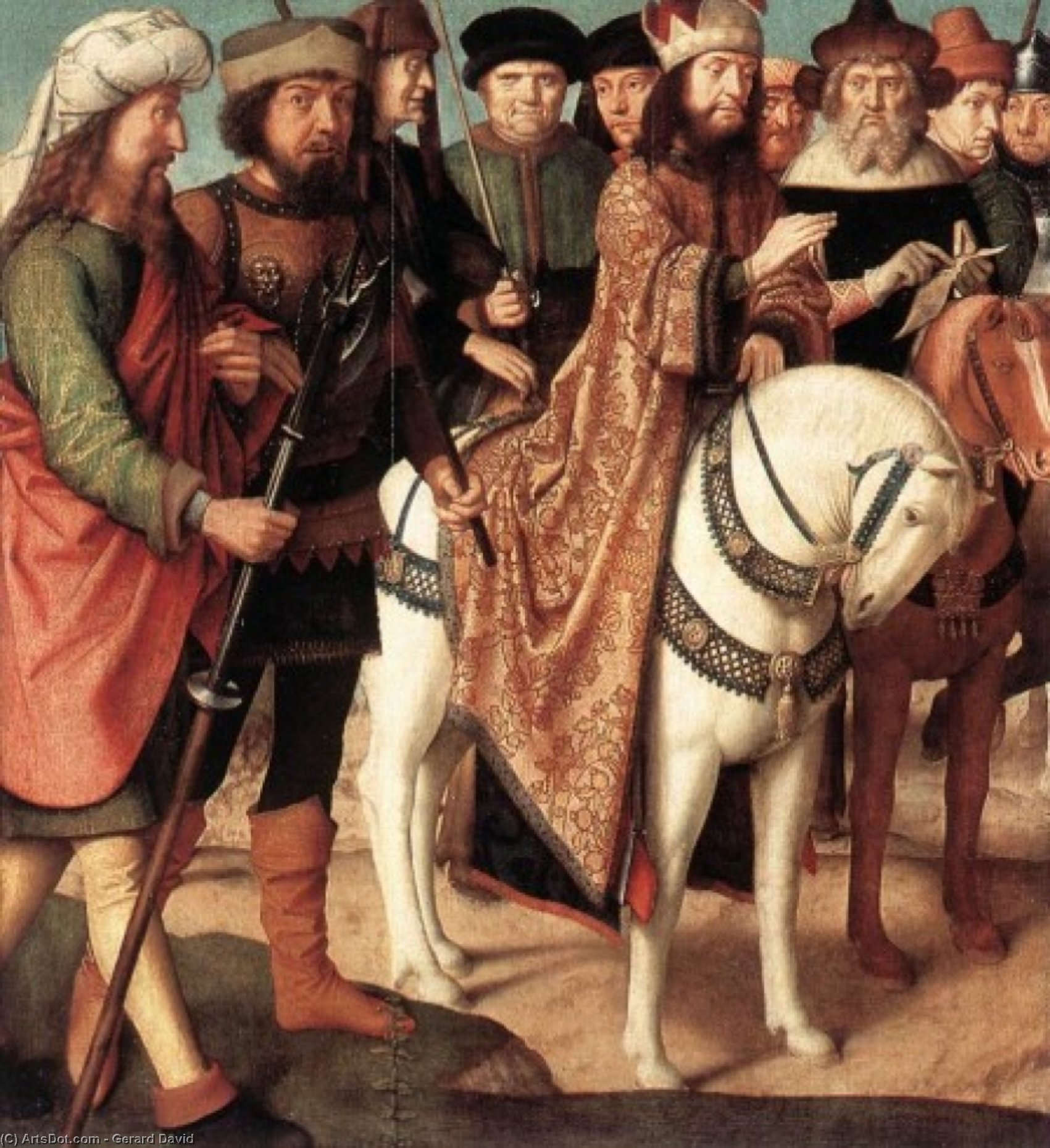
Gerard David's “Pilate’s Dispute with the High Priest,” painted circa 1480-1485, isn’t merely a depiction of a biblical moment; it’s a meticulously crafted tableau of political tension and moral ambiguity. The painting captures a pivotal scene from the Gospel of Matthew – the fraught exchange between Pontius Pilate and Caiaphas, the High Priest, over the fate of Jesus Christ. David, a master of the burgeoning Flemish style, eschews the stark realism favored by some contemporaries, instead opting for an atmosphere thick with suggestion and psychological depth. The composition is deliberately complex, drawing the viewer into a swirling vortex of figures, each contributing to the overall sense of unease and uncertainty.
The scene unfolds within a richly detailed interior space – a chamber dominated by a large table upon which Pilate sits, his posture conveying both authority and a palpable weariness. He’s not portrayed as a triumphant ruler, but rather as a man burdened by responsibility, his gaze fixed on Caiaphas, whose expression is one of resolute conviction. The High Priest, seated beside him, embodies the unwavering power of religious establishment, his robes and gestures radiating an air of unshakeable certainty. The other figures – soldiers, attendants, and onlookers – are rendered with a subtle dynamism, their positions hinting at the simmering conflict beneath the surface. David’s masterful use of perspective and spatial relationships creates a sense of claustrophobia, intensifying the drama of the encounter.
A Masterclass in Color and Light: The Flemish Approach
David's signature style is immediately apparent in his handling of color and light – hallmarks of the Northern Renaissance. He employs a sophisticated palette dominated by deep reds, blues, and browns, creating a rich, velvety texture that imbues the scene with an almost dreamlike quality. Light isn’t used to illuminate the figures directly; instead, it filters through the room in a diffused manner, casting long shadows and highlighting key elements of the composition. This technique contributes significantly to the painting's atmosphere of mystery and introspection. The subtle gradations of color and tone are achieved through meticulous layering of glazes – a hallmark of Flemish painting – resulting in an astonishing level of detail and luminosity.
The artist’s attention to texture is equally remarkable. From the rough weave of the fabrics to the polished surfaces of the furniture, every element is rendered with painstaking accuracy. This commitment to realism reflects David's deep understanding of materials and his desire to create a convincing illusion of three-dimensionality. The use of gold leaf in the High Priest’s robes further emphasizes his status and authority, while the subtle details of the soldiers’ armor add to the painting’s sense of historical authenticity.
Symbolism and Historical Context: A Reflection of Roman Power
Beyond its biblical subject matter, “Pilate’s Dispute” offers a compelling commentary on the political dynamics of late antiquity. The scene is not simply about the trial of Jesus; it's about the clash between secular authority (represented by Pilate) and religious power (embodied by Caiaphas). The sword prominently displayed in the painting – a symbol of Roman military might – underscores the precarious position of Christ and the potential for violence. The very act of disputation, the verbal sparring between the two figures, highlights the inherent conflict between reason and faith, justice and expediency.
Painted during a period of intense political and religious upheaval in Europe, the painting reflects the anxieties and uncertainties of the era. The rise of humanism and the questioning of traditional authority were challenging established norms, while the growing influence of the Church threatened to undermine secular power. David’s work can be seen as a subtle critique of these tensions, offering a nuanced portrayal of the complexities involved in navigating the moral dilemmas of his time. The painting's enduring appeal lies in its ability to resonate with viewers across centuries, prompting reflection on themes of power, justice, and the nature of belief.
A Timeless Masterpiece: Reproduction and Artistic Legacy
Reproductions of “Pilate’s Dispute” capture a remarkable degree of the original's atmosphere and detail. The rich colors, intricate textures, and psychological depth are faithfully reproduced, allowing viewers to appreciate David’s artistic genius even in a smaller format. This painting remains a cornerstone of Northern Renaissance art, influencing generations of artists with its masterful use of color, light, and composition. Its enduring legacy is a testament to Gerard David's skill as a painter and his ability to capture the complexities of human experience within a single, unforgettable image.