A Vision of Devotion: The Sacred Presence of St. Jerome
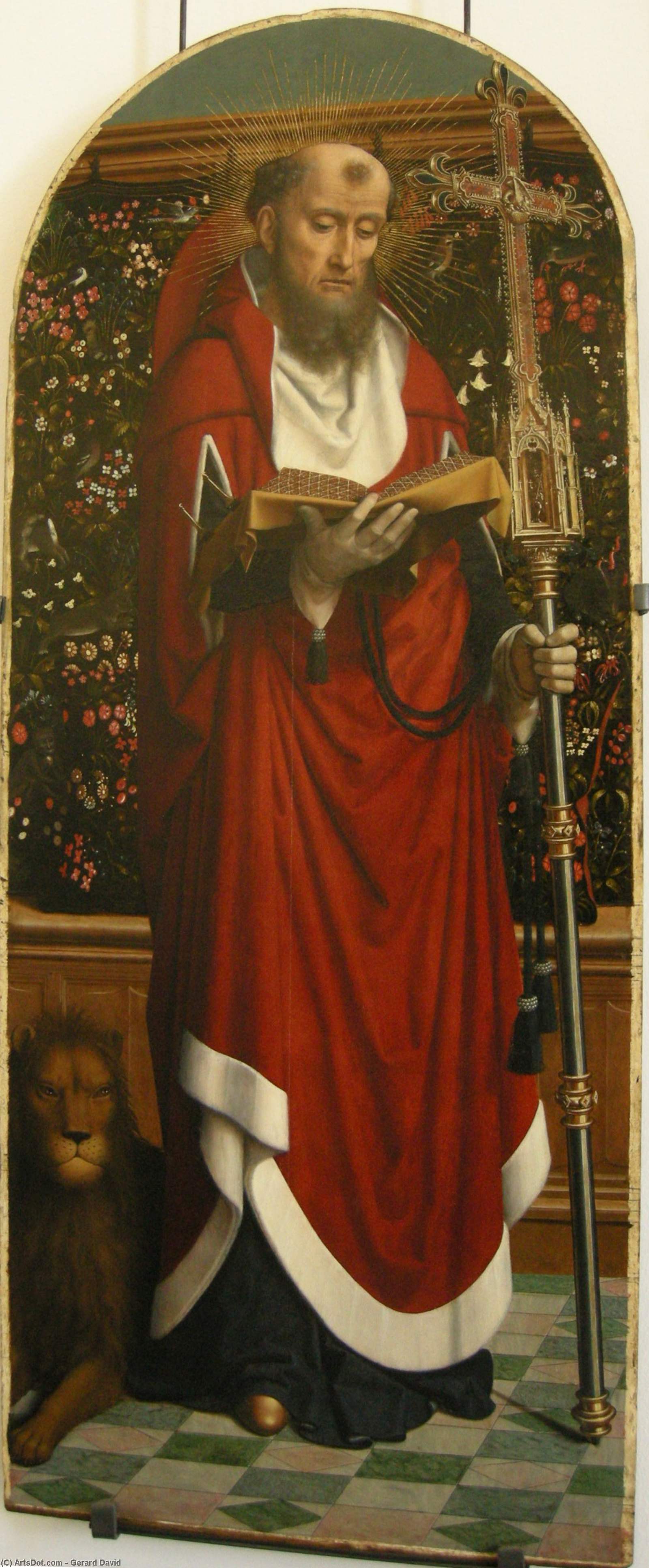
In the quiet, contemplative realm of the Northern Renaissance, few images command the soul with such profound stillness as Gerard David’s Polyptych of Cervara: St. Jerome. Created in 1506, this masterpiece serves as a window into a period where the divine and the earthly were inextricably linked through meticulous detail and luminous color. The painting presents us with an intimate portrait of St. Jerome, depicted not merely as a historical figure, but as a living embodiment of scholarly devotion. Clad in a striking red robe that commands the viewer's attention, the saint sits amidst a composition that balances heavy theological weight with a delicate, atmospheric grace. As one gazes upon his weathered features and the book held firmly in his hands, there is an immediate sense of entering a private moment of prayer and intellectual labor.
The artistry of Gerard David, a master of Flemish light, is on full display through his unparalleled ability to manipulate texture and luminosity. The technique characteristic of the Early Netherlandish tradition allows for a breathtaking realism; one can almost feel the weight of the heavy crimson fabric and the aged parchment of the scripture. This mastery of oil painting enables a soft, diffused light to wash over the scene, creating a sense of depth that draws the collector into the very heart of the saint's study. For the interior designer or art enthusiast, this piece offers more than just visual beauty; it provides a focal point of profound intellectual and spiritual gravity, making it an ideal centerpiece for spaces designed for reflection, study, or sophisticated classical elegance.
Symbolism and the Silent Guardians
Beyond the central figure of the saint, the painting is rich with symbolic layers that reward deep contemplation. Flanking St. Jerome are two lions, positioned with a watchful presence on either side of the composition. In Christian iconography, the lion often serves as a symbol of strength, protection, and the untamed power of nature brought into service of the divine. Here, they act as silent guardians of the saint’s sanctity, perhaps representing the triumph of faith over primal instinct. This balance between the ferocious power of the beasts and the serene, scholarly focus of Jerome creates a compelling tension that keeps the viewer's eye moving across the canvas, discovering new details in every corner.
The interplay between the vibrant red of the robe and the more muted, earthy tones of the surroundings serves to elevate the subject, ensuring that St. Jerome remains the undisputed protagonist of this sacred narrative. For those seeking to adorn a home or gallery with a reproduction of this caliber, the painting offers an emotional resonance that transcends time. It is a work that speaks of endurance, the pursuit of knowledge, and the quiet strength found in solitude. To possess such an image is to invite a sense of historical continuity and timeless peace into one's environment, celebrating the enduring legacy of the Flemish masters.