A Vision of Justice and Mortality
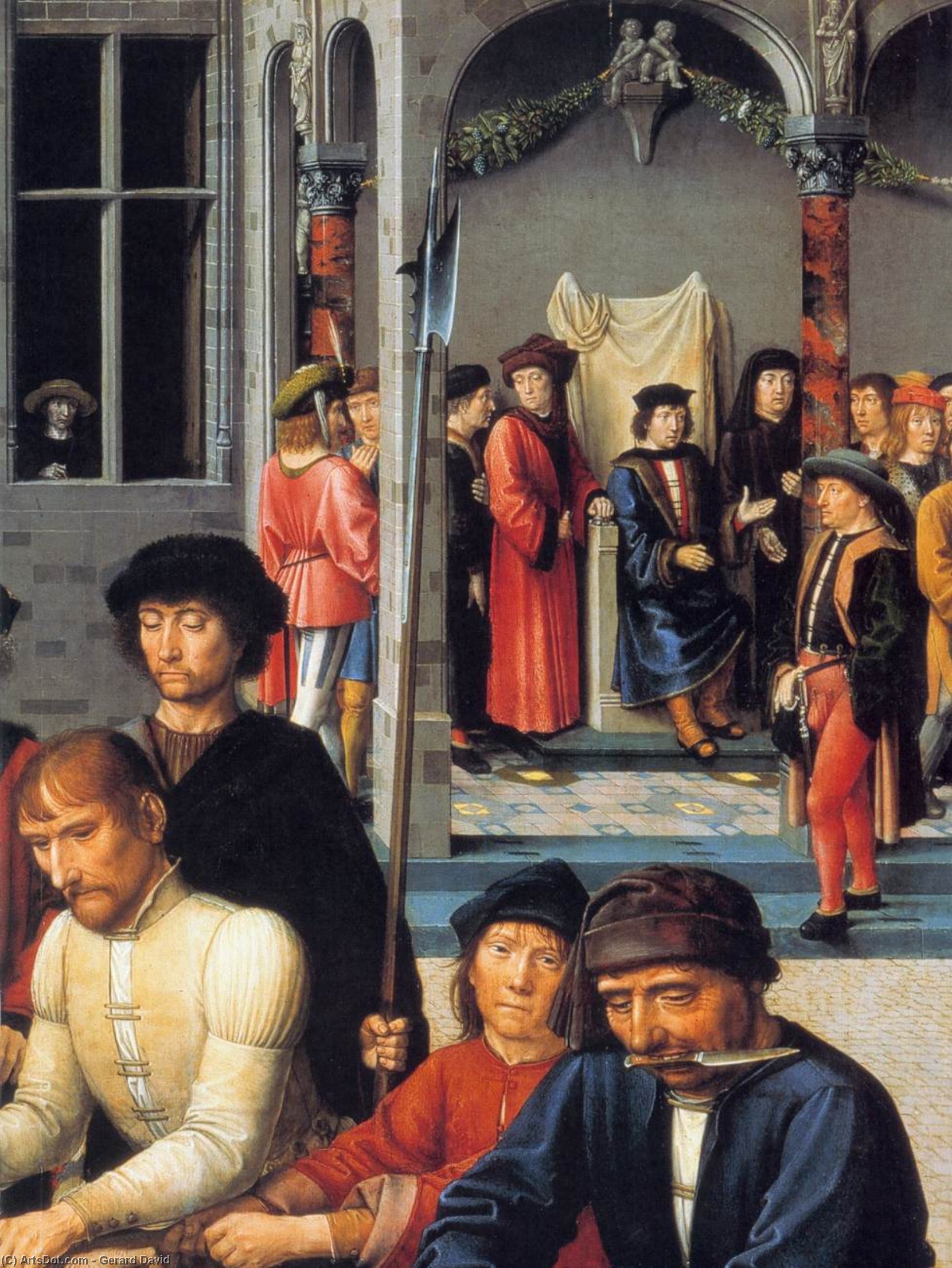
Gerard David’s “The Judgment of Cambyses,” a pivotal work from 1498 housed within the Groeninge Museum in Bruges, transcends mere historical depiction to become a profoundly moving meditation on justice, mortality, and the precarious nature of human ambition. More than just a retelling of a classical myth – the story of King Cambyses’s brutal judgment of three men accused of plotting against him – this diptych presents a scene saturated with psychological intensity and a haunting beauty born from meticulous detail and masterful color. It's a painting that demands contemplation, inviting viewers to confront uncomfortable truths about power, guilt, and the inevitable reckoning that awaits us all.
David’s genius lies not simply in his technical skill – though undeniably impressive – but in his ability to infuse a cold, classical narrative with an intensely human drama. The scene unfolds within a meticulously rendered space, blending elements of Northern European realism with subtle echoes of Italian Renaissance influence. The architecture, reminiscent of Bruges itself, grounds the fantastical event in a tangible reality, while the figures—rendered with astonishing anatomical accuracy and emotional depth—seem poised on the brink of both action and despair.
A Symphony of Color and Light
David’s palette is remarkably restrained yet profoundly evocative. He eschews the vibrant hues favored by some of his contemporaries, opting instead for a rich tapestry of earth tones – deep browns, ochres, and siennas—that imbue the scene with a sense of solemnity and gravitas. The lighting, too, plays a crucial role in shaping the painting’s mood. A diffused light source casts long shadows across the figures, emphasizing their vulnerability and highlighting the stark contrast between the opulent setting and the impending doom.
- Dominant Colors: Earth tones (browns, ochres, siennas) create a somber atmosphere.
- Light Source: Diffused light emphasizes shadows and highlights figures’ vulnerability.
- Technique: David masterfully employs glazing techniques to build up layers of color, creating a luminous surface that captures the subtle nuances of texture and form.
The Weight of Guilt and the Spectacle of Punishment
At the heart of the diptych lies the brutal depiction of Sisamnes’s flaying – a scene both shocking and deeply unsettling. David doesn't shy away from the graphic details, yet he avoids sensationalism, instead focusing on conveying the psychological torment of the condemned man. His face is contorted in agony, his eyes wide with terror, as he endures this horrific punishment. The figures surrounding him—including Cambyses himself—are rendered with a chilling detachment, highlighting the cold indifference of power and the casual cruelty of justice.
The composition itself reinforces this sense of unease. The arrangement of figures creates a claustrophobic space, trapping Sisamnes within his torment. The diagonals of the scene converge on the central figure, drawing the viewer’s eye directly to his suffering. This deliberate use of perspective and spatial relationships amplifies the emotional impact of the image, forcing us to confront the uncomfortable realities of violence and injustice.
A Legacy of Dramatic Intensity
“The Judgment of Cambyses” stands as a testament to Gerard David’s artistic vision and his mastery of the Northern Renaissance style. It's a painting that continues to resonate with viewers centuries after its creation, prompting reflection on timeless themes such as morality, power, and the human condition. Its influence can be seen in subsequent works by Flemish artists, and it remains a cornerstone of the Groeninge Museum’s collection – a poignant reminder of Bruges’s rich artistic heritage.