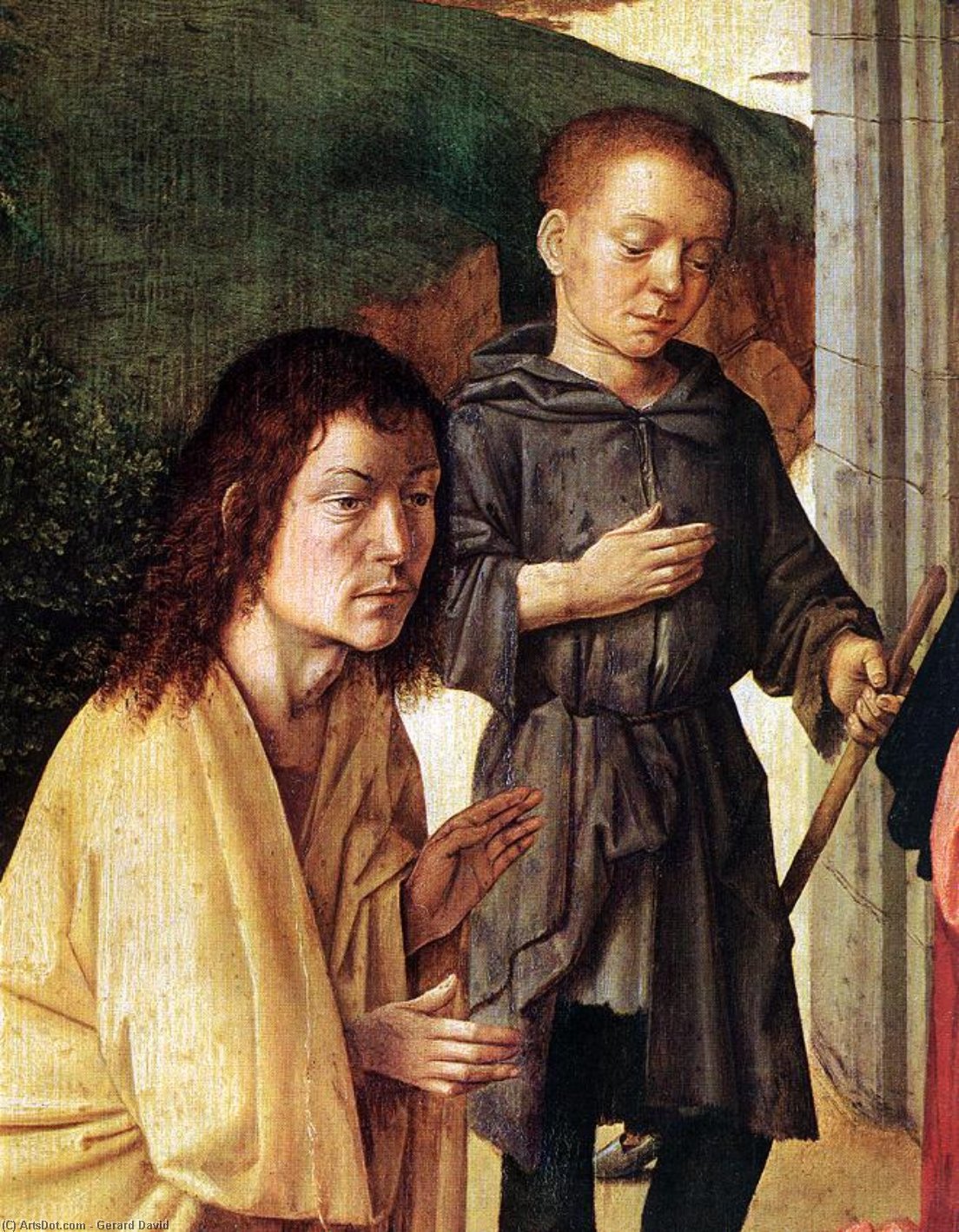
This intricately crafted painting showcases Mary, Joseph, and Jesus amidst a tranquil forest setting, embodying the spiritual essence of Flemish art during the Renaissance.
Discover Gerard David (c. 1460-1523), a Flemish Renaissance master renowned for vibrant colors, detailed religious scenes, and innovative landscapes. Explore his influence on Early Netherlandish painting.
Explore European art history at the Szépművészeti Múzeum in Budapest! Discover ancient Egyptian treasures, Old Masters & modern masterpieces within a stunning palace on Heroes’ Square.
A Moment of Divine Stillness: Exploring Gerard David's Nativity Detail
To gaze upon this detail from Gerard David’s The Nativity is to step across the threshold of time and into a moment suspended by divine grace. This painting, dating back to 1490, is not merely a depiction of a biblical event; it is a profound meditation on humility, divinity, and the quiet miracle of human connection. The composition centers around Mary and Joseph, figures rendered with an exquisite tenderness that speaks volumes of the Northern Renaissance spirit. Notice how the light seems to emanate from within the scene itself, illuminating the gentle interaction between the Holy Family while casting the surrounding elements—like the watchful donkey on the right—into a state of reverent quiet.
Mastery in Flemish Light and Detail
Gerard David was celebrated for his unparalleled ability to capture light, earning him renown as a master of Flemish illumination. In this work, that mastery is breathtakingly apparent. The technique employed showcases the meticulous detail characteristic of early Netherlandish painting; every fold in Mary’s long dress, the subtle gesture of the child standing beside her with clasped hands, and even the texture suggested on the donkey's coat are rendered with painstaking precision. This level of craftsmanship invites the viewer to lean closer, almost whispering secrets gleaned from the pigment itself. It is a testament to the period when painting was elevated to an art form demanding both spiritual devotion and supreme technical virtuosity.
Symbolism Woven into the Scene
The symbolism within this intimate grouping is rich and layered. The presence of Mary, Joseph, and the infant Jesus anchors the narrative in profound religious meaning. Yet, David enriches this core story with surrounding elements—the tranquil forest setting suggested by the background, and the inclusion of animals like the donkey—which ground the divine event within a tangible, earthly reality. These details serve to heighten the emotional resonance, reminding us that miracles often unfold amidst the mundane. The entire scene vibrates with an unspoken sense of awe, inviting contemplation on themes of sacrifice and new beginnings.
Bringing Renaissance Serenity Home
For the collector or designer seeking a piece that transcends mere decoration, this reproduction offers a window into the spiritual depth of the late Quattrocento. Owning a representation of David’s work is to curate an atmosphere of contemplative beauty within your own space. The soft palette and the inherent narrative weight lend themselves beautifully to drawing-room settings, chapels, or any area where moments of quiet reflection are cherished. It is more than art; it is an heirloom piece imbued with centuries of artistic devotion.