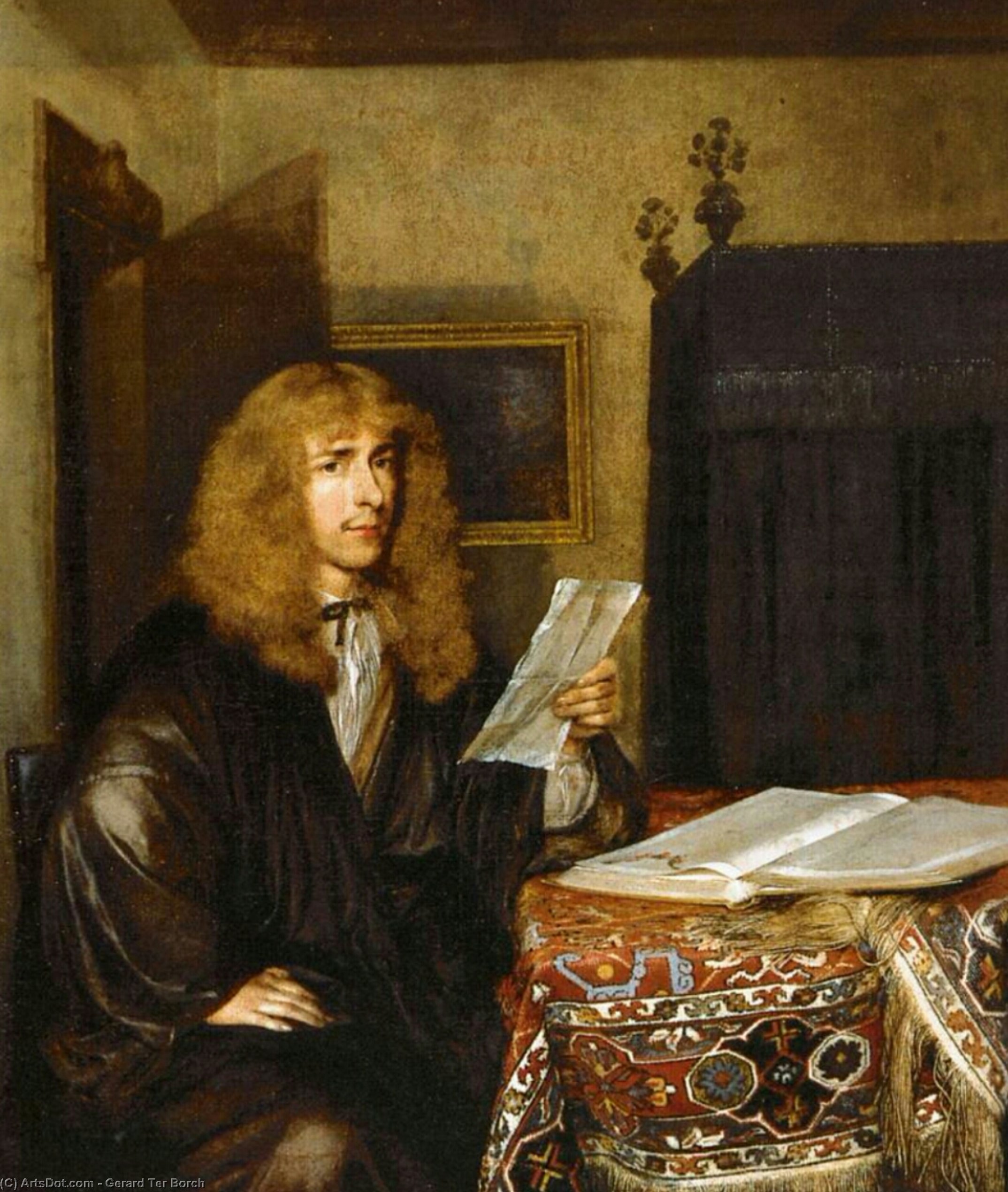
A Quiet Moment of Intellectual Grace
In the hushed atmosphere of a seventeenth-century Dutch interior, Gerard ter Borch captures a moment that transcends the simple act of reading. His 1675 masterpiece, Portrait of a Man Reading, serves as a profound window into the soul of the Dutch Golden Age—an era defined by a burgeoning thirst for knowledge and a newfound appreciation for the dignity found in everyday life. As we gaze upon this figure, seated in contemplative stillness, we are not merely observing a subject; we are invited to share in his solitude. The painting possesses an intimate gravity, pulling the viewer into a private sanctum where the rustle of paper and the soft glow of light are the only companions to thought.
Ter Borch, a master of genre painting, employs a technique that breathes life into the inanimate. Through the sophisticated use of chiaroscuro, he orchestrates a dramatic interplay between shadow and illumination. A single, unseen light source—perhaps a nearby window—sweeps across the canvas, sculpting the man’s features and lending a sculptural weight to his form. This mastery of light does more than create depth; it directs our emotional journey, highlighting the tactile reality of the scene. One can almost feel the heavy weave of the rug beneath the table and the crisp, delicate texture of the documents held in the subject's hands. It is this meticulous attention to materiality that makes a reproduction of this work such a captivating centerpiece for any curated collection.
Symbolism and the Spirit of an Era
Beyond its technical brilliance, the portrait is rich with the symbolic language of the Enlightenment. During the reign of William III, the Dutch Republic was undergoing a cultural metamorphosis, moving toward values of reason, civic virtue, and intellectual rigor. The man’s focused gaze upon his papers is a deliberate emblem of these ideals. He represents the scholar, the merchant, or the official—individuals whose status was defined not just by wealth, but by their engagement with the written word and the pursuit of truth. Every element within the frame, from the architectural stability of the background to the somber, dignified palette of browns, blacks, and muted reds, reinforces this sense of established authority and quiet wisdom.
For the discerning collector or interior designer, this artwork offers much more than mere decoration; it provides an anchor of sophistication. The composition, centered and commanding, lends a sense of balance and permanence to a room. Whether placed in a sunlit study or a moody, contemporary gallery space, the painting’s ability to evoke a sense of history and scholarly prestige is unparalleled. It is a piece that speaks of timelessness, inviting conversation about the enduring human desire to seek meaning within the quiet corners of our own lives.