A Window into Domestic Tranquility: Gerard ter Borch’s “The Letter”
Gerard ter Borch stands as a cornerstone of Dutch Golden Age painting, celebrated for his unparalleled ability to portray the quiet dramas unfolding within ordinary domestic spaces. Unlike many contemporaries who favored grand narratives and mythological subjects, ter Borch focused on capturing fleeting moments of human interaction—scenes imbued with subtle emotion and psychological depth—a characteristic that distinguishes him from other artists of his time.
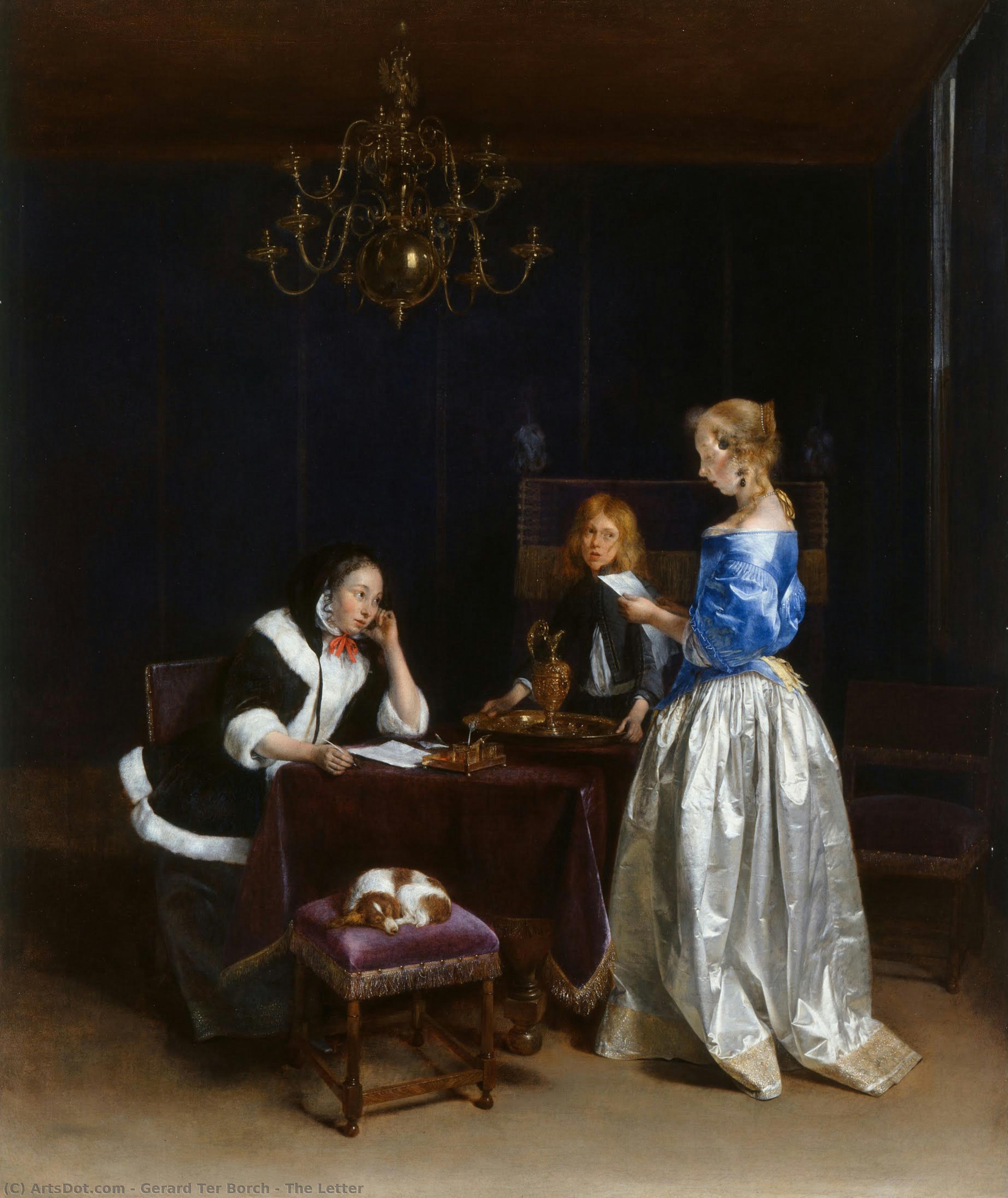
- Subject Matter: “The Letter” depicts a serene tableau within a richly appointed room. At its center is a young woman seated at a table, absorbed in reading; beside her stands another woman gesturing animatedly as she attempts to convey something important to the boy who listens intently.
- Style & Technique: Ter Borch’s distinctive style embodies meticulous realism and masterful execution. He achieved this through painstaking observation of light and texture—a hallmark of Dutch Golden Age art—employing oil paints on canvas with remarkable precision. The artist's brushstrokes are smooth, blending seamlessly to create an illusion of depth and capturing the delicate nuances of fabric folds and illuminated surfaces.
- Historical Context: Painted circa 1660-1665, “The Letter” reflects the intellectual climate of its era, marked by a burgeoning interest in humanist ideals and a fascination with portraying human psychology. Ter Borch’s work aligns perfectly with the broader artistic movement that sought to depict everyday life with unflinching honesty and sensitivity.
Illumination & Shadow: The Dramatic Use of Light
The artwork's most striking feature is its dramatic lighting—a single, unseen source casts deep shadows across the room, emphasizing the textures of velvet upholstery, silk dresses, and a fur trim. This technique isn’t merely decorative; it serves to heighten the emotional impact of the scene, creating an atmosphere of intimacy and contemplation. Ter Borch skillfully manipulates light to sculpt the figures and surfaces, guiding the viewer's eye toward the central interaction.
Symbolism & Emotional Resonance
"The Letter" transcends its depiction of a simple domestic moment, offering a profound meditation on communication and education. The woman’s gesture suggests an attempt to impart knowledge or convey important information—a theme prevalent in Dutch art during this period—while the boy's attentive gaze embodies receptiveness and intellectual curiosity. Ter Borch captures not just what is seen but also what is felt, inviting viewers to ponder the significance of human connection.
A Legacy of Realism & Detail
Gerard ter Borch’s legacy rests upon his unwavering commitment to realism—a pursuit that resulted in canvases brimming with exquisite detail. From the subtle variations in tone to the meticulous rendering of fabric folds and textures, every element contributes to an immersive experience for the viewer. Reproductions of “The Letter” allow collectors and interior designers alike to appreciate the enduring beauty and psychological insight of this iconic masterpiece.