A Quiet Symphony of Light and Intimacy
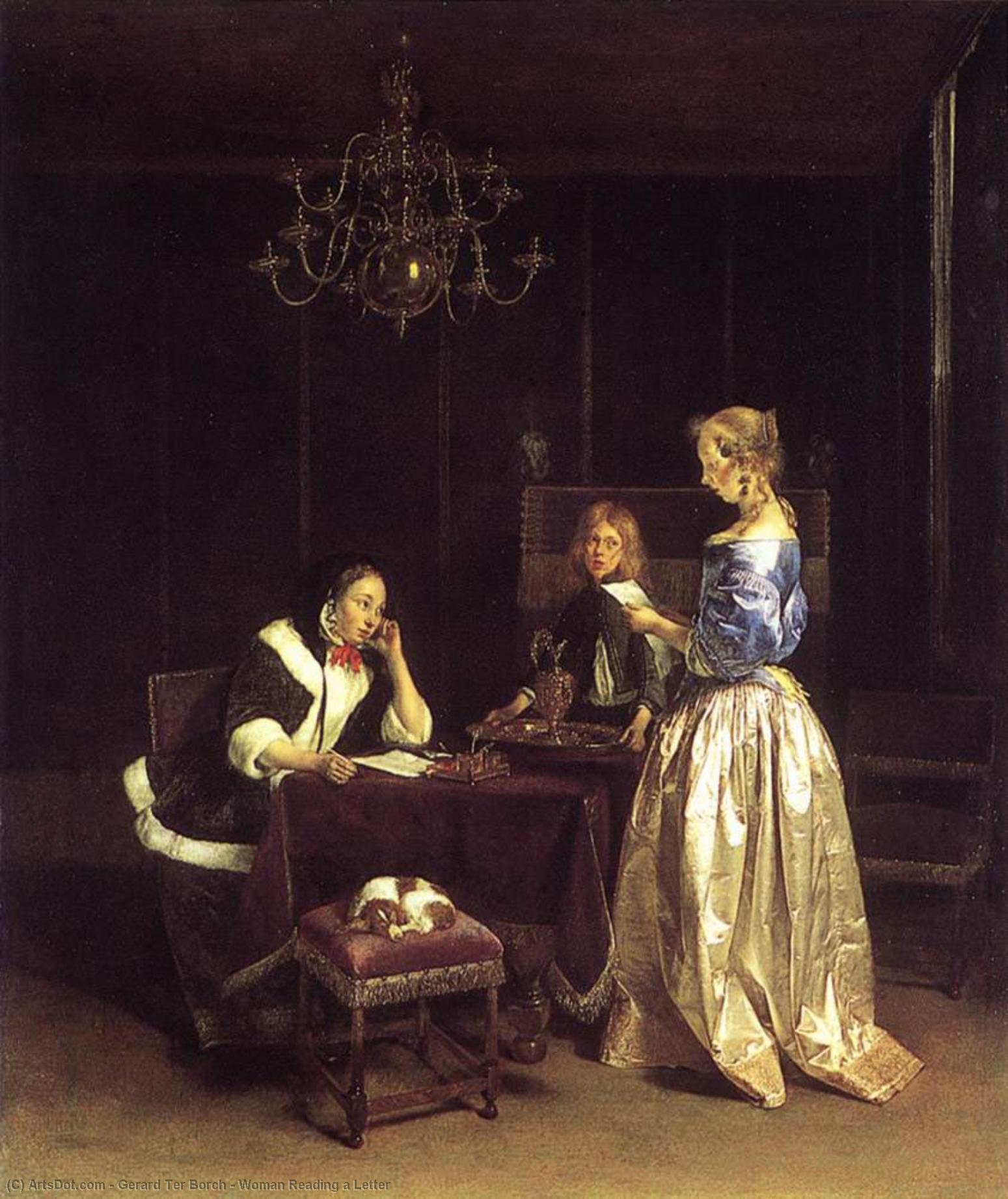
In the heart of the Dutch Golden Age, few artists possessed the ability to transform a mundane domestic moment into a profound psychological study as masterfully as Gerard ter Borch. His 1660 masterpiece, Woman Reading a Letter, serves as an exquisite window into a world of quietude and subtle emotion. The scene unfolds within a richly textured interior, where the air seems heavy with the weight of unspoken words. A woman sits anchored at a table, her focus entirely consumed by the parchment in her hands, while the presence of two men—one reading aloud and another observing from the periphery—creates a delicate tension between shared experience and private contemplation. Even the small dog, resting peacefully upon its stool, contributes to this atmosphere of domestic serenity, grounding the composition in a sense of lived-in reality.
The emotional resonance of the piece lies in its ability to capture the "unseen" elements of human interaction. Ter Borch does not rely on grand gestures or dramatic movements; instead, he finds drama in the stillness. There is a palpable sense of intimacy here, yet it is an intimacy layered with social nuance and perhaps a hint of melancholy. For the collector or the enthusiast of fine art, this painting offers more than mere decoration; it provides a meditative focal point that invites the viewer to slow down and participate in the silent dialogue occurring between the figures on the canvas.
Mastery of Texture and the Dutch Technique
To behold this work is to witness the pinnacle of seventeenth-century oil painting technique. Ter Borch was renowned for his ability to manipulate light and shadow, using a method of meticulous layering and glazing to achieve a luminous depth that feels almost tactile. The way light emanates from an unseen window, washing over the scene in soft, diffused tones, allows the artist to sculpt form with incredible precision. One can almost feel the heavy weight of the fabrics draped over the furniture and the delicate smoothness of the skin, rendered with a realism that was revolutionary for its time.
The color palette is a sophisticated arrangement of muted earth tones—deep browns, creamy whites, and shimmering golds—which lends the artwork a timeless, dignified quality. This restrained use of color ensures that the viewer's eye is drawn to the play of light upon different surfaces, from the crisp edges of the letter to the soft folds of clothing. For interior designers seeking to infuse a space with classical elegance, the tonal harmony of this piece makes it an ideal centerpiece, capable of anchoring a room with its sophisticated and understated grandeur.
A Legacy of Realism and Refined Taste
Historically, Ter Borch’s work represents a pivotal shift in the trajectory of European art. Moving away from the grand religious and mythological narratives that dominated previous eras, he helped pioneer the genre painting movement, which celebrated the beauty of everyday life. By bringing the viewer into the "sanctum of the home," he established a new framework for subject matter that emphasized the inner lives and uncertainties of ordinary people. This focus on the psychological truth of the human condition is what allows Woman Reading a Letter to remain so strikingly modern despite its age.
Owning a high-quality reproduction of such a significant work allows one to bring this piece of history into a contemporary setting. Whether placed in a sunlit study or a formal dining room, the painting acts as a bridge between the meticulous craftsmanship of the Dutch masters and the aesthetic demands of modern luxury. It is an investment in atmosphere, offering a sense of continuity, culture, and a profound appreciation for the quiet beauty found in life's most private moments.