A Symphony of Light and Shadow
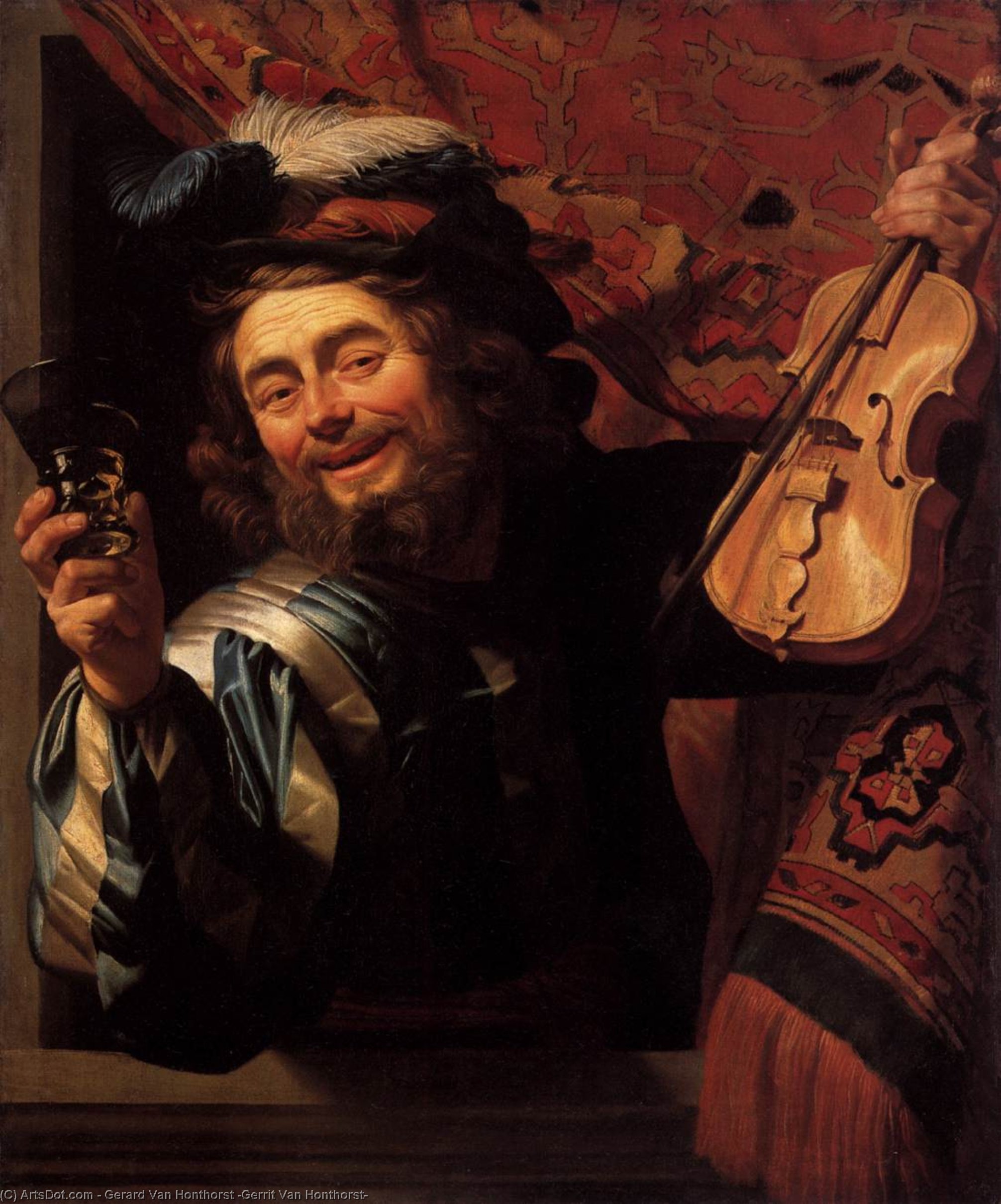
In the heart of the Dutch Golden Age, few artists captured the ephemeral magic of a single moment as profoundly as Gerard van Honthorst. His masterpiece, The Merry Fiddler, serves as a breathtaking window into a world of nocturnal joy and theatrical intensity. Created in 1623, this work is far more than a mere portrait of a musician; it is a masterclass in the dramatic interplay of light and darkness. As the viewer approaches the canvas, they are immediately enveloped by the artist's signature use of tenebrism—a technique heavily influenced by Caravaggio that allows deep, velvety shadows to emerge from the periphery, only to be pierced by sudden, radiant pools of illumination. This deliberate manipulation of light does not simply reveal the subject; it sculptively defines him, pulling the violinist from the gloom and thrusting his exuberant energy into the viewer's space.
The composition centers on a man lost in the passion of his craft, his face alight with a genuine, infectious smile that suggests the music is as much a spiritual release as it is entertainment. Dressed in opulent attire that whispers of Italian sophistication, the musician wears a blue garment accented by shimmering gold trim, a detail that catches the light and adds a layer of tactile luxury to the scene. Flanking him are two observers, their attentive expressions acting as emotional anchors that guide our own gaze toward the center of the musical performance. This arrangement creates a sense of intimacy, making the spectator feel less like an outsider looking in and more like a silent guest seated at the very table where the melody unfolds.
The Legacy of the Utrecht Caravaggisti
To understand the depth of The Merry Fiddler, one must look to the transformative journey Honthorst undertook during his time in Rome. As a prominent member of the Utrecht Caravaggisti, Honthorst absorbed the raw, visceral energy of the Italian Baroque and brought it back to the Netherlands, where he earned the evocative nickname Gherardo delle Notti—Gerard of the Nights. This title reflects his unparalleled ability to depict scenes lit by candlelight or hidden flames, creating an atmosphere that feels both secretive and profoundly human. In this painting, the light source is unseen yet palpable, casting a warm, flickering glow that breathes life into the textures of fabric, skin, and wood.
For the discerning collector or interior designer, this artwork offers much more than historical significance; it provides a powerful emotional anchor for any curated space. The painting’s ability to command attention through contrast makes it an ideal centerpiece for rooms designed for contemplation or sophisticated entertaining. Whether placed in a library filled with classical literature or a modern lounge seeking a touch of Old World grandeur, the piece brings with it a sense of narrative tension and timeless elegance. It is a celebration of life's fleeting, joyful moments, captured forever through the masterful brushstrokes of a man who knew exactly how to make the darkness sing.