A Fragmented Reality: The Genesis of *Abstraktes Bild, 21. Nov. 43*
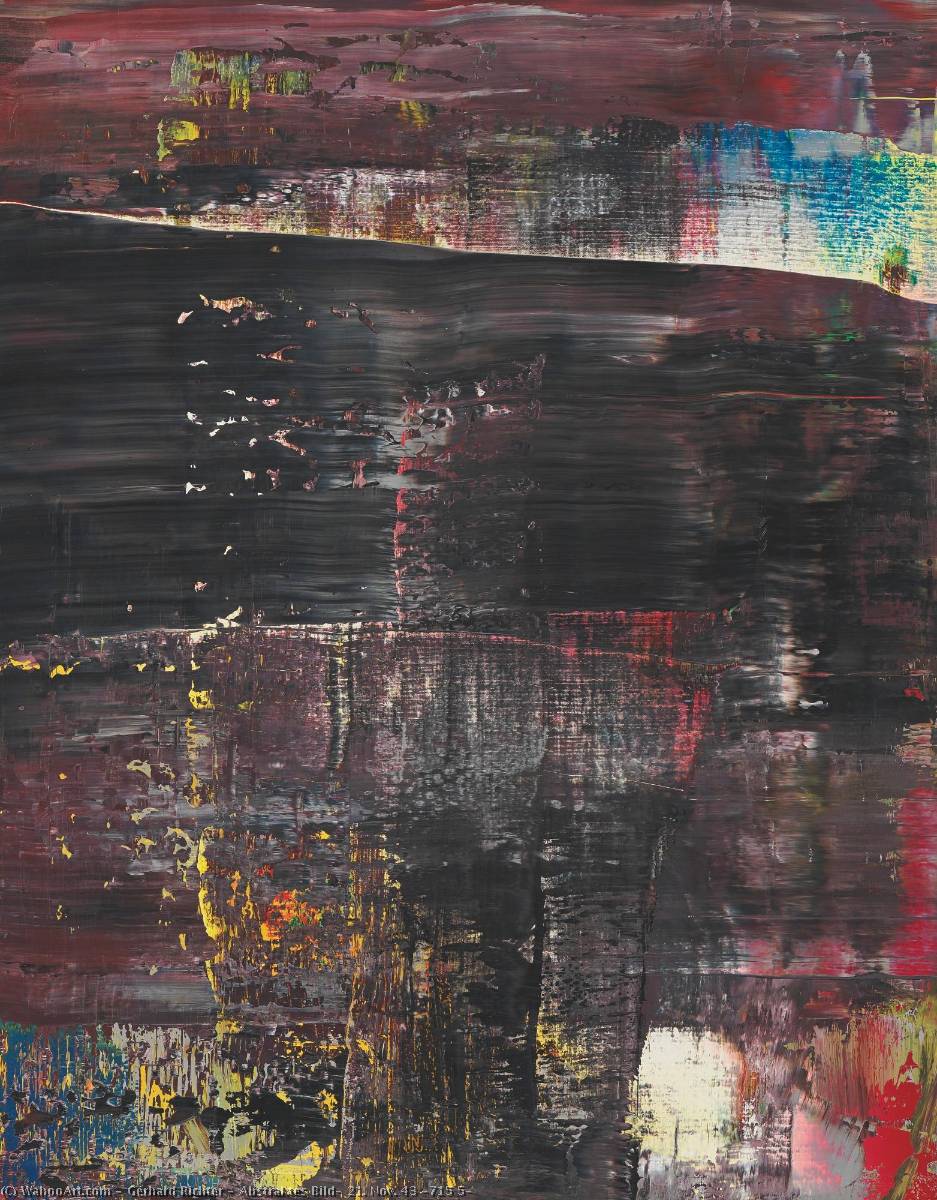
Gerhard Richter’s *Abstraktes Bild, 21. Nov. 43 (715 5)* isn't merely a painting; it’s a distilled echo of a turbulent era and a profound exploration of perception itself. Painted in November 1943, during the height of World War II in Germany, this work embodies the anxieties and uncertainties that permeated Richter’s childhood – a period shaped by displacement, shifting loyalties, and the ever-present shadow of political upheaval. Born in Dresden, his early years were marked by instability, moving between Reichenau and Waltersdorf as the war raged, experiences that instilled within him a deep-seated questioning of reality and a fascination with the blurred edges of memory. This formative period, far from being a backdrop to artistic creation, became inextricably woven into the very fabric of his work, informing his later explorations of abstraction and chance.
Richter’s early training as an advertising and stage-set painter provided him with technical skills that he would later adapt to his own unique style. However, it was his studies at the Dresden Academy of Fine Arts under figures like Will Grohmann that truly shaped his artistic trajectory. The influence of abstract expressionism, particularly the gestural brushwork and emphasis on process, is evident here, though Richter’s approach diverges significantly through his systematic manipulation of color and texture. The painting's creation wasn't a spontaneous burst of inspiration but rather a meticulously controlled, almost scientific, procedure – a deliberate attempt to impose order onto chaos.
Chromatic Fields and the Language of Chance
At first glance, *Abstraktes Bild, 21. Nov. 43* presents a deceptively simple composition: a predominantly black background punctuated by vibrant yellow spots scattered across its surface. Yet, beneath this apparent simplicity lies a complex interplay of color and texture achieved through a remarkably intricate process. Richter employed a technique he termed “layered painting,” meticulously applying thin washes of paint – scarlet, emerald green, gold, lemon yellow, violet, and Prussian blue – to the canvas using a squeegee. This method involved repeatedly scraping off layers of paint, allowing new colors to seep through, creating a dynamic and unpredictable surface.
- The Squeegee Technique: Richter’s use of the squeegee is crucial. It wasn't simply used for applying color; it was employed to disrupt and re-arrange existing layers, introducing an element of chance and control simultaneously.
- Layered Application: The multiple layers create a sense of depth and luminosity, as colors bleed into one another and new hues emerge from beneath the surface.
- Color Harmony & Discord: The juxtaposition of warm and cool tones – the fiery yellows against the deep blues and greens – generates both visual harmony and subtle tension.
Decoding Symbolism and Emotional Resonance
While Richter himself has resisted definitive interpretations, *Abstraktes Bild, 21. Nov. 43* is widely considered to be a reflection of the fragmented nature of memory and experience during wartime. The black background can be seen as representing the darkness and uncertainty of that period, while the yellow spots – reminiscent of sunlight breaking through the clouds – offer glimpses of hope and resilience. The seemingly random placement of these colors suggests a subconscious attempt to impose order on a chaotic world.
Furthermore, the painting’s repetitive process—the scraping, layering, and re-application—mirrors the cyclical nature of trauma and the difficulty of fully confronting painful memories. It's a testament to Richter's ability to distill complex emotions into a visual language that is both abstract and profoundly moving. The work invites viewers to contemplate their own experiences of loss, uncertainty, and the enduring power of memory.
A Reproduction for Your Space – Capturing Richter’s Vision
ArtsDot offers meticulously crafted hand-painted reproductions of *Abstraktes Bild, 21. Nov. 43 (715 5)*, ensuring that you experience the full depth and nuance of this iconic work. Our artists replicate Richter's layered technique with exceptional precision, capturing the subtle shifts in color and texture that define the painting’s unique character. Whether displayed in a contemporary setting or as a statement piece within a classic interior, this reproduction will bring a touch of Richter’s profound artistic vision to your home or office. Explore the original artwork here and discover how you can own a piece of art history.