A Symphony of Gray: Exploring Gerhard Richter’s ‘Colour Streaks’
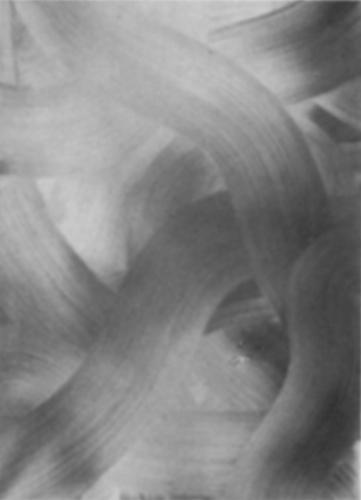
Gerhard Richter's *Colour Streaks*, created in 1968, is a pivotal work from his celebrated series of gray paintings. This piece isn’t about depicting something *from* the world, but rather exploring painting itself – its materiality, process, and potential for emotional resonance. Measuring 60 x 40 cm, it's an intimate yet powerfully evocative abstract composition that embodies Richter’s early rejection of representational imagery in favor of pure visual experience. The work eschews any recognizable subject matter, instead presenting a dynamic field of swirling, layered brushstrokes rendered entirely in shades of gray.
Technique and the Pursuit of ‘Non-Painting’
- Impasto & Gesture: Richter employs a remarkably physical application of paint – an *impasto* technique where thick layers are built up on the canvas. This isn't about delicate blending; it’s about the assertive, almost violent sweep of the brush, creating visible texture and a sense of energetic movement.
- Blurring Boundaries: The artist doesn’t aim for crisp lines or defined shapes. Instead, forms emerge and dissolve within each other, suggesting depth and an ambiguous spatial relationship. This blurring is intentional – Richter was actively seeking to dismantle traditional notions of pictorial space and representation.
- The Squeegee's Influence: While not directly evident in *Colour Streaks*, it’s important to note that around this time, Richter began experimenting with a squeegee to drag paint across the canvas. This technique, which would become central to his later work, shares a similar ethos of disrupting control and embracing chance.
Historical Context: Post-War Germany & Artistic Rebellion
Born in 1932, Richter’s life was deeply shaped by the tumultuous history of post-war Germany. Growing up amidst displacement and political division instilled a skepticism towards grand narratives and established ideologies. *Colour Streaks* reflects this context through its deliberate rejection of traditional artistic conventions. In 1960s Germany, artists were grappling with how to represent – or not represent – a past burdened by trauma and guilt. Richter’s abstract work can be seen as a response to this challenge; it's a refusal to offer easy answers or comforting illusions. He was part of a generation questioning the very foundations of art in a rapidly changing world, influenced by movements like Abstract Expressionism but forging his own unique path.
Emotional Resonance and Interior Design
Despite its monochromatic palette, *Colour Streaks* is far from emotionally sterile. The swirling forms evoke a sense of introspection, perhaps even melancholy, while the dynamic brushwork conveys energy and vitality. Its subdued tones make it incredibly versatile for interior design. It would serve as a striking focal point in a minimalist space, adding depth and texture without overwhelming the room. Alternatively, its grayscale palette complements a wide range of colors and styles, making it an excellent choice for those seeking a sophisticated and timeless piece of art. The painting’s abstract nature encourages viewers to project their own emotions and interpretations onto the work, fostering a personal connection that transcends mere aesthetic appreciation.