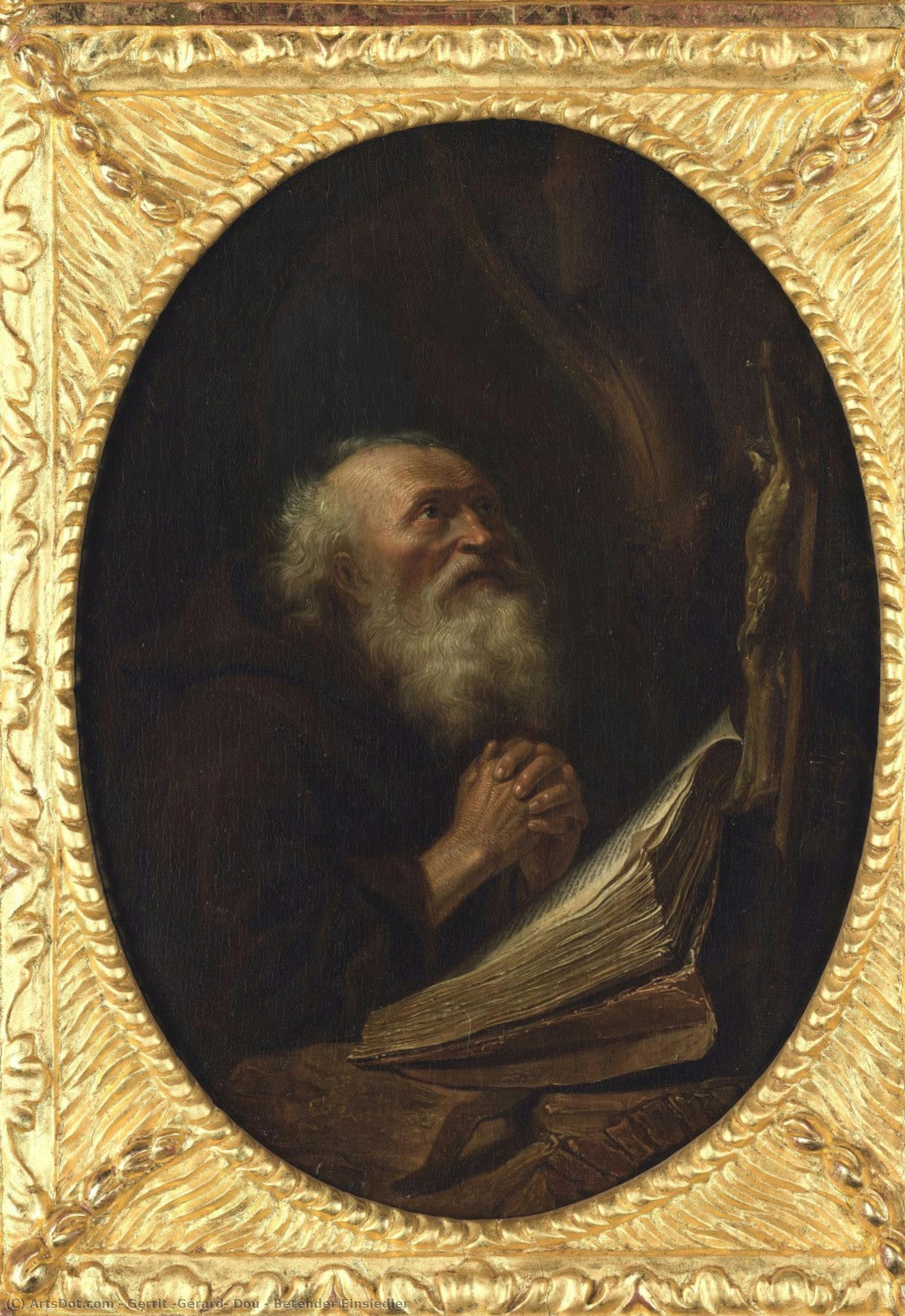
Admire Gerrit Dou's 'Betender Einsiedler,' a masterpiece of Dutch Golden Age painting featuring serene contemplation and exquisite detail. Explore its history, artistic style & find high-quality reproductions at NiceArtGallery.
Explore the exquisite Dutch Golden Age paintings of Gerrit (Gérard) Dou (1613-1675). Known for his meticulous 'fijnschilder' style, genre scenes, and masterful use of light in candlelit interiors. Discover his legacy & works!
Step back to the 18th century at the Picture Gallery Sanssouci! Explore masterpieces by Caravaggio & Rubens in Europe’s oldest royal museum, a stunning Baroque experience.
A Moment of Contemplation: Gerard Dou’s “Betender Einsiedler”
The painting "Betender Einsiedler" (Praying Hermit), executed by Gerrit Dou around 1670, stands as a testament to the meticulous artistry and psychological depth characteristic of the Leiden School during the Dutch Golden Age. Acquired by Friedrich II for the Staatliche Bildergalerie in Berlin shortly after his return from a voyage to Holland, this diminutive masterpiece exemplifies Dou’s signature style – a breathtaking blend of realism and illusionistic technique that continues to fascinate viewers centuries later.
Style and Technique: Mastery of Chiaroscuro
Dou's approach distinguishes itself through an unparalleled command of chiaroscuro, the dramatic interplay between light and shadow. Unlike many contemporaries who favored brighter palettes, Dou skillfully employs subtle gradations of tone to sculpt the figure of the hermit and imbue the scene with a palpable sense of intimacy. The artist’s painstaking attention to detail is evident in every aspect of the composition: from the delicately rendered folds of the hermit's robe to the meticulously crafted texture of his skin and hair, mirroring the effects of candlelight. This technique wasn’t merely decorative; it served as a crucial tool for conveying emotion and creating an illusion of depth that transcends its small size.
Historical Context: The Enlightenment Spirit
The painting emerged during a period marked by intellectual ferment – the Enlightenment – where artists sought to capture human experience with unprecedented accuracy. Friedrich II's fascination with northern European art, particularly Dou’s work alongside Gerrit Braamkamps and others, underscores this broader cultural preoccupation with observation and psychological realism. The Staatliche Bildergalerie itself was conceived as a space for showcasing exceptional artworks, reflecting the aristocratic patronage that fueled artistic innovation during the era.
Symbolism: Inner Reflection and Spiritual Seeking
Beyond its technical brilliance, “Betender Einsiedler” resonates with profound symbolic significance. The hermit’s posture – bowed in prayer before a crucifix – embodies the humanist ideals of piety and contemplation prevalent at the time. The book held by the figure represents intellectual pursuit and spiritual reflection, mirroring the Enlightenment's emphasis on reason alongside faith. Furthermore, the inclusion of a clock subtly reminds us of the passage of time and invites viewers to contemplate mortality—a theme frequently explored in Baroque art but skillfully understated here.
Emotional Impact: A Window into Human Consciousness
Ultimately, Dou’s masterpiece succeeds in transporting the viewer into the contemplative heart of its subject. The painting captures not just a visual likeness but also an emotional state – quiet devotion and profound introspection. Its muted color palette—primarily whites and browns—enhances this sense of serenity, creating a space for reflection and contemplation. Reproductions of “Betender Einsiedler” offer collectors and interior designers alike the opportunity to bring this evocative image into their homes, celebrating Dou’s enduring legacy as one of the most accomplished painters of his generation.