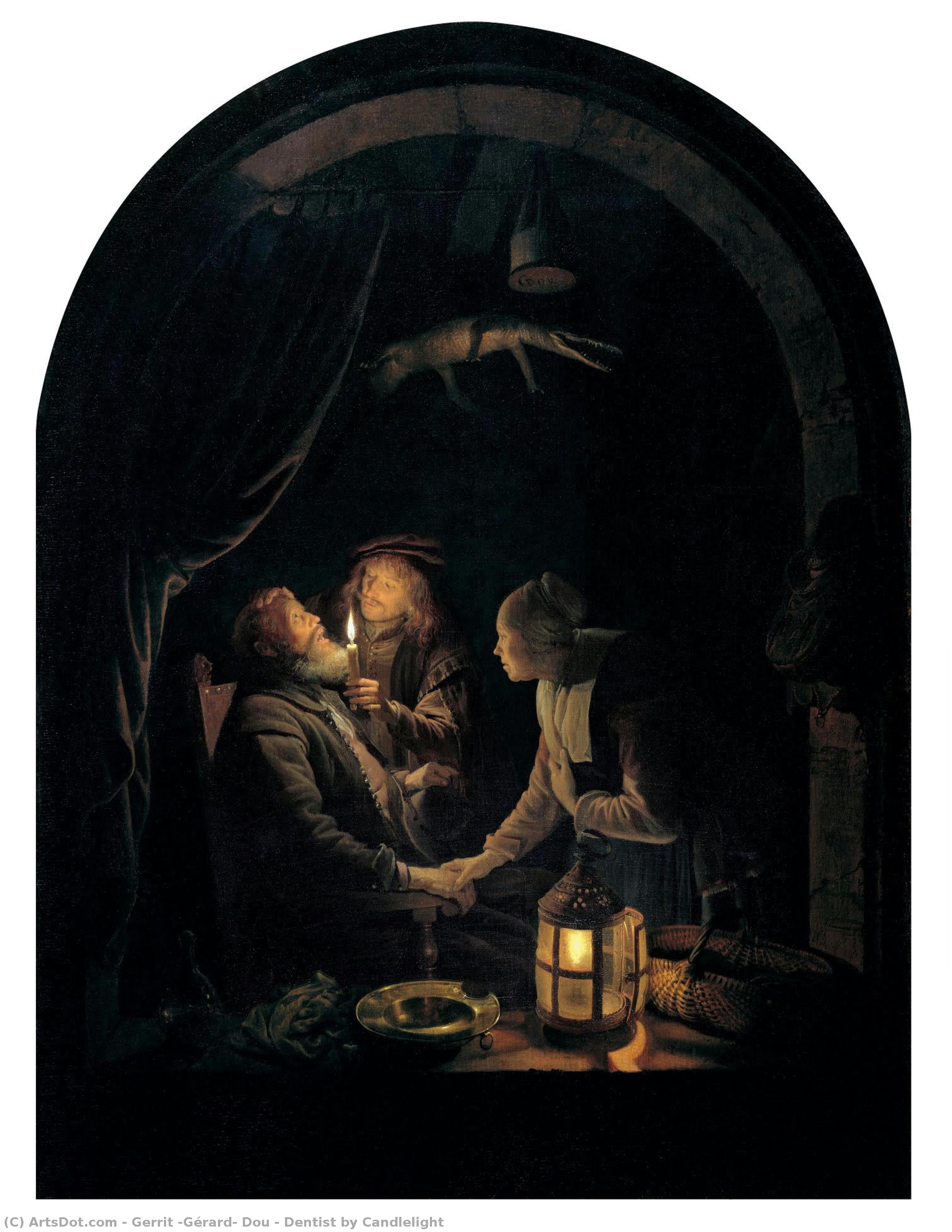
Experience Gerrit Dou's masterful depiction of a dentist's office illuminated by candlelight – a captivating fijnschilders masterpiece showcasing meticulous detail and emotional nuance.
Explore the exquisite Dutch Golden Age paintings of Gerrit (Gérard) Dou (1613-1675). Known for his meticulous 'fijnschilder' style, genre scenes, and masterful use of light in candlelit interiors. Discover his legacy & works!
Kimbell Art Museum
(Fort Worth, United States of America)
Discover the Kimbell Art Museum's stunning architecture & world-class European art collection. Explore masterpieces by Rembrandt, El Greco & more in Fort Worth’s Cultural District.
A Masterpiece Illuminated: Gerrit Dou’s Dentist by Candlelight
Gerrit Dou, born in Leiden in 1613 and deceased in 1675, stands as a titan amongst the Dutch Golden Age painters—a figure whose meticulous artistry continues to resonate with collectors and art historians alike. His contribution to the fijnschilders (“fine painters”) movement cemented his reputation for unparalleled detail and luminous surfaces, resulting in works that transcend mere representation and delve into profound psychological observation. “Dentist by Candlelight,” completed around 1660, exemplifies Dou’s genius, offering a captivating glimpse into both artistic prowess and the anxieties inherent within everyday life.
The Scene Unfolds: Composition and Technique
Dou's masterful composition centers on a dimly lit room where a dentist attends to a seated patient. The architectural setting—a simple arched doorway—draws the viewer’s gaze towards the central drama, while a concerned onlooker occupies the left side of the canvas. This careful arrangement creates an atmosphere of claustrophobia, mirroring the vulnerability experienced by both figures under the watchful eye of candlelight. Dou's technique is characterized by painstaking layering of thin glazes – a hallmark of fijnschilders – achieving remarkable tonal variation and luminosity. The artist’s dedication to capturing subtle textures—the rough fabric of clothing, the smooth skin tones—is evident throughout, mirroring Rembrandt’s influence without eclipsing Dou’s distinctive vision.
Historical Context and Symbolism
The painting captures a commonplace profession of the seventeenth century: dentistry. However, Dou elevates this subject beyond mere documentation, embedding it within a rich tapestry of symbolism. The inclusion of the crocodile—a frequent motif in barber-surgeon iconography—represents the trade itself, highlighting its perceived dangers and demanding precision. More powerfully, the patient’s upward gaze towards the suspended crocodile embodies fear and apprehension – an emotion skillfully conveyed through Dou's masterful use of chiaroscuro lighting. This dramatic interplay between light and shadow amplifies the psychological tension within the scene, inviting contemplation on themes of vulnerability and professional responsibility.
Emotional Resonance: Light, Gesture, and Psychological Depth
Dou’s artistic brilliance lies in his ability to infuse his paintings with emotional depth. The dentist's focused demeanor contrasts sharply with the patient’s anxious expression, creating a compelling visual narrative that speaks to the human condition. Candlelight casts an ethereal glow upon certain surfaces, emphasizing key elements like the dentist’s face and highlighting the subtle nuances of emotion. This deliberate manipulation of light serves not only as a technical accomplishment but also as a conduit for conveying profound psychological insight—a testament to Dou's enduring legacy as one of the most perceptive artists of his era.
A Legacy Endured: Dou’s Influence and Recognition
Ole Borch, a Danish scholar visiting Dou’s studio in 1662, famously declared him “unequaled in the Netherlands and even in all other countries in the world.” This accolade underscores Dou's unparalleled reputation during his lifetime and confirms his place among the artistic titans of the Golden Age. His meticulous attention to detail and luminous surfaces continue to inspire artists today, securing his enduring influence on subsequent generations of painters—a remarkable achievement for an artist who honed his craft with unwavering dedication.