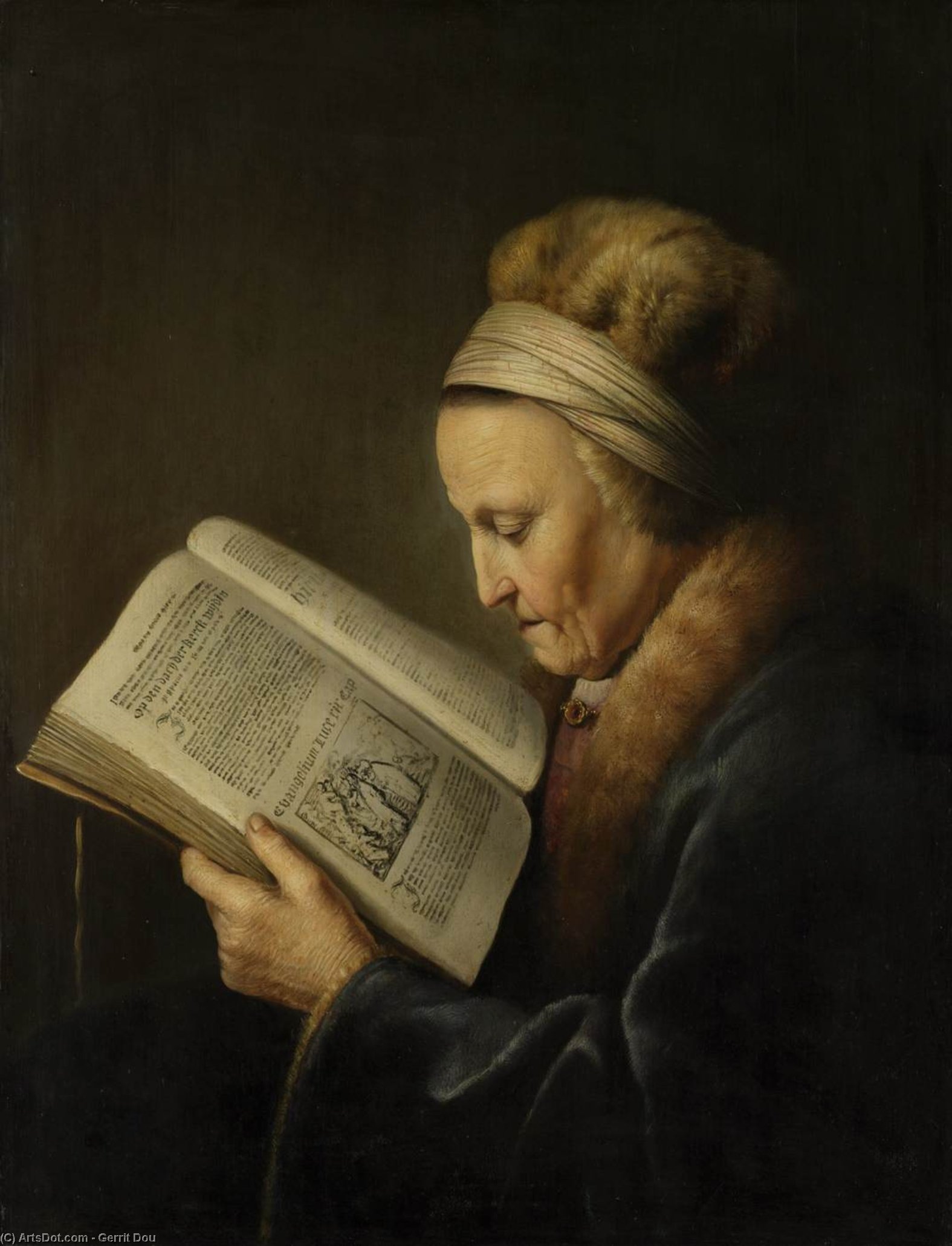
Admire Gerrit Dou’s ‘Old Woman Reading a Bible,’ a stunning Baroque portrait of quiet contemplation. Explore this 1630 masterpiece's rich details & symbolism.
Explore the exquisite Dutch Golden Age paintings of Gerrit (Gérard) Dou (1613-1675). Known for his meticulous 'fijnschilder' style, genre scenes, and masterful use of light in candlelit interiors. Discover his legacy & works!
Rijksmuseum
(Amsterdam, Netherlands)
Explore Dutch art & history at the Rijksmuseum Amsterdam! Marvel at Rembrandt, Vermeer & Van Gogh masterpieces in an iconic landmark – a journey through 800 years of culture.
A Portrait of Faith Illuminated: Gerrit Dou’s ‘Old Woman Reading a Bible’
Gerrit Dou's “Old Woman Reading a Bible,” painted circa 1630, stands as a testament to the Dutch Golden Age’s fascination with realism and psychological depth—a captivating glimpse into the contemplative spirit of its time. This remarkable Baroque portrait transcends mere depiction; it embodies a profound exploration of faith, wisdom, and the quiet dignity inherent in aging. Dou's meticulous attention to detail elevates this seemingly simple subject matter into an enduring masterpiece.
The Artistry Behind the Image: Technique and Style
Dou’s signature style—often termed ‘fijnschilder,’ or fine painting—is immediately apparent. Unlike many of his contemporaries who favored bold brushstrokes and dramatic color palettes, Dou achieved unparalleled luminosity through masterful chiaroscuro. This technique skillfully manipulates light and shadow to sculpt the woman's face and hands, creating an illusionistic depth that draws the viewer into the scene. The artist employed oil paints on canvas with painstaking precision, blending colors seamlessly and layering textures to convey a remarkable sense of materiality. Notice particularly the subtle folds in her shawl and the delicately rendered skin—evidence of Dou’s dedication to capturing the nuances of human form. Lines are used strategically to define contours and enhance visual impact, mirroring the meticulous craftsmanship characteristic of his oeuvre.
Historical Context: The Leiden School and Dutch Portraiture
“Old Woman Reading a Bible” belongs to the Leiden School, a group of artists who flourished in Leiden during Dou’s lifetime—a period marked by intellectual ferment and artistic innovation. This school championed naturalism alongside psychological realism, rejecting idealized representations in favor of portraying subjects with honesty and sensitivity. Gerrit Dou's work aligns perfectly with the broader trend of Dutch portraiture during this era, which sought to capture not just physical likeness but also inner character and moral virtue. The painting reflects the humanist values prevalent at the time—a belief in reason, observation, and the importance of individual experience—values that profoundly influenced artistic expression.
Symbolism: Faith, Wisdom, and Time’s Passage
The woman reading the Bible is laden with symbolic significance. The book represents knowledge, divine wisdom, and spiritual contemplation – concepts central to Protestant beliefs during the Reformation. Her posture conveys serenity and introspection, suggesting a life lived in accordance with moral principles. Furthermore, her age serves as a reminder of time's passage and the accumulation of experience—themes frequently explored in Baroque art. Dou’s depiction subtly communicates an appreciation for inner peace and spiritual devotion amidst the complexities of human existence.
Emotional Resonance: Quiet Contemplation and Timeless Beauty
“Old Woman Reading a Bible” evokes a powerful emotional response – one of quiet contemplation and profound beauty. The subdued lighting casts gentle shadows, fostering a sense of intimacy and inviting viewers to engage in their own reflections on faith and wisdom. Dou’s masterful rendering captures the essence of human dignity and resilience—a timeless image that continues to inspire admiration for its artistic excellence and intellectual depth. It's a piece that speaks volumes without uttering a word, securing its place as an iconic representation of Baroque artistry.