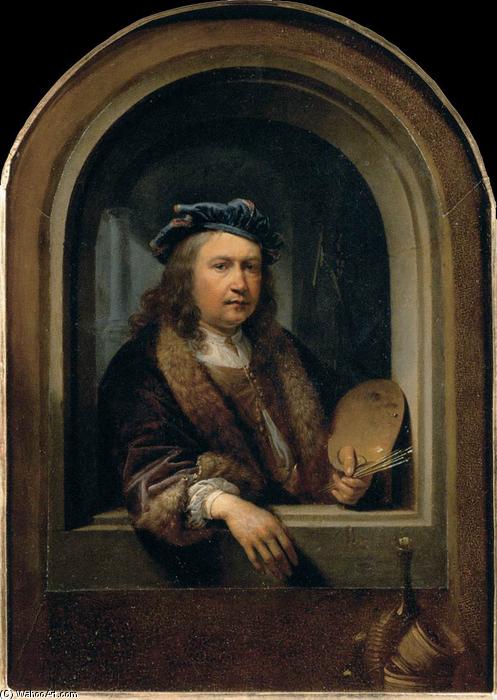
Gerrit Dou’s ‘Self-Portrait with a Palette’ (1660) – a Baroque masterpiece! Dramatic chiaroscuro, rich textures & introspective mood. Explore this Dutch Golden Age gem.
Explore the exquisite Dutch Golden Age paintings of Gerrit (Gérard) Dou (1613-1675). Known for his meticulous 'fijnschilder' style, genre scenes, and masterful use of light in candlelit interiors. Discover his legacy & works!
Explore the Louvre Museum in Paris! Home to iconic masterpieces like the Mona Lisa & Venus de Milo, journey through art history from ancient Egypt to Renaissance icons. Plan your visit today!
A Window Into Soul: Gerrit Dou’s ‘Self-Portrait with Palette’
The Dutch Golden Age witnessed an explosion of artistic innovation, fueled by burgeoning commerce and intellectual curiosity. Among the luminaries of this era stood Gerrit Dou (1613 – 1675), a painter whose meticulous technique and profound psychological insight cemented his place as one of Rembrandt van Rijn's most astute disciples. His masterpiece, ‘Self-Portrait with Palette,’ transcends mere representation; it’s an immersive experience into the artist’s inner world—a testament to Dou’s unparalleled ability to convey emotion through subtle visual cues.
The Style and Technique: Baroque Precision
Dou’s artistic vision firmly rooted in the Baroque style demanded a level of detail rarely achieved by his contemporaries. Unlike Rembrandt's looser brushstrokes, Dou employed a painstakingly controlled method – ‘grisaille,’ or monochrome painting – utilizing thin layers of oil paint to build up tonal gradations with astonishing accuracy. This technique wasn’t simply about achieving realism; it served as a crucial tool for exploring the complexities of human emotion. The artist deliberately subdued color, prioritizing light and shadow to sculpt form and imbue the portrait with an aura of contemplative seriousness. Notice how Dou skillfully manipulates chiaroscuro—the dramatic interplay between light and dark—to highlight the face and hands, drawing the viewer’s gaze inward toward the subject's gaze. This masterful use of light isn’t merely decorative; it symbolizes enlightenment and introspection, mirroring the artist’s own quest for understanding.
Historical Context: Leiden’s Artistic Renaissance
Painted around 1660, ‘Self-Portrait with Palette’ emerged during Leiden’s artistic renaissance—a period marked by a flourishing intellectual climate and a renewed interest in classical ideals. Dou belonged to the Leiden fijnschilders – a group of artists who championed refined aesthetics and sought to elevate painting beyond mere depiction. Influenced by Rembrandt's groundbreaking explorations of light and emotion, Dou pushed the boundaries of Baroque art, striving for an unprecedented level of psychological realism. The artist’s decision to depict himself within an arched window frame wasn’t accidental; it reflects the broader artistic preoccupation with architectural grandeur and symbolic depth prevalent during the era.
Symbolism: Light, Shadow, and Artistic Identity
The composition itself is laden with symbolism. The arched window serves as a visual metaphor for contemplation and transcendence—a gateway to inner reflection. The palette held by Dou represents his creative vocation, embodying both intellect and artistic endeavor. More profoundly, the subdued color palette underscores the artist’s emotional state – conveying a sense of quiet dignity and melancholic introspection. Rembrandt's influence is palpable in Dou’s portrayal of the human figure; he captures not just physical likeness but also psychological nuance—a feat achieved through meticulous observation and masterful execution. The fur collar adds an element of aristocratic formality, hinting at Dou’s social standing and reinforcing the portrait’s solemn character.
Emotional Impact: A Portrait of Inner Reflection
Ultimately, ‘Self-Portrait with Palette’ succeeds in capturing a moment of profound psychological depth—a glimpse into the artist's soul. It invites viewers to contemplate themes of artistic dedication, self-awareness, and perhaps even loneliness. Dou’s achievement lies not merely in replicating reality but in transforming it into an emotionally resonant experience. Like Rembrandt before him, he understood that art could illuminate the human condition, prompting contemplation and fostering empathy. This enduring masterpiece continues to inspire artists and collectors alike—a testament to Gerrit Dou's genius and his unwavering commitment to artistic excellence.