A Quiet Moment in Delft: Gerrit Dou’s “Untitled (AQQJ9Q)”
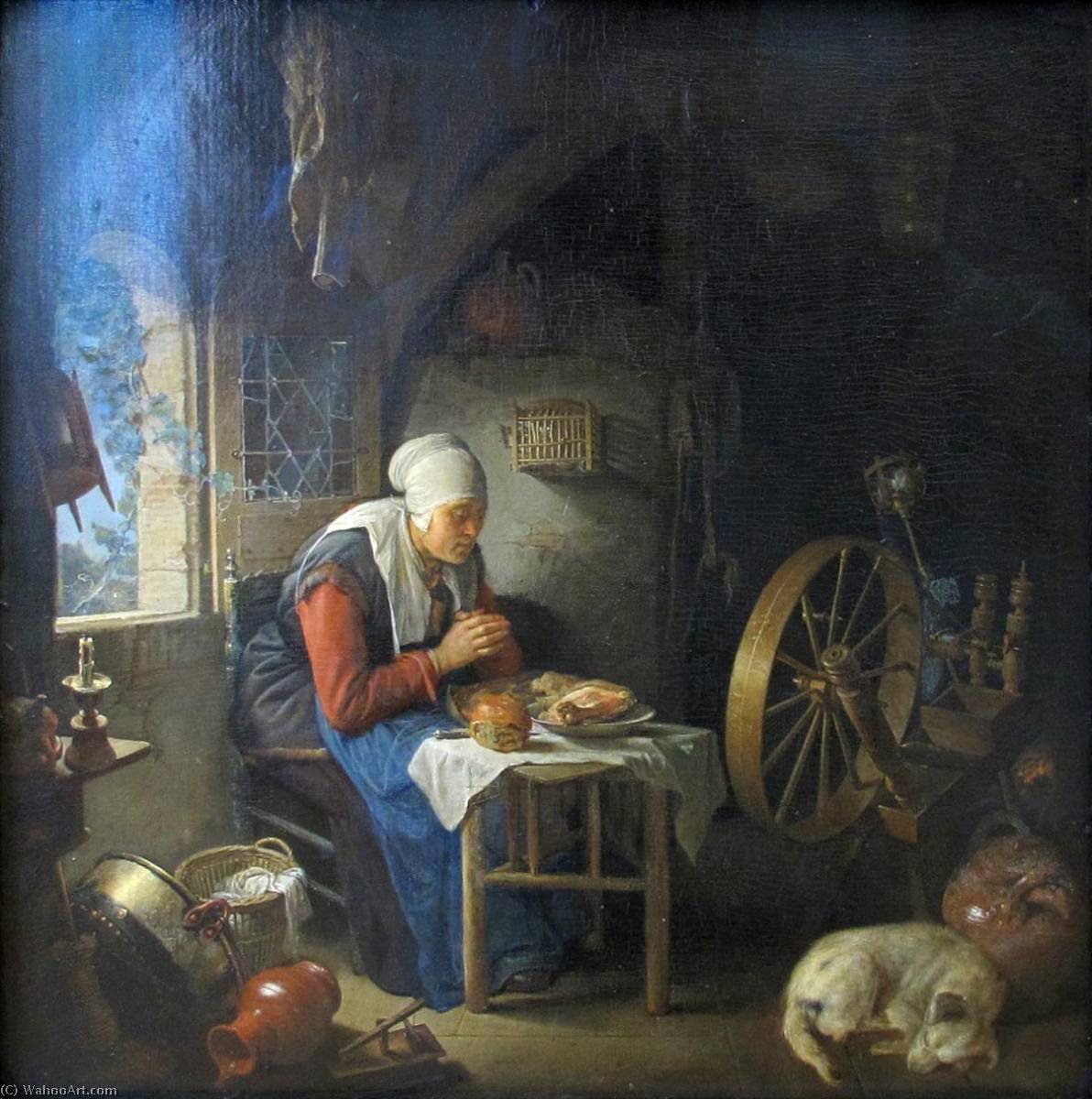
Gerrit Dou's "Untitled (AQQJ9Q)," a captivating work emerging from the heart of the Dutch Golden Age, isn’t merely a depiction of a domestic scene; it’s an invitation into a world of quiet contemplation and subtle grace. Painted around 1650, this small-scale masterpiece exemplifies Dou's signature “fijnschilder” style – a meticulous approach that elevates everyday life to the realm of profound observation. The painting centers on an elderly woman seated at a humble table, bathed in the warm glow of candlelight, seemingly preparing for or reflecting upon a simple meal. It’s a scene brimming with understated dignity and a poignant sense of timelessness, instantly transporting the viewer to a bygone era.
Dou's genius lies not just in his technical skill – though it is undeniably remarkable – but in his ability to imbue ordinary subjects with extraordinary depth. The composition is remarkably tight, drawing our attention immediately to the woman’s face and hands, rendered with an almost photographic realism. A window on the left acts as a portal, offering glimpses of a distant landscape—a subtle reminder of the world beyond this intimate space. Around her, carefully arranged objects – a spinning wheel, a simple pottery bowl holding food, a watchful dog – contribute to a narrative that speaks volumes about rural life and domesticity. The inclusion of these details isn’t haphazard; each element is deliberately placed to enrich the scene's symbolic weight.
The Language of Light and Shadow
Central to understanding Dou’s work is his masterful manipulation of light and shadow, a technique known as *chiaroscuro*. The painting is dominated by a dramatic interplay between illumination and darkness. A single candle, positioned strategically on the table, casts a warm, golden glow upon the woman's face and hands, highlighting their wrinkles and suggesting a lifetime of experience. The surrounding areas remain shrouded in shadow, creating a sense of mystery and intimacy. This contrast isn’t simply aesthetic; it serves to emphasize the woman’s presence and draw our attention to her inner world. The light itself feels almost tangible—a warm embrace that invites us into her quiet moment.
Dou's technique is characterized by layers of translucent glazes, meticulously applied to build up color and texture. He employed a unique method – using a concave lens and convex mirror – to achieve an unparalleled level of detail and accuracy in his rendering of surfaces. The fabric of the woman’s clothing appears soft and slightly wrinkled, while the wooden table and spinning wheel possess a tactile quality that invites us to reach out and touch them. The artist's brushstrokes are visible yet skillfully blended, creating a smooth surface that reflects light with remarkable brilliance. This painstaking attention to detail is what distinguishes Dou’s work from more generalized depictions of genre scenes.
Symbolism and the Essence of Dutch Piety
Beyond its technical brilliance, “Untitled (AQQJ9Q)” resonates with profound symbolic meaning. The woman's posture – seated at a table, hands clasped in prayer or gratitude – speaks to a deep sense of piety and humility. The simple meal she is preparing suggests contentment and an appreciation for the bounty of life. The presence of the dog, often associated with loyalty and companionship, further reinforces this theme of domestic harmony. These elements combine to create a scene that embodies the core values of Dutch society during the Golden Age – faith, family, and hard work.
Furthermore, the painting reflects the broader cultural context of the time, particularly the “paragone” debate—the ongoing discussion about which art form best represented nature: painting, sculpture, or poetry. Dou’s meticulous realism and his ability to capture fleeting moments of human emotion aligned with the pursuit of truth through observation, a central tenet of this artistic discourse. The scene evokes a sense of peace, tranquility, and perhaps even a touch of melancholy—a quiet reflection on the passage of time and the enduring beauty of simple things.
A Timeless Masterpiece
“Untitled (AQQJ9Q)” is more than just a painting; it’s a window into the soul of 17th-century Holland. Gerrit Dou's masterful technique, combined with his profound understanding of human nature and symbolism, has created a work that continues to captivate viewers centuries later. Reproductions of this piece offer an exceptional opportunity to bring this moment of quiet contemplation into your own home, allowing you to experience the enduring beauty and wisdom of one of the Dutch Golden Age’s greatest artists.