A Moment Frozen in Time: Gerrit Dou’s “Woman Pouring Water into a Jar”
Gerrit Dou's "Woman Pouring Water into a Jar," painted circa 1640, isn’t merely a depiction of domestic activity; it’s a masterclass in observation and the subtle art of capturing fleeting moments. This intimate genre scene, housed within the Louvre’s collection, offers a glimpse into the quiet rhythms of daily life during the Dutch Golden Age – a period renowned for its artistic innovation and profound engagement with the world around it. Dou, a key figure within the Leiden “fijnschilders” (fine painters), eschewed the grand narratives favored by some contemporaries, instead focusing on the nuanced details of ordinary subjects, elevating them to levels of exquisite beauty and psychological depth.
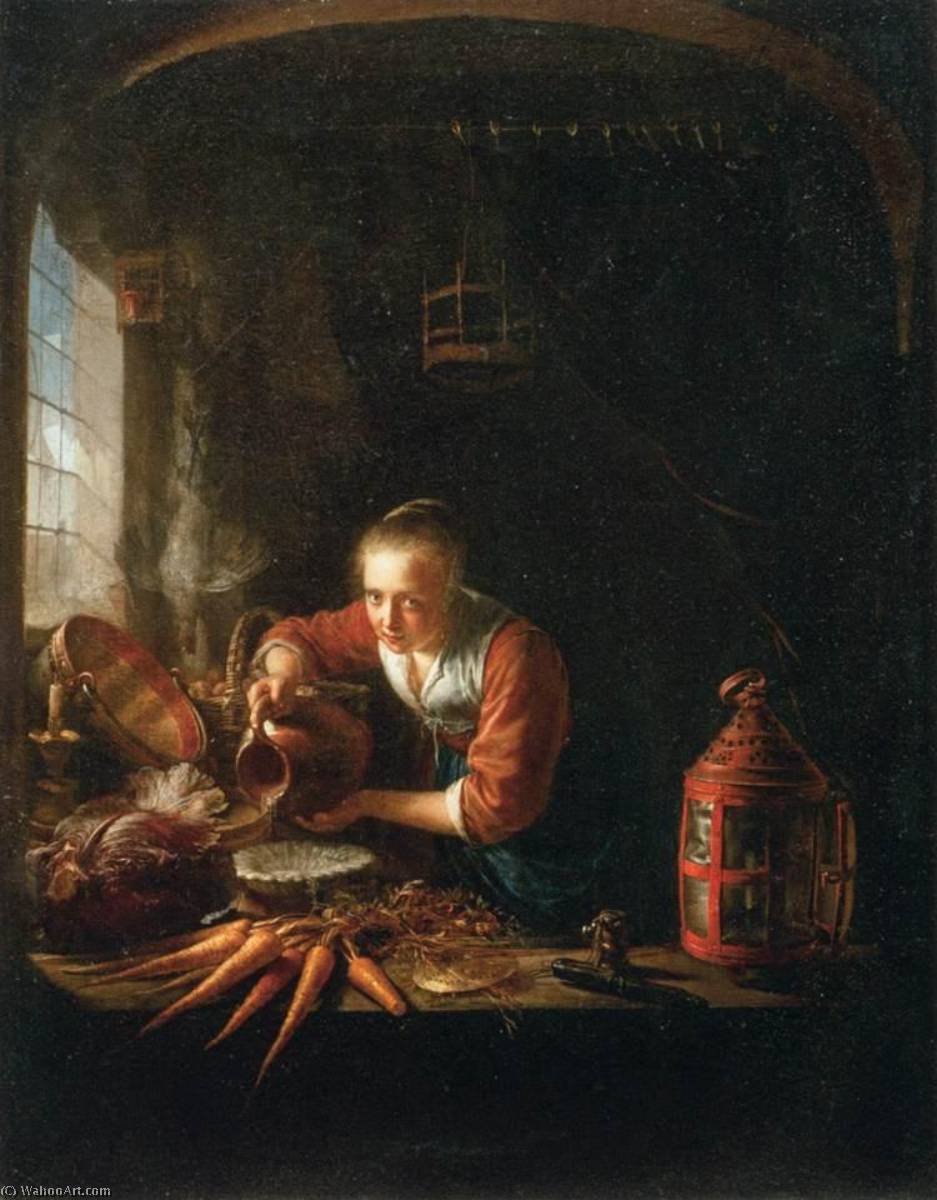
The painting immediately draws the eye to the central figure – a woman, her face partially obscured by shadow, engaged in the seemingly simple act of pouring water from a pitcher into a jar. Yet, Dou transforms this commonplace task into something profoundly captivating. The light, masterfully rendered through his signature use of *chiaroscuro* (the dramatic contrast between light and dark), is not merely illuminating; it’s actively shaping our perception. Notice how the light pools around the woman's hands, emphasizing their delicate movements and the glistening surface of the water. This careful manipulation of light creates a sense of intimacy, drawing us into her private world.
Beyond the immediate subject matter, “Woman Pouring Water into a Jar” is rich in symbolic resonance. The act of pouring itself can be interpreted as a metaphor for generosity and hospitality – offering sustenance and refreshment to others. The presence of the bowl and cups suggests an invitation to share, while the carrot, placed deliberately on the lower left corner, adds a touch of rustic charm and hints at the bounty of the harvest. Dou’s meticulous attention to detail extends beyond the figures themselves; observe the texture of the wooden table, the sheen of the pitcher, and the subtle reflections in the jar – each element contributes to the painting's overall sense of realism and depth.
The Art of the *Fijnschilder*
Dou’s artistic approach aligns perfectly with the principles of the *fijnschilders*, a group of Dutch painters who distinguished themselves through their painstaking attention to detail, refined techniques, and ability to create remarkably lifelike images. Unlike many of his contemporaries who favored bold brushstrokes and vibrant colors, Dou employed a technique characterized by incredibly fine lines and subtle gradations of tone. This meticulous approach required immense patience and skill – he was reportedly known to spend days perfecting the rendering of a single hand or eyelash.
His studio practices were equally innovative. Legend has it that Dou utilized a combination of lenses and mirrors to achieve unparalleled accuracy in his depictions of light and shadow, meticulously studying his subjects from multiple angles. This dedication to realism extended beyond mere imitation; Dou sought to capture the *essence* of his subjects – their personalities, emotions, and inner lives. The painting’s stillness is deceptive; it feels as though we are witnessing a private moment, frozen in time, yet brimming with unspoken narratives.
A Window into 17th-Century Dutch Life
“Woman Pouring Water into a Jar” offers a valuable window into the daily lives of ordinary people during the Dutch Golden Age. The painting reflects the prosperity and cultural flourishing of the period – a time when art was not solely reserved for the wealthy elite but enjoyed by a wider segment of society. The scene is remarkably unostentatious, yet it speaks volumes about the values and customs of the time: the importance of hospitality, the appreciation for beauty in everyday objects, and the quiet dignity of domestic life.
Furthermore, the painting’s composition—the carefully arranged objects, the subdued lighting, and the intimate setting—echoes the *niche* paintings that were popular during this era. These small-scale works, often depicting scenes within enclosed spaces like cabinets or alcoves, served as decorative elements in wealthy homes, showcasing the owner's taste and refinement. Dou’s painting exemplifies this trend, offering a glimpse into the carefully curated interiors of 17th-century Dutch households.
Collecting a Masterpiece: Reproduction & Beyond
While original works by Gerrit Dou are highly sought after by collectors worldwide, high-quality reproductions offer an accessible and affordable way to experience the beauty and artistry of this remarkable painter. Reproductions capture the nuances of Dou’s technique – the subtle gradations of light, the delicate details, and the overall sense of realism – with exceptional fidelity. When selecting a reproduction, consider the medium (oil on canvas is generally preferred for its vibrancy and texture) and the level of detail achieved.
Whether you're an art enthusiast, a collector, or simply seeking to add a touch of timeless elegance to your home, “Woman Pouring Water into a Jar” remains a captivating testament to Gerrit Dou’s genius. It is a painting that rewards repeated viewing, revealing new layers of beauty and meaning with each encounter.