A Vision of Rococo Grace: The Ethereal Presence of Tiepolo
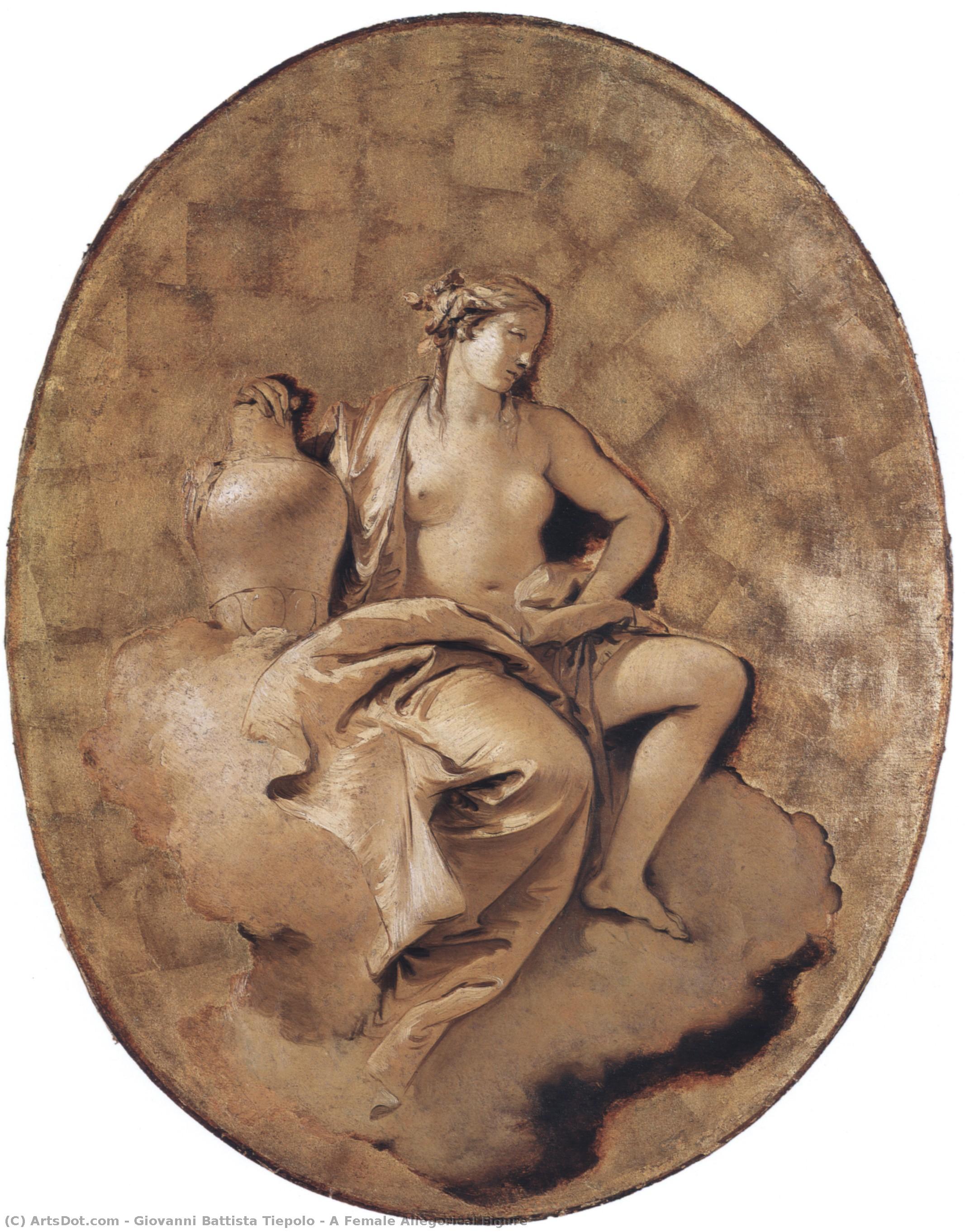
In the luminous realm of eighteenth-century Venetian art, few names evoke the sheer brilliance of light and movement quite like Giovanni Battista Tiepolo. His masterpiece, A Female Allegorical Figure, painted in 1740, serves as a breathtaking window into the heart of the Rococo era. The painting captures a moment of profound, quiet beauty, featuring a woman seated upon the earth, her form draped in a delicate interplay of shadow and light. While she appears caught in a state of natural vulnerability, the graceful way a dress is swept over her shoulders suggests a deliberate, poetic composition. As she holds a vase in one hand and a jug in the other, the viewer is invited into a scene that feels both intimate and monumental, embodying the very essence of Tiepolo’s ability to transform a single figure into a celestial event.
The technique employed in this work is a testament to Tiepolo's mastery of oil on canvas. He utilizes a palette that breathes with the vitality of the Venetian school, employing soft, pastel hues that dance across the skin of the subject, contrasted against deeper, more resonant tones in the background. His brushwork possesses a rhythmic fluidity, creating an illusionistic depth that makes the figure seem to emerge from the canvas itself. This mastery of disegno—the foundational Italian principle of design—is harmoniously blended with the airy, decorative elegance characteristic of the Rococo style. The result is a surface that does not merely depict a subject but radiates a sense of atmosphere and warmth, making it an irresistible centerpiece for any sophisticated collection.
Symbolism and the Language of Allegory
Beyond its immediate aesthetic splendor, the painting functions as a profound allegorical study. In the tradition of the great Venetian masters, Tiepolo often used the human form to represent abstract virtues or natural elements. The presence of the vase and the pitcher suggests themes of abundance, nourishment, and the cyclical nature of life—motifs that were deeply embedded in the cultural consciousness of the 1740s. The way the light catches the curve of the vessel and the soft texture of the woman's skin creates a symbolic dialogue between the earthly and the divine. For the discerning collector or interior designer, this piece offers more than just visual decoration; it provides a narrative depth that can anchor a room with intellectual and emotional weight.
To possess a reproduction of such a work is to invite the legacy of the Rococo Master into one's personal space. The painting’s ability to evoke a sense of timelessness makes it an ideal choice for high-end residential projects, where it can serve as a focal point in a classically inspired salon or a subtle, elegant accent in a contemporary setting. It carries with it the grandeur of the palaces of Venice and the quiet dignity of the Metropolitan Museum of Art, offering an unparalleled opportunity to surround oneself with the enduring magic of Tiepolo’s light and illusion.