The Myth Made Manifest: Gian Lorenzo Bernini’s “Apollo and Daphne”
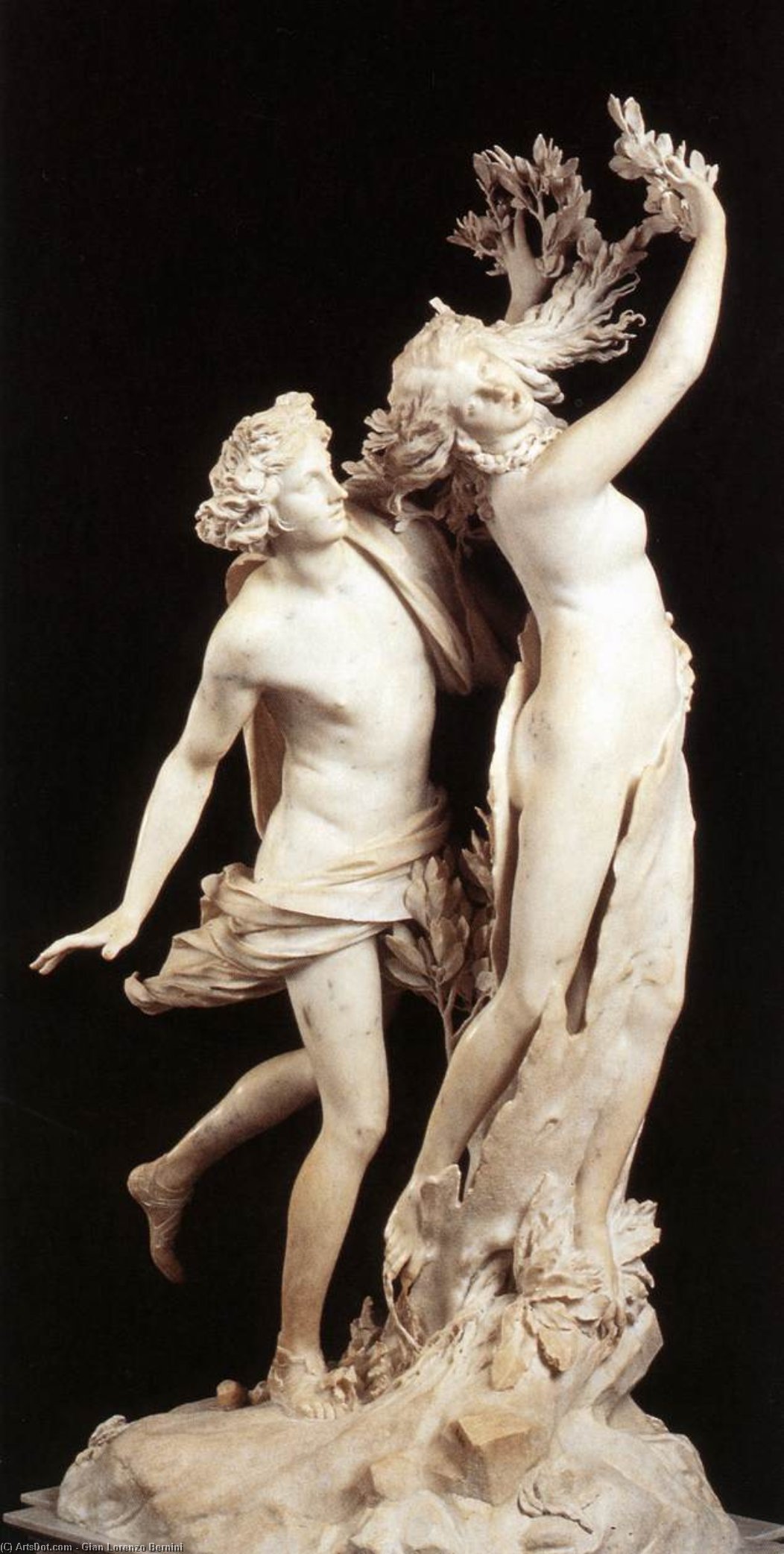
Gian Lorenzo Bernini's "Apollo and Daphne," housed within the opulent Galleria Borghese in Rome, isn’t merely a sculpture; it’s a visceral embodiment of Ovid’s timeless tale. Completed between 1622 and 1625, this monumental work transcends its marble materiality to capture a fleeting, dramatic moment – the precipice of transformation where the god Apollo, consumed by desire, attempts to seize the nymph Daphne, who desperately flees into becoming a laurel tree. Bernini’s genius lies not just in his technical mastery but in his ability to infuse stone with an astonishing sense of movement and emotional intensity, creating a scene that feels perpetually caught in the throes of action.

Baroque Drama: Sculpture as Living Motion
Bernini, a pivotal figure in the transition from Renaissance to Baroque art, rejected the static formality of earlier sculpture. Instead, he embraced dynamism, capturing figures in mid-gesture, imbued with palpable emotion. “Apollo and Daphne” exemplifies this approach perfectly. The sculptor masterfully manipulates marble to convey an astonishing sense of movement – Apollo’s outstretched hand, poised to grasp Daphne; her fleeing form, limbs transforming into branches; the billowing drapery that seems to ripple around them both. The sculpture isn't a depiction of a static event but rather a frozen moment of intense pursuit and desperate escape. The use of *contrapposto*, where Apollo’s weight shifts slightly to one leg, adds further to the illusion of movement.
Bernini’s technique is breathtakingly sophisticated. He employed a complex system of scaffolding and supports within the marble itself, allowing him to create an outward appearance of lightness and fluidity. The surface of the stone is polished to a luminous sheen, reflecting light and enhancing the sense of volume and depth. The details are exquisite – the delicate texture of Daphne’s hair transforming into leaves, the intricate folds of her drapery, the subtle expression of panic on her face.
Mythic Symbolism: Love, Flight, and Transformation
The story of Apollo and Daphne is rich in symbolic meaning. Apollo, representing divine power and beauty, embodies relentless pursuit and unyielding desire. Daphne, a symbol of innocence and resistance, represents the preservation of virtue and the rejection of worldly temptations. Her transformation into a laurel tree – a plant closely associated with Apollo himself – signifies her ultimate victory over his advances, becoming a symbol of both beauty and resilience. The myth itself explores themes of love, loss, and the conflict between desire and freedom.
The sculpture’s placement within the Borghese Gallery is also significant. Originally intended to be viewed from a specific angle, it highlights the dramatic interplay between Apollo's forceful pursuit and Daphne's desperate flight. The surrounding architecture of the gallery further enhances this effect, creating an immersive experience for the viewer.
A Legacy of Emotion: Bernini’s Enduring Impact
“Apollo and Daphne” stands as a testament to Bernini’s unparalleled skill and his profound understanding of human emotion. It is not simply a representation of a classical myth but a powerful exploration of the human condition – the struggle between desire and resistance, the triumph of virtue over temptation, and the enduring power of transformation. Bernini's work continues to captivate audiences centuries later, demonstrating the timeless appeal of this dramatic narrative and solidifying his place as one of art history’s greatest masters. Reproductions of this masterpiece offer a remarkable opportunity to bring this extraordinary sculpture into any space, evoking the drama and emotion of Bernini’s original vision.