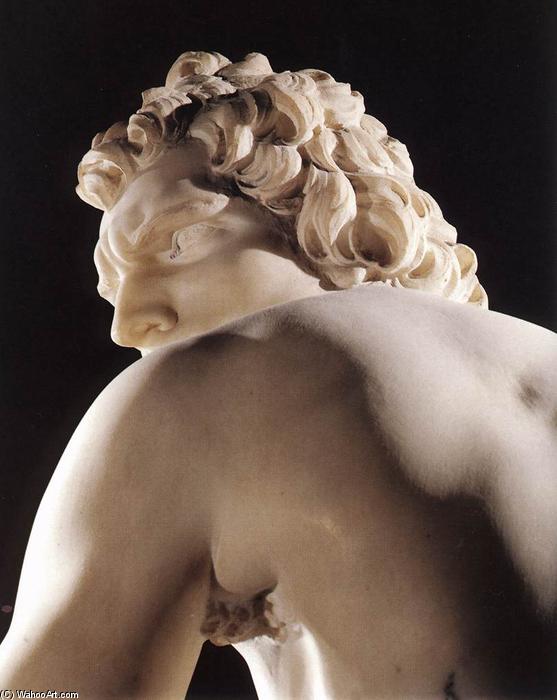
The Genesis of a Hero: Bernini’s David
Gian Lorenzo Bernini's 1623 sculpture, “David,” residing within the opulent Galleria Borghese in Rome, isn’t merely a depiction of the biblical hero; it’s a visceral embodiment of youthful defiance and impending triumph. Commissioned by Cardinal Scipione Borghese, a fervent admirer of classical antiquity, this masterpiece transcends simple narrative illustration, becoming a profound meditation on courage, vulnerability, and the very essence of human potential. Bernini, already establishing himself as the leading sculptor of his age, seized upon the story of David and Goliath not just to recreate a biblical scene but to capture an intensely personal moment – the decisive seconds before action, pregnant with anticipation.

A Masterclass in Marble: Technique and Innovation
Bernini’s genius lies not just in his subject matter but in the revolutionary techniques he employed to render it. Carved from a single block of Carrara marble, “David” exemplifies Bernini's mastery of *subdolitas*, a term describing a delicate, almost hesitant grace that was highly prized during the Baroque period. The surface is astonishingly smooth, achieved through an intricate process of grinding and polishing – a testament to Bernini’s relentless dedication and his understanding of marble’s inherent qualities. Notice how he captures the subtle texture of David's hair, the delicate veins in his hands, and the tautness of his muscles. Crucially, Bernini didn’t simply sculpt a static figure; he imbued it with dynamic movement. The slight tilt of his head, the furrowed brow, and the outstretched hand all suggest an internal struggle – a moment of intense concentration before unleashing a decisive blow. This sense of kinetic energy was groundbreaking for its time, moving away from the more rigid poses favored in earlier Renaissance sculpture.
- Subdolitas: Bernini’s signature style emphasizing delicate grace and movement.
- Carrara Marble: The finest white marble sourced from Italy, prized for its purity and workability.
- Dynamic Composition: Bernini captures a fleeting moment of intense anticipation, conveying the hero's inner turmoil.
Symbolism and Context: A Renaissance Vision
“David” is deeply rooted in the classical ideals of heroism and civic virtue that were prevalent during the Renaissance. The story of David slaying Goliath served as a potent metaphor for the triumph of the underdog, the defense of justice against tyranny, and the importance of courage in the face of overwhelming odds. Bernini cleverly incorporates these themes into his sculpture. David’s youthful appearance symbolizes innocence and potential, while the giant Goliath represents established power and corruption. The sling, held loosely in David's hand, is not a weapon of brute force but a symbol of faith and strategic intelligence – highlighting the importance of wit over strength. Furthermore, the setting within the Borghese Gallery itself—a lavishly decorated villa reflecting the wealth and influence of Cardinal Borghese—underscores the sculpture’s role as a display of power and patronage.
Emotional Resonance: A Timeless Appeal
Despite being created over four centuries ago, “David” continues to resonate deeply with viewers. Bernini masterfully captures not just the physical likeness of the biblical hero but also his emotional state – a potent blend of determination, vulnerability, and quiet confidence. The sculpture invites us to contemplate our own struggles against adversity, reminding us that even in moments of uncertainty, courage and faith can prevail. It’s a testament to Bernini's ability to transform a historical narrative into a profoundly human experience, securing his place as one of the greatest sculptors of all time. The reproduction captures this essence beautifully, offering a window into the heart of Baroque artistry.