The Throne of Saint Peter: A Baroque Masterpiece
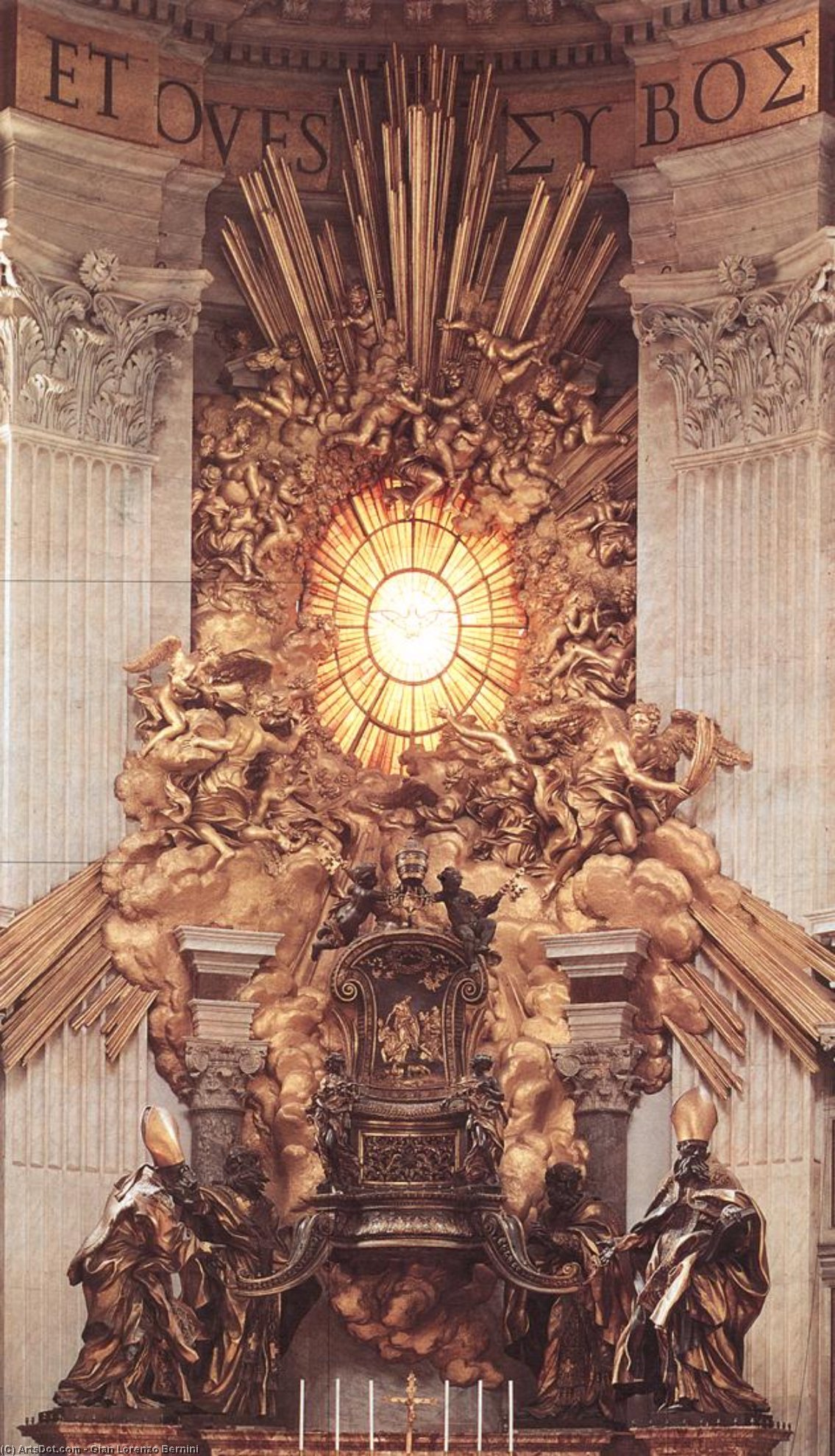
Within the heart of St. Peter’s Basilica in Vatican City resides an artwork that transcends mere sculpture; it is a monumental declaration of faith, power, and divine grace – Gian Lorenzo Bernini's Cathedra Petri, or Chair of Saint Peter. More than just a throne, this intricate ensemble embodies centuries of religious belief, artistic innovation, and the very essence of Baroque style. It’s a piece that demands contemplation, inviting viewers to lose themselves in its opulent details and profound symbolism.
Bernini conceived of the Cathedra Petri as an experience, not simply an object. Completed between 1647 and 1653, it represents a culmination of his artistic genius – a masterful synthesis of sculpture, architecture, and light. The core of the piece is the ancient wooden chair itself, believed to have belonged to Saint Peter, the first Pope and founder of the Roman Catholic Church. This humble seat is dramatically elevated and enveloped within a breathtaking structure of gilded bronze and shimmering stucco, creating an illusion of weightlessness and divine presence.
A Symphony of Materials and Technique
Bernini’s technical prowess is immediately apparent in every facet of the Cathedra Petri. The bronze casing, meticulously crafted with intricate scrolling patterns, showcases his unparalleled skill in manipulating this challenging medium. Notice how he seamlessly integrates elements of relief sculpture – cherubs, angels, and classical figures – into the very fabric of the structure. These aren’t merely decorative additions; they actively participate in the overall narrative, conveying a sense of movement and dynamism. The use of gold leaf, applied with painstaking precision, bathes the entire piece in an ethereal glow, amplifying its spiritual impact.
Beyond the bronze, Bernini employed stucco – a lightweight plaster – to create the soaring arches and clouds that frame the throne. This technique allowed for incredible detail and volume, contributing significantly to the sense of grandeur and celestial drama. The interplay between these materials—the solidity of bronze, the lightness of stucco, and the transparency of glass—is a testament to Bernini’s mastery of form and texture.
Symbolism and Spiritual Significance
The Cathedra Petri is laden with symbolism, reflecting the profound theological importance of Saint Peter. The chair itself represents Peter's authority as the first Bishop of Rome and the successor of Christ. Surrounding it are four colossal figures representing the Doctors of the Church – Ambrose, Augustine, Chrysostom, and Athanasius—each a symbol of intellectual and spiritual leadership within the Christian tradition. These figures aren’t simply supporting the throne; they're anchoring it to the earth, reminding us of Peter’s earthly roots and his role as shepherd of the faithful.
The central sunburst motif, radiating from the chair, is a powerful symbol of divine light and grace. The dove, representing the Holy Spirit, emerges from this radiant core, further emphasizing the transformative power of faith. Even the inscription above – “O Pastor Ecclesiae, tu omnes Christi pascis agnos et oves” (O Shepherd of the Church, you feed all Christ’s lambs and sheep) – reinforces Peter's role as protector and guide of the Christian flock.
A Legacy of Baroque Grandeur
The Cathedra Petri stands as a defining example of the Baroque style—a period characterized by dramatic emotion, opulent decoration, and a fervent embrace of religious fervor. Bernini’s work embodies these principles to an extraordinary degree, creating a space that is both awe-inspiring and deeply moving. It's not merely a piece of art; it’s a testament to human creativity and the enduring power of faith—a visual embodiment of spiritual authority and divine grace.
Reproductions of this iconic artwork capture only a fraction of its original impact, but they offer a valuable opportunity to experience Bernini's genius in your own space. Consider commissioning a hand-painted reproduction that faithfully recreates the intricate details and luminous atmosphere of this extraordinary masterpiece.