John Bill Ricketts (unfinished): A Glimpse into Gilbert Stuart's Process
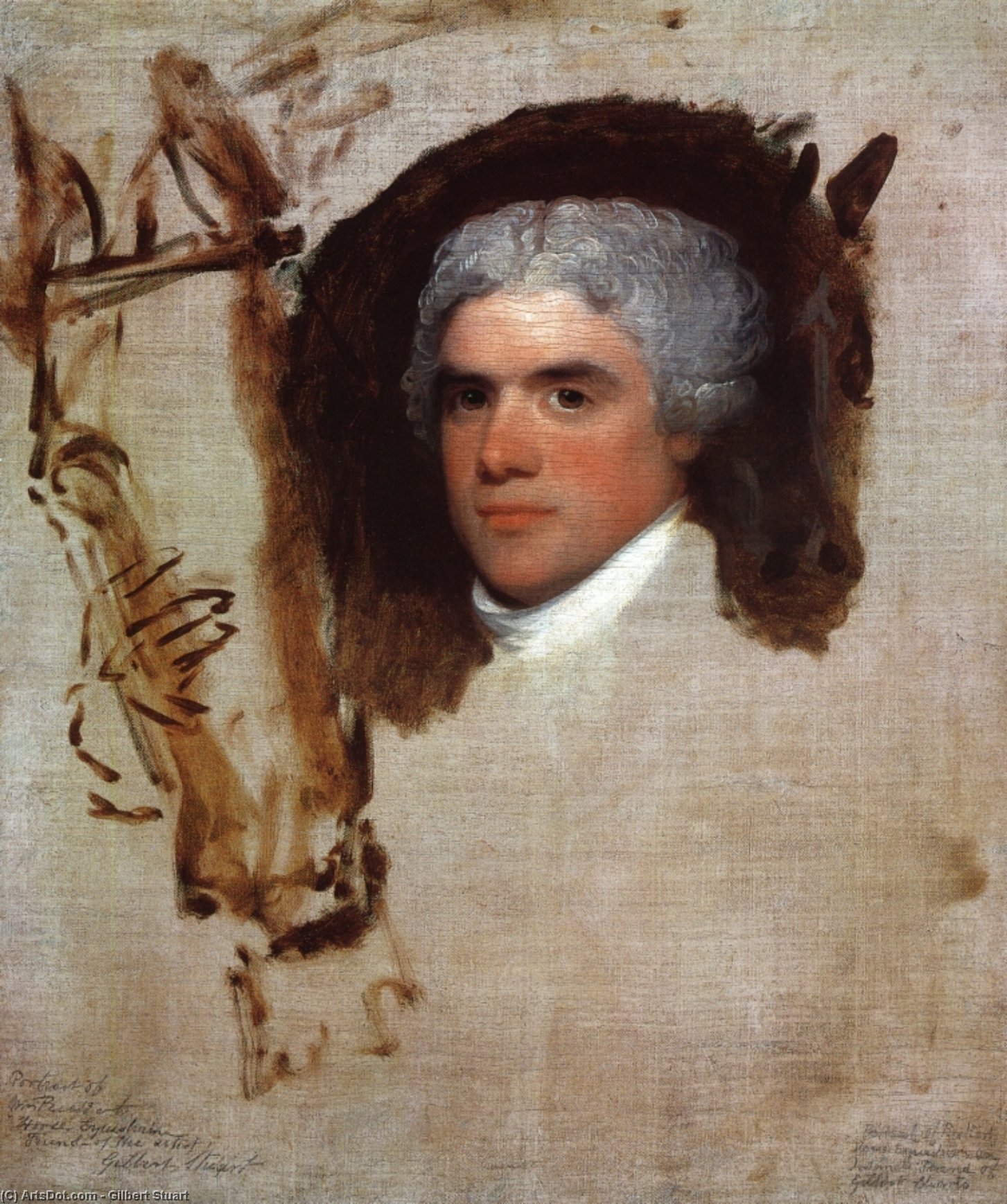
The National Gallery of Art in Washington, United States, holds a captivating piece: Gilbert Stuart’s oil on canvas painting, John Bill Ricketts (unfinished), also known as Breschard, the Circus Rider. Created in 1807, this artwork offers a unique window into the artist's working methods and his ability to capture character.
The Subject: John Bill Ricketts – A Celebrated Equestrian
John Bill Ricketts was a celebrated African American equestrian and circus performer who gained immense popularity in late 18th and early 19th century America. Known for his exceptional horsemanship, he captivated audiences with his daring feats and skillful riding. Ricketts’s presence in Stuart's studio suggests a recognition of his status as a notable figure within the entertainment world. The painting depicts Ricketts seated between two horses, likely alluding to his profession and mastery over these powerful animals. While the work remains unfinished, it still conveys a sense of dignity and poise about its subject.
Style and Technique: Neoclassical Portraiture in Progress
Gilbert Stuart was a leading figure in American portraiture, known for his adherence to Neoclassical principles while imbuing his works with a distinct psychological depth. This painting exemplifies this approach. The composition is relatively simple, focusing on the central figures of Ricketts and the horses. Stuart’s technique involved layering oil paints onto canvas, creating rich textures and subtle gradations of color. The "unfinished" nature of the piece allows us to observe his process directly – the visible brushstrokes, areas where paint has been applied in thin layers, and sections left largely untouched reveal Stuart's deliberate approach to building form and capturing light. The use of impasto (thickly applied paint) in certain areas adds a tactile quality to the work.
Historical Context and Significance
Created during a period of burgeoning American identity, this portrait reflects an interest in documenting individuals from various walks of life. Ricketts’s prominence as a performer highlights the growing popularity of circus entertainment in early America. The painting's unfinished state is particularly significant; it provides insight into Stuart’s artistic process and challenges conventional notions of finished artwork. It suggests that Stuart may have intended to continue working on the portrait, but circumstances prevented him from doing so. The fact that this portrait exists as an "unfinished" work offers a rare glimpse into the creative journey of one of America's most important artists.
Emotional Impact and Artistic Legacy
Despite its incomplete status, John Bill Ricketts (unfinished) evokes a sense of quiet contemplation and admiration for its subject. The painting’s directness and lack of elaborate ornamentation contribute to its emotional power. As a handmade oil painting reproduction, this artwork allows art enthusiasts to experience the beauty and historical significance of Gilbert Stuart's work up close, appreciating the nuances of his technique and the compelling presence of John Bill Ricketts.