The painting
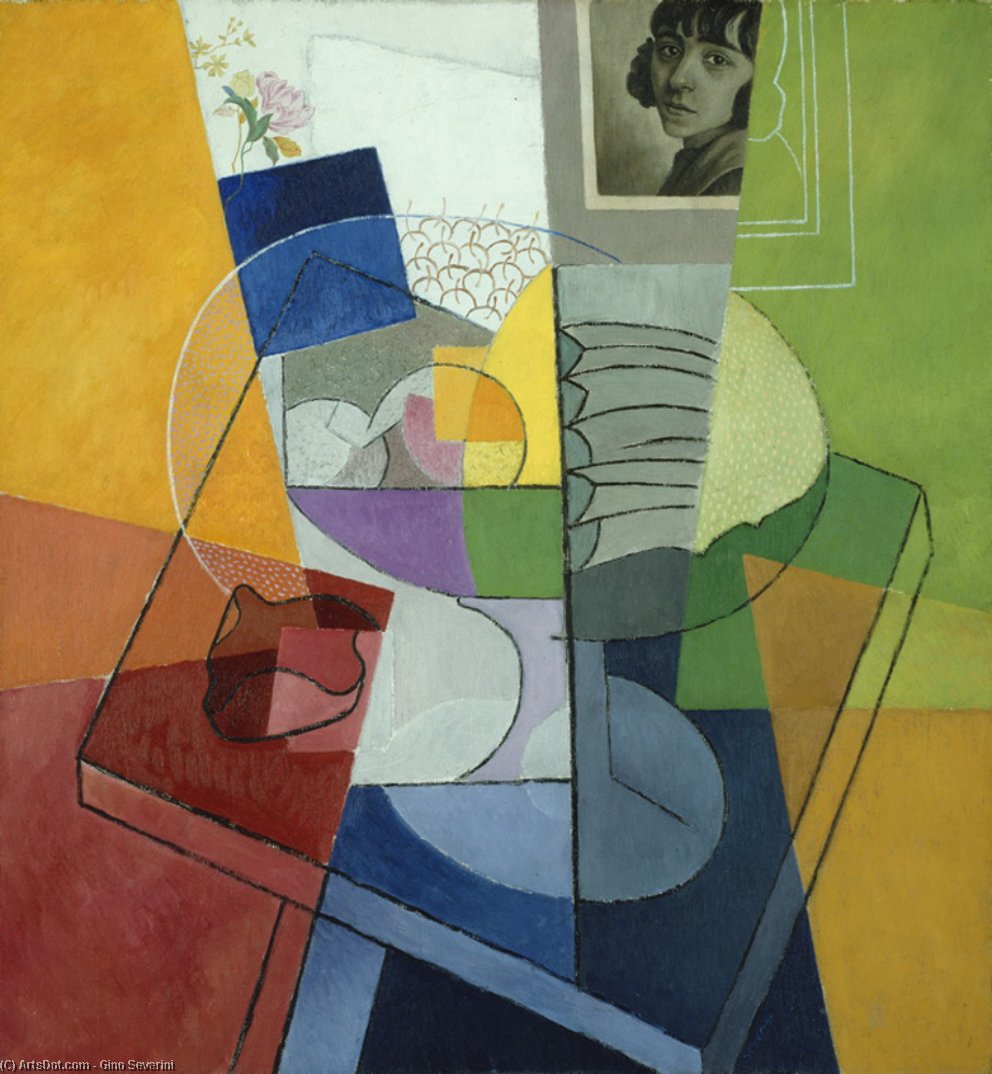
Still Life. Centrifugal Expansion of Colors. by
Gino Severini is a remarkable example of Synthetic Cubism, created in 1916. This artwork showcases the artist's skill in manipulating colors and shapes to create a visually striking composition. As a leading member of the Futurist movement,
Gino Severini was known for his innovative approach to art, which is evident in this painting.
The Cubist Influence
The Cubist art movement, pioneered by artists like Pablo Picasso and Georges Braque, had a significant impact on the development of modern art.
Gino Severini was influenced by this movement, as seen in his use of geometric forms and fragmented images in
Still Life. Centrifugal Expansion of Colors.. The painting features a variety of colors and shapes, including a yellow circle on the left side, a blue square in the middle, and a green rectangle on the right side.
Artistic Style
Gino Severini's artistic style is characterized by his use of
Synthetic Cubism, which emphasizes the creation of new forms and colors. In
Still Life. Centrifugal Expansion of Colors., he employs this style to create a dynamic and visually appealing composition. The painting is a testament to the artist's skill in capturing the essence of modernity and innovation.
- The painting features a complex arrangement of shapes and colors, creating a sense of movement and energy.
- The use of geometric forms, such as circles and squares, adds to the overall sense of dynamism.
- The color palette is characterized by bold and vibrant hues, which create a striking visual effect.
Handmade oil painting reproductions of
Still Life. Centrifugal Expansion of Colors. are available on
ArtsDot.com, allowing art enthusiasts to own a piece of this remarkable artwork. For more information on
Gino Severini and his artistic style, visit the
artist's page on ArtsDot.com.
The
Imperial War Museums in London also features artworks by prominent artists, including
Sir George Clausen, who created the powerful oil painting
Youth Mourning in 1916. To learn more about Cubism and its influence on modern art, visit the
Cubist Art Movement page on ArtsDot.com.