Giorgio Vasari (1511-1574): Italian Renaissance painter, architect & art historian. Author of 'Lives of Artists,' a cornerstone of art history, and designer of the Uffizi Gallery.
Explore Canada's national art museum! Discover stunning collections of Indigenous & European art, innovative exhibitions, and architectural marvels in Ottawa’s National Gallery.
Giorgio Vasari’s ‘Abraham and the Three Angels’: A Mannerist Masterpiece of Faith and Form
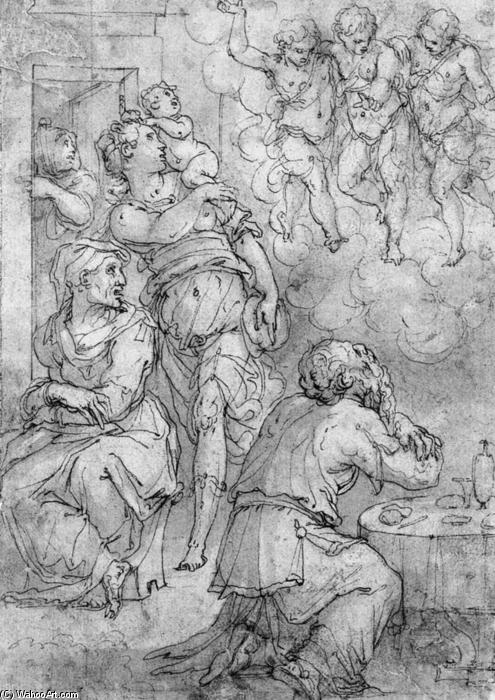
Giorgio Vasari's “Abraham and the Three Angels” stands as a compelling testament to the artistic currents of the late 16th century, specifically the Mannerist style that flourished during the Italian Renaissance. This meticulously rendered pen drawing, now faithfully reproduced in a luxurious hand-painted format, offers a profound glimpse into a biblical narrative imbued with both spiritual significance and masterful technical skill. The artwork’s enduring power lies not just in its depiction of Abraham's hospitality but also in Vasari’s sophisticated manipulation of form, light, and shadow – hallmarks of his artistic vision.
- Subject Matter: The scene depicts the pivotal moment from Genesis where Abraham welcomes three angels into his tent. This story is a cornerstone of Jewish and Christian faith, representing unwavering trust, generosity, and divine intervention.
- Style & Period: Executed in the Mannerist style, Vasari deliberately departs from the idealized proportions and harmonious compositions favored by earlier Renaissance artists like Raphael or Leonardo da Vinci. Instead, he embraces elongation, distortion, and a heightened sense of drama to convey emotional intensity and psychological complexity.
Technique & Materials: A Study in Precise Linework
Vasari’s skill as a draftsman is immediately apparent in the artwork's intricate details. The composition is dominated by precise pen lines, meticulously applied to create a remarkably three-dimensional effect despite the monochromatic palette. The artist skillfully employs hatching and cross-hatching techniques to build up tonal values, suggesting drapery folds, muscular forms, and the subtle nuances of facial expressions. The medium – ink on paper – lends itself perfectly to this level of detail, allowing for a controlled and deliberate approach to rendering form. Note the careful attention paid to the texture of Abraham’s robe and the flowing garments of the angels, demonstrating Vasari's deep understanding of fabric behavior.
- Pen on Paper: The use of pen allows for incredible control and precision in line work, a key characteristic of Mannerist art.
- Hatching & Cross-Hatching: These shading techniques create depth and volume within the composition.
Symbolism & Historical Context
“Abraham and the Three Angels” is more than just a biblical illustration; it’s a reflection of Vasari's broader intellectual concerns. The Mannerist style, prevalent during his time, often sought to challenge established norms and explore complex psychological states. The elongated figures and dramatic poses can be interpreted as representing humanity’s struggle with faith, doubt, and the overwhelming power of divine judgment. Furthermore, Vasari was deeply invested in documenting the history of art, and this drawing likely served as a study for a larger work or as part of his ongoing project to celebrate the achievements of Renaissance artists. The inclusion of architectural elements – a doorway and table – grounds the scene within a domestic setting, emphasizing the personal nature of Abraham’s faith.
- Mannerist Influence: The elongated figures and dramatic poses are hallmarks of the Mannerist style.
- Religious Symbolism: The story of Abraham embodies core religious values of hospitality, trust, and divine grace.
Emotional Impact & Reproduction
The hand-painted reproduction captures not only the visual details of Vasari’s original drawing but also its inherent emotional power. The artwork's composition evokes a sense of quiet contemplation and reverence, inviting viewers to reflect on themes of faith, compassion, and human connection. ArtsDot offers this masterpiece in a range of sizes, ensuring that you can bring this timeless work of art into your home or office – a stunning addition to any collection and a powerful reminder of the enduring legacy of Giorgio Vasari.