The Weight of Justice: Giorgio Vasari’s Allegory of Truth and Power
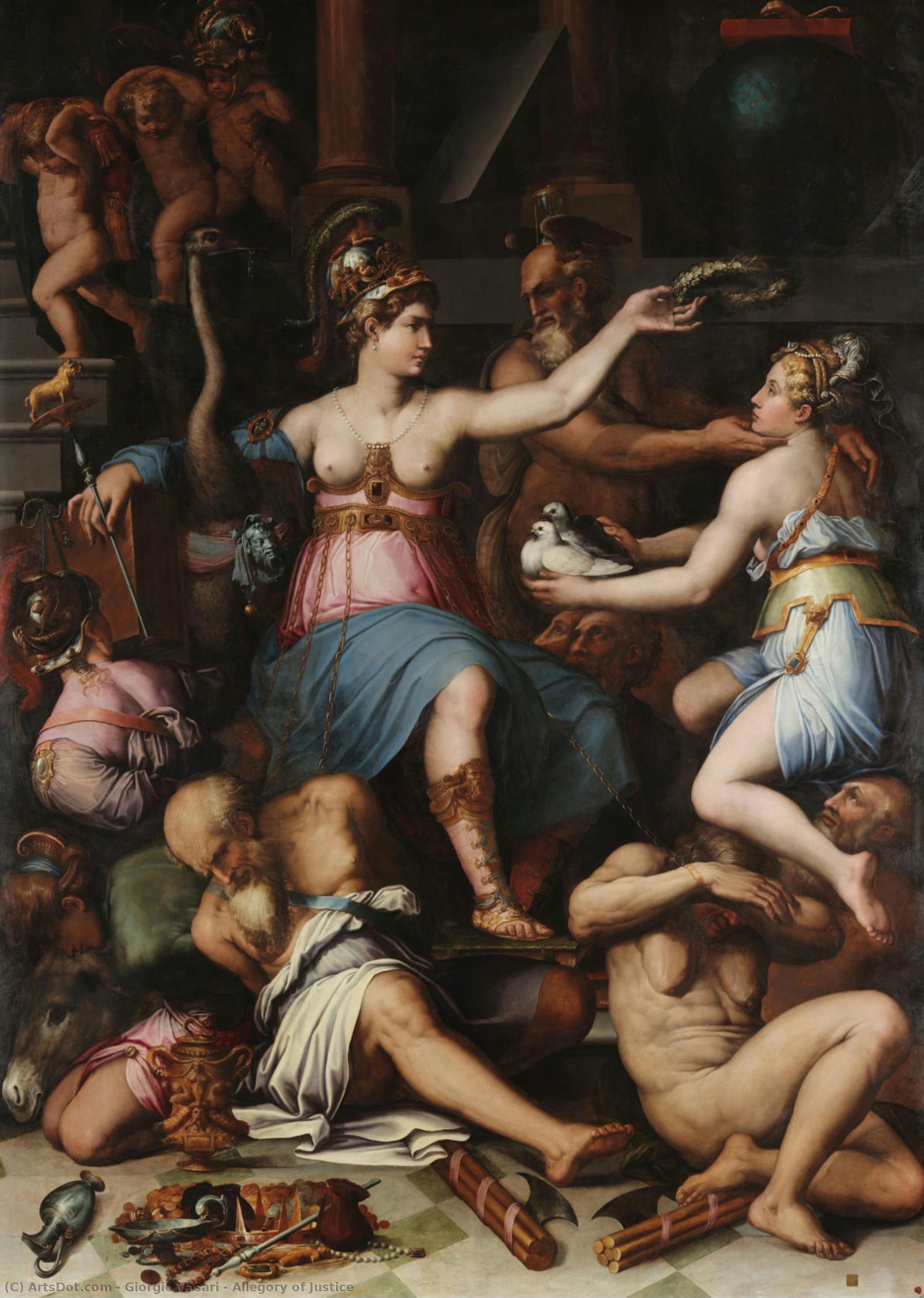
Giorgio Vasari's 1543 fresco, “Allegory of Justice and Truth,” residing within the Palazzo Cancelleria in Rome, is far more than a mere decorative panel; it’s a meticulously constructed visual sermon on virtue, governance, and the very foundations of Renaissance ideals. Commissioned by Cardinal Alessandro Farnese, this monumental work transcends its initial purpose as a room decoration to become a profound meditation on the principles that underpinned the burgeoning power of the Papal States and the evolving concept of justice itself. Vasari masterfully blends classical allegory with humanist philosophy, creating an image brimming with symbolic weight and arresting beauty.
The composition immediately commands attention. At its heart stands Justice, personified as a youthful woman, her figure rendered in a striking semi-nude pose – a deliberate choice that reflects both the idealized beauty of Renaissance sculpture and a subtle assertion of female authority within a traditionally masculine realm of power. Her arms are engaged in a dynamic embrace: one outstretched to cradle an ostrich, representing patience and endurance; the other extended to bestow a laurel crown upon Truth, personified by a serene, contemplative figure. This gesture signifies Justice’s active role in nurturing and validating truth – a crucial element within the context of the Reformation and the challenges to papal authority.
A Tapestry of Symbolic Figures
Surrounding this central triad is a carefully orchestrated tableau populated by personifications of various virtues and vices. Time, depicted as an aged man burdened with an hourglass, patiently bestows wisdom upon Truth, illustrating the cyclical nature of justice and the importance of remembering past lessons. Below them, chained and subdued, are the seven deadly sins – Greed, Pride, Envy, Wrath, Sloth, Lust, and Gluttony – a potent reminder of the corrupting influence that Justice must constantly combat. The inclusion of these figures isn’t merely decorative; it serves as a stark warning against moral decay and underscores the necessity of upholding ethical standards within society.
Notably, the scene is framed by a complex interplay of classical references. The ostrich, a symbol deeply rooted in Roman tradition, represents not just patience but also vigilance – a crucial attribute for those entrusted with administering justice fairly. The laurel crown bestowed upon Truth echoes the honors and recognition granted to philosophers and virtuous individuals throughout antiquity. Vasari’s skillful integration of these elements elevates the fresco beyond a simple depiction of abstract concepts, grounding it in a rich historical and philosophical context.
Technique and Artistic Flourishes
Vasari's mastery is evident in his meticulous execution and sophisticated use of color and light. The fresco employs *terracotta* – a reddish-brown pigment derived from clay – to create a warm, earthy palette that contrasts beautifully with the cool blues and greens used for the figures’ drapery. The artist demonstrates an exceptional understanding of perspective and anatomical accuracy, particularly in the rendering of Justice's physique, which is reminiscent of classical sculptures by artists like Donatello and Michelangelo. The subtle gradations of tone and shadow contribute to a remarkable sense of depth and realism, drawing the viewer into the scene.
A Legacy of Moral Authority
“Allegory of Justice and Truth” remains a powerful testament to Vasari’s artistic skill and his engagement with the intellectual currents of the Renaissance. It served as a visual manifesto for the Farnese court, promoting the virtues of justice, prudence, and piety – qualities deemed essential for maintaining order and stability within the Papal States. Beyond its immediate political context, the fresco continues to resonate today as a timeless exploration of fundamental human values and the enduring struggle between good and evil. It’s a work that invites contemplation, prompting viewers to consider their own roles in upholding justice and striving towards truth in an increasingly complex world.