A Regal Vision: Giorgio Vasari’s Portrait of Cosimo I de' Medici
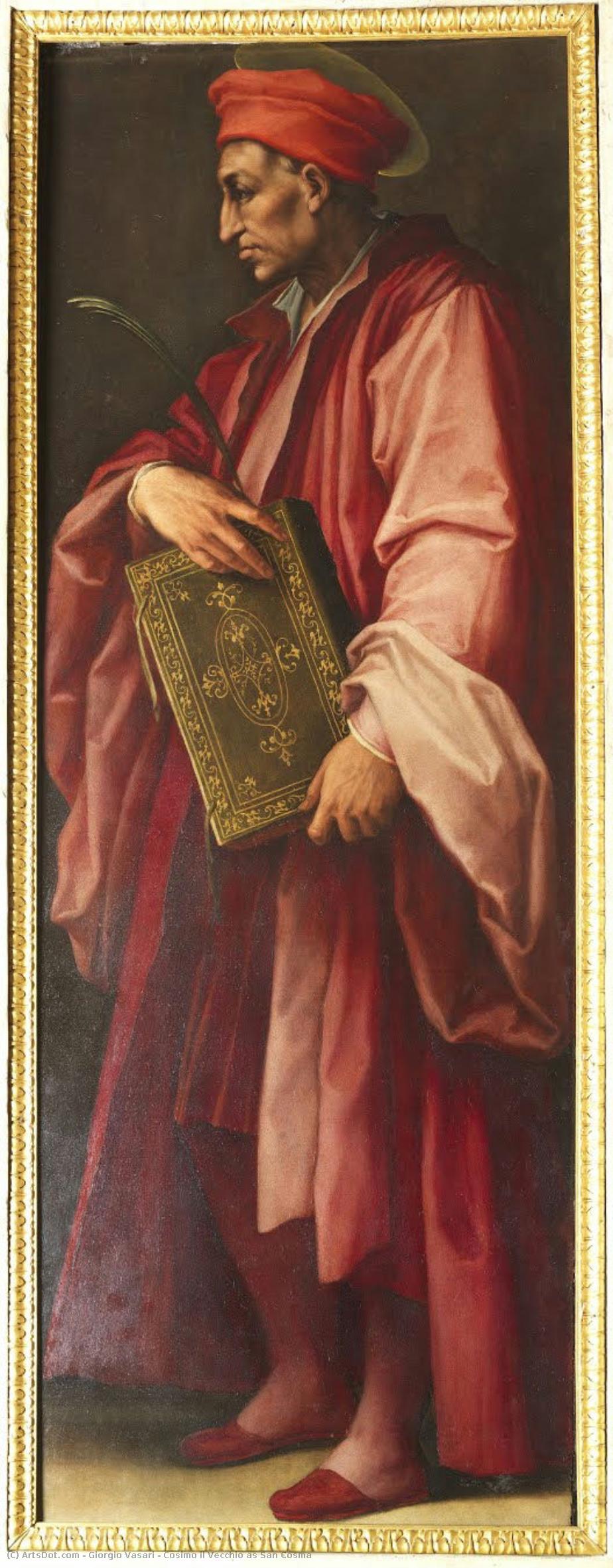
The year is 1559, and Florence pulses with the ambition of the Renaissance under the shrewd guidance of Cosimo I de’ Medici. Within the walls of the Palazzo Vecchio, a masterpiece emerges – Giorgio Vasari’s “Cosimo il Vecchio as San Cosma,” a portrait that transcends mere likeness to become a potent symbol of power, piety, and the enduring legacy of the Medici dynasty. This isn't simply a depiction of a man; it’s an invitation into the heart of Florentine identity, meticulously crafted with a keen understanding of classical ideals and deeply rooted in the spiritual currents of its time.
Vasari, already establishing himself as one of Florence’s most significant artists, masterfully employs the conventions of Renaissance portraiture. The composition is strikingly vertical, emphasizing Cosimo's stature and commanding presence. He is rendered in a classical style, reminiscent of both Roman sculpture and Florentine Mannerism – a deliberate blend that speaks to the ambition of the Medici court to emulate the grandeur of antiquity while simultaneously forging its own distinct artistic identity. The figure dominates the canvas, bathed in directional light from the upper left, creating dramatic shadows that lend volume and depth to his robes and face, drawing the viewer’s eye directly to his gaze – a look both resolute and subtly contemplative.
The Weight of Faith and Authority
Cosimo is depicted not merely as a ruler but as a saint, identified by the red ecclesiastical robes that signify his role as San Cosma, one of the patron saints of medicine. This association speaks to the Medici’s deep connection with both power and healing – a duality central to their political strategy. The open book in his hands is more than just an emblem of learning; it represents divine knowledge, faith, and the authority vested in the Medici leadership. The careful rendering of the folds in the robes, achieved through meticulous brushstrokes and subtle shading, suggests both the weight of responsibility and the dignity of office.
Beyond the immediate visual elements, the portrait is steeped in symbolism. The dark background serves to isolate Cosimo, reinforcing his importance and directing attention solely to his figure. The geometric patterns within the robes – a recurring motif in Medici art – are not merely decorative; they represent order, harmony, and the divine structure of the universe, mirroring the Medici’s belief in their role as stewards of Florence and its prosperity.
A Masterpiece of Technique and Context
Vasari's skill is evident in every detail. The use of oil paints allows for a rich, luminous quality, capturing the textures of fabric and skin with remarkable realism. The artist’s attention to perspective creates a sense of depth and space, while his masterful handling of light and shadow imbues the portrait with a dramatic intensity. This work is not just an artistic achievement; it's a product of its time – reflecting the humanist ideals, political ambitions, and religious fervor that defined Renaissance Florence.
Further enriching our understanding of this piece is its connection to Cosimo’s patronage of the arts and his desire to elevate Florence’s status. The portrait was commissioned during a period when the Medici were actively seeking to legitimize their rule through association with classical ideals and religious iconography. The work, alongside other commissions by Vasari for the Palazzo Vecchio, served as a powerful propaganda tool, projecting an image of strength, wisdom, and divine favor.
Rediscovering the Legacy
Today, “Cosimo il Vecchio as San Cosma” resides in the Museo Nazionale di San Marco, offering visitors a rare glimpse into the world of Renaissance Florence. It stands as a testament to Giorgio Vasari’s artistic genius and a poignant reminder of the enduring legacy of the Medici family – a dynasty that shaped the cultural landscape of Italy for centuries. Reproductions of this iconic portrait continue to captivate art lovers and collectors alike, offering a tangible connection to one of the most transformative periods in Western history.