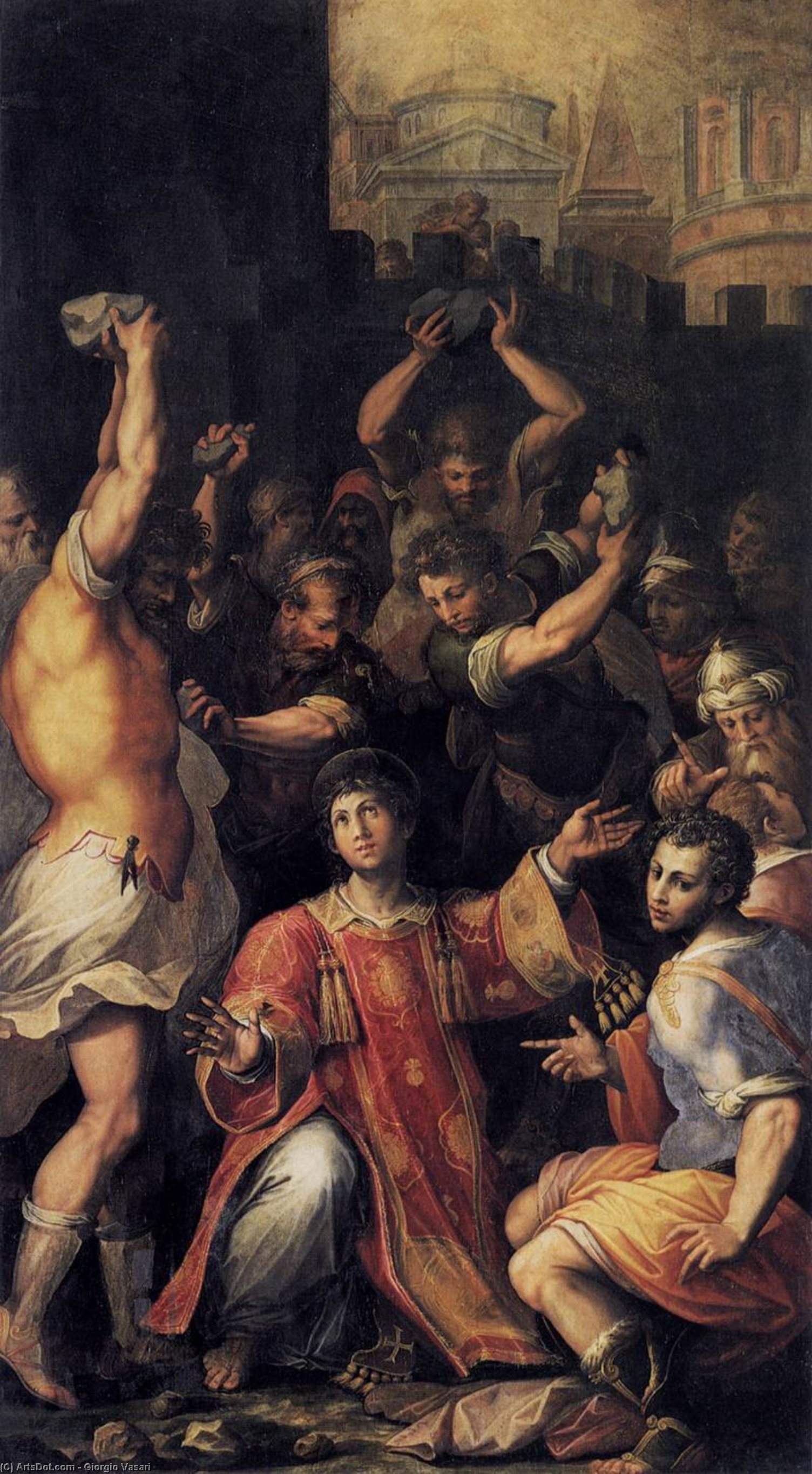
Witness Vasari's monumental High Renaissance fresco of St Stephen's martyrdom, capturing dramatic faith amidst persecution; discover this masterpiece today.
Giorgio Vasari (1511-1574): Italian Renaissance painter, architect & art historian. Author of 'Lives of Artists,' a cornerstone of art history, and designer of the Uffizi Gallery.
Pinacoteca
(Vatican City, Italy)
Explore the Vatican Pinacoteca! Discover Renaissance & Baroque masterpieces by Raphael, Caravaggio & more within the historic halls of Vatican City.
A Testament to Faith Amidst Persecution: Giorgio Vasari’s Martyrdom of St Stephen
The chapel walls of Saint Peter's Basilica bear witness to the enduring power of faith and artistic brilliance—specifically, Giorgio Vasari’s monumental depiction of the martyrdom of St Stephen. Completed in 1560 during the High Renaissance, this fresco transcends mere visual representation; it embodies a profound theological statement interwoven with masterful execution that continues to captivate audiences centuries later. Vasari, already establishing himself as a prolific architect and historian, sought to elevate the spiritual experience within the basilica through his artistic prowess, resulting in an image brimming with symbolic richness and emotional resonance.
Style and Technique: Embracing Monumental Form
Vasari’s approach distinguishes itself from many of his contemporaries by prioritizing monumental form—a characteristic deeply rooted in classical ideals—over fleeting decorative trends. The fresco adheres to the principles of disegno, a humanist aesthetic championed by Leonardo da Vinci that emphasizes careful observation and anatomical accuracy. Vasari meticulously studied human anatomy, striving for realism within the framework of religious iconography. He employed tempera paint on plaster, a technique favored for its luminosity and durability, ensuring that the image would withstand the passage of time and retain its vibrancy for generations to come. The composition is carefully balanced, guiding the viewer’s gaze across the scene with deliberate precision—a hallmark of Vasari's architectural sensibilities translated into visual art.
Historical Context: Reformation Echoes
The commission itself reflects the turbulent religious landscape of sixteenth-century Rome. Following the Protestant Reformation, the Catholic Church actively sought to reaffirm its authority and inspire piety through grand artistic projects. Vasari’s Martyrdom of St Stephen served as a deliberate counterpoint to Protestant skepticism, portraying St Stephen's unwavering faith in the face of brutal persecution—a narrative powerfully resonant with biblical themes of sacrifice and divine justice. The fresco underscores the importance of spiritual fortitude amidst adversity, aligning seamlessly with the broader theological concerns of the era. Furthermore, Vasari’s work engages with the artistic legacy of Michelangelo Buonarroti, whose Sistine Chapel ceiling had established a precedent for ambitious fresco cycles addressing complex religious narratives.
Symbolism: Layers of Meaning Within the Scene
The painting is replete with symbolic elements that enrich its theological significance. St Stephen himself stands at the center of the composition, his outstretched hands symbolizing prayer and supplication—a gesture mirroring Christ’s ascension. The crowd surrounding him embodies earthly judgment, representing humanity's flawed response to divine grace. Notably, Vasari incorporates a priest figure alongside St Stephen, signifying spiritual leadership and highlighting the role of clergy in upholding Christian values. The stones hurled at St Stephen symbolize worldly hostility and cruelty, contrasting sharply with the sanctity of his martyrdom. Each detail contributes to a multilayered narrative that speaks to fundamental questions about faith, morality, and redemption.
Emotional Impact: Capturing Suffering and Triumph
Vasari’s masterful depiction succeeds in conveying the profound emotional impact of St Stephen's ordeal—a testament to both human suffering and divine triumph. The artist skillfully captures the physicality of martyrdom, portraying St Stephen’s agony with unflinching realism. Yet, Vasari simultaneously imbues the scene with an aura of serenity and dignity, reflecting St Stephen’s unwavering faith despite his imminent demise. The luminous tempera paint enhances the emotional intensity of the fresco, illuminating the faces of the figures and conveying a palpable sense of pathos. Ultimately, Vasari's Martyrdom of St Stephen inspires contemplation on themes of courage, compassion, and spiritual perseverance—a timeless masterpiece that continues to resonate with viewers across cultures and eras.