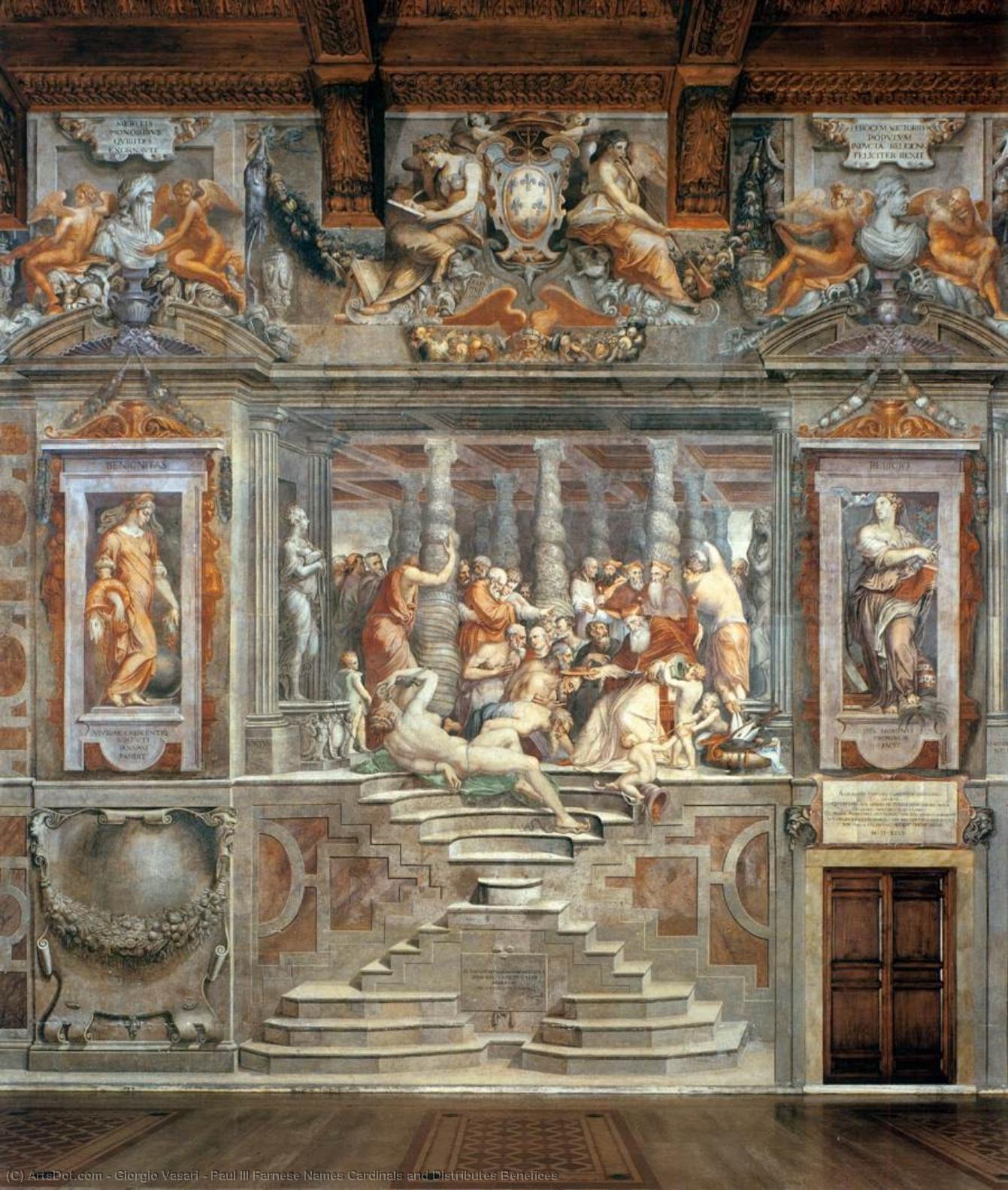
Admire Giorgio Vasari’s ‘Paul III Farnese’ fresco! A Renaissance masterpiece depicting papal power & mythology. Explore classical themes, rich colors, & intricate detail in this historical artwork.
Giorgio Vasari (1511-1574): Italian Renaissance painter, architect & art historian. Author of 'Lives of Artists,' a cornerstone of art history, and designer of the Uffizi Gallery.
Experience the breathtaking Hall of Honor featuring Vasari's legendary frescoes at Rome's Palazzo della Cancelleria, a Renaissance masterpiece where ancient history and papal grandeur await your discovery.
Giorgio Vasari’s ‘Paul III Farnese Names Cardinals and Distributes Benefices’: A Renaissance Echo of Power and Virtue
The Sala dei Cento Giorni, nestled within the Palazzo della Cancelleria in Rome, stands as a testament to Giorgio Vasari's mastery—a monumental fresco that transcends mere decoration to embody the spirit of the High Renaissance. Commissioned by Cardinal Alessandro Farnese in 1546, this ambitious undertaking wasn’t simply about adorning a room; it was about proclaiming papal authority and celebrating the enduring values of Roman civilization. Vasari himself meticulously documented the project, recognizing its significance as an artistic statement reflecting the intellectual currents of his time.
### The Narrative Landscape: Mythological Allegory Meets Papal Patronage
Vasari’s fresco plunges viewers into a complex narrative tapestry woven with threads of classical mythology and Christian allegory. At its core lies a central group of figures seated around a table, representing papal governance—a deliberate choice to visually communicate Farnese's lineage and the grandeur of his ambition. Surrounding this focal point are smaller vignettes depicting scenes from Greek mythology, specifically the Trojan War, symbolizing resilience and triumph over adversity – themes deeply resonant with Renaissance ideals. The artist skillfully employs perspective and layering to create a sense of depth and drama, transporting the viewer into an imagined space brimming with symbolic significance.
### Vasari’s Technique: Fresco Painting—A Legacy of Brilliance
Vasari employed the venerable technique of fresco painting, applying pigments mixed with water onto freshly plastered walls. This method demanded precision and patience, resulting in a surface texture that retains its luminosity over centuries – a remarkable feat of artistic craftsmanship. The palette is dominated by earthy hues—ochre, terracotta, and muted reds—reflecting the prevailing aesthetic sensibilities of the era. Lines delineate architectural elements and drapery folds with meticulous accuracy, contributing to the overall clarity and structural integrity of the artwork. Vasari’s studio utilized a masterful blend of observation and imagination, capturing both the grandeur of Roman history and the moral virtues championed by humanist thinkers.
### Symbolism: Virtues Embodied and Divine Glory Revealed
The fresco is replete with symbolic representations designed to elevate the viewer's understanding of papal power and Christian piety. Figures embodying justice, prudence, fortitude, and piety dominate the composition—each attribute carefully chosen to convey specific moral qualities deemed essential for rulers and citizens alike. The depiction of gods and goddesses—particularly Venus and Apollo—references classical mythology’s celebration of beauty and intellect – mirroring the Renaissance fascination with humanist ideals. Vasari's intention was not merely to depict events but to instill in his audience a sense of awe and reverence for divine grace, cementing the Sala dei Cento Giorni’s place as an enduring emblem of Renaissance artistic achievement.
### A Window into History: Contextualizing Vasari’s Vision
Created during the reign of Pope Paul III Farnese—a pivotal figure in shaping the Catholic Reformation—the fresco reflects the anxieties and aspirations of its time. The commission itself underscored Farnese's determination to assert papal dominance amidst challenges posed by Protestantism, while simultaneously reaffirming the importance of classical virtues as a foundation for moral conduct. Vasari’s work stands alongside Michelangelo’s Sistine Chapel ceiling as one of the defining masterpieces of the High Renaissance—a testament to artistic innovation and intellectual engagement that continues to inspire admiration today.