St. Luke Painting the Virgin: A Renaissance Masterpiece of Faith and Creation
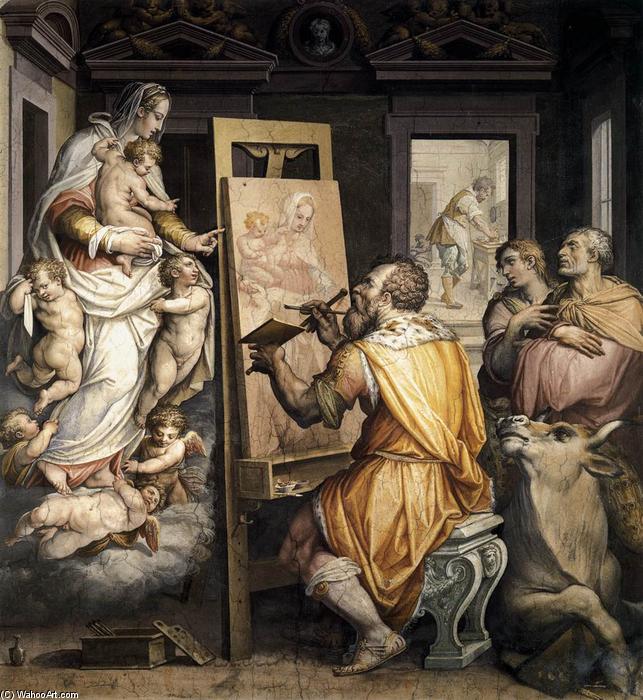
The image before you—a fresco depicting St. Luke painting the Virgin Mary with the Child Jesus—is more than just a beautiful depiction of a biblical scene; it’s a window into the heart of the Italian Renaissance, a testament to the burgeoning humanist spirit, and a profound meditation on art itself. Attributed to Giorgio Vasari, a pivotal figure in both artistic creation and historical scholarship, this work, housed within the Santissima Annunziata church in Florence, embodies the era’s fascination with classical ideals, religious devotion, and the elevation of the artist as a divine craftsman.
Vasari, born in 1511, wasn't merely a painter; he was a meticulous chronicler of his own time. His “Lives of the Most Excellent Painters, Sculptors, and Architects” remains a cornerstone of art history, not just for its biographical accounts but also for its insightful analysis of artistic techniques and philosophies. This fresco reflects that scholarly approach—a careful observation of detail, an understanding of iconography, and a deliberate engagement with the legacy of earlier masters. The scene itself is rooted in the tradition of depicting St. Luke as the Evangelist who first recorded the Virgin’s role in the Nativity, solidifying his position as a patron saint of artists.
A Study in Light, Color, and Composition
The fresco's execution reveals Vasari’s mastery of tempera on oak panel—a technique favored during the High Renaissance. Notice the meticulous layering of colors, particularly the warm reds and blues that dominate the Virgin Mary’s robes, creating a sense of luminous grace. The artist skillfully employs *sfumato*, a subtle blurring of lines and edges, to soften the forms and imbue the scene with an ethereal quality. The use of light is equally deliberate; it bathes the figures in a gentle radiance, drawing the viewer's eye towards the central focus—the Virgin Mary herself.
Vasari’s compositional choices are also noteworthy. The arrangement of figures within the room feels deliberately balanced, creating a sense of harmony and stability. The inclusion of various flowers – tulips, roses, carnations, an iris, and a butterfly – adds a layer of naturalism to the scene, reflecting the prevailing interest in botany during the Renaissance. These elements weren’t merely decorative; they were symbolic, representing beauty, purity, and the fleeting nature of life—themes frequently explored in Renaissance art.
Symbolism and Artistic Identity
The fresco is rich with symbolism that speaks to Vasari's own identity as an artist and his understanding of the role of the painter. St. Luke himself is depicted not just as a recorder of scripture but as actively engaged in the creative process—holding a brush, poised to capture the divine image on canvas. This self-portrait within the painting underscores the belief that artists were divinely inspired, possessing a unique ability to imitate and elevate God’s creation. The presence of a small box containing paintbrushes further emphasizes this connection between artistic skill and spiritual insight.
The inclusion of a young boy, often interpreted as Luke's assistant or apprentice, adds another layer of meaning. It highlights the transmission of knowledge and the importance of mentorship within the artistic community. The overall composition subtly elevates the artist’s role—he is not merely an observer but a participant in the sacred act of creation.
A Legacy of Inspiration
The “St. Luke Painting the Virgin” by Giorgio Vasari stands as a powerful testament to the Renaissance spirit, blending religious devotion with artistic innovation and intellectual curiosity. Its enduring appeal lies not only in its technical brilliance but also in its profound exploration of the human condition—the search for beauty, the pursuit of knowledge, and the transformative power of art. Reproductions of this masterpiece offer a chance to bring this evocative scene into your own space, inviting contemplation and inspiring a deeper appreciation for the rich artistic heritage of Italy.