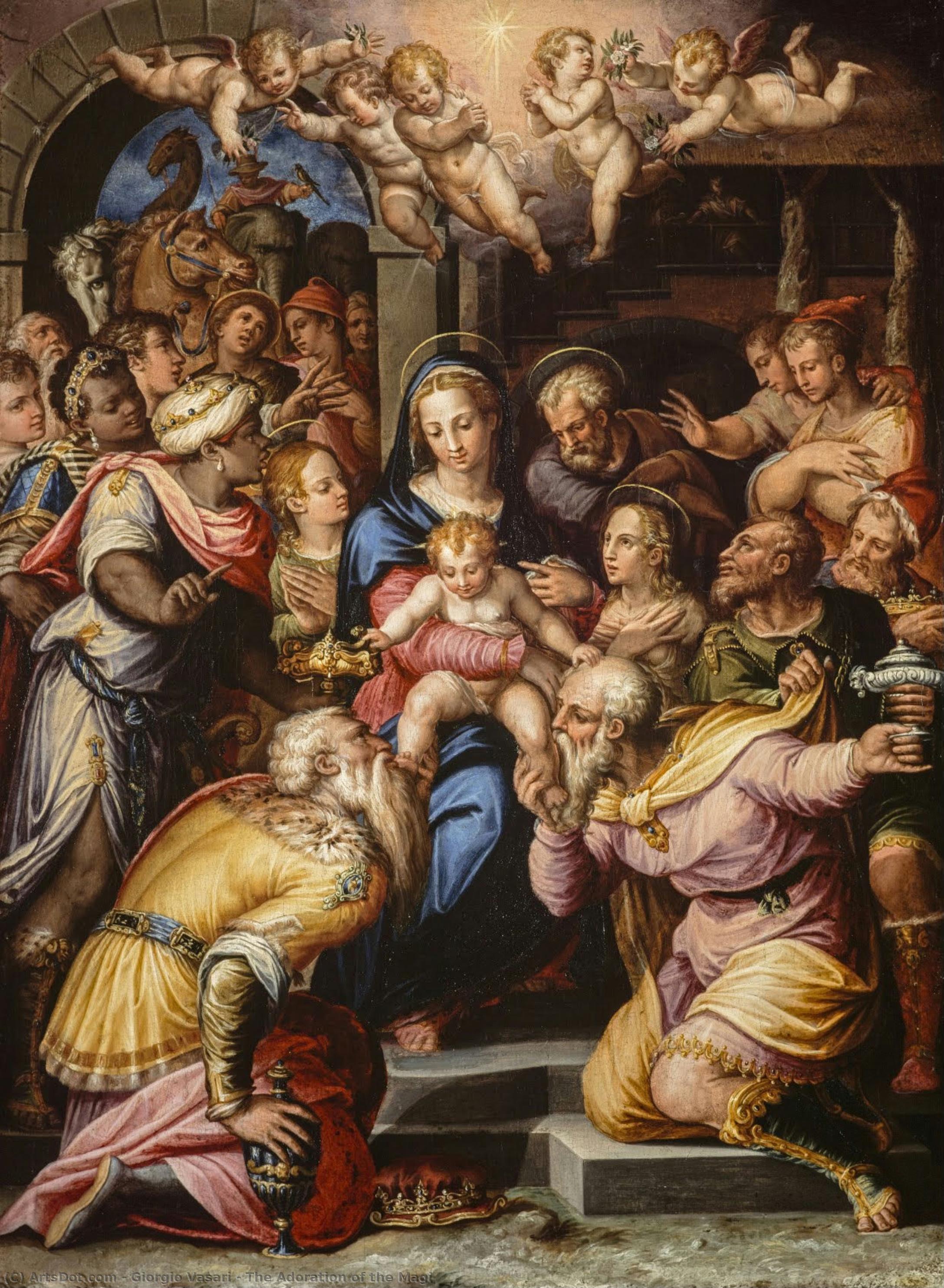
A Vision of Reverence: Giorgio Vasari’s “The Adoration of the Magi”
Giorgio Vasari's "The Adoration of the Magi," painted in 1567, isn’t merely a depiction of a biblical scene; it’s an immersive experience—a vibrant tableau brimming with religious fervor and humanist ideals. This panel, originally intended as part of a larger altarpiece for Pope Pius V, captures a pivotal moment: the arrival of the Magi bearing gifts to the newborn Jesus. Vasari, a polymath renowned as both painter and art historian, masterfully blends technical skill with profound symbolic meaning, creating an artwork that continues to resonate centuries later.
The scene unfolds within a richly detailed interior, bathed in a warm, diffused light that emphasizes the figures’ expressions of awe and devotion. Mary, serene and dignified, cradles the infant Jesus, while Joseph stands protectively beside her. Around them gather a throng of onlookers – shepherds, villagers, and the three Magi themselves—each rendered with meticulous attention to costume, gesture, and facial expression. The composition is carefully balanced, drawing the eye towards the central figures while simultaneously enveloping the viewer in the scene’s palpable atmosphere.
The Language of Symbolism: Interpreting the Magi
The choice of depicting the Adoration of the Magi was deeply rooted in Renaissance theology and humanist thought. More than simply illustrating a biblical narrative, Vasari's panel served as a potent reminder of Christ’s divine status and humanity’s role in acknowledging his glory. The three Magi—Gaspar, Melchior, and Balthasar—represent the East, symbolizing the universality of faith and the promise of salvation extending beyond the confines of Judea. Their gifts – gold, frankincense, and myrrh – are not just material offerings but potent symbols of Christ’s divinity: gold representing his royal status, frankincense signifying purity and divine fragrance, and myrrh embodying sacrifice and immortality.
Beyond the Magi themselves, every element within the painting is laden with symbolic weight. The architectural details—the arches, columns, and vaulted ceiling—evoke a sense of grandeur and timelessness, reflecting the Renaissance fascination with classical antiquity. The use of perspective creates an illusion of depth, drawing the viewer into the scene and fostering a feeling of intimacy. Even the gestures of the figures – their bowed heads, outstretched hands, and expressions of reverence – communicate profound spiritual emotion.
A Masterclass in Technique: Vasari’s Renaissance Style
Vasari's execution is characterized by his masterful command of oil paint—a medium that allowed for nuanced color gradations, subtle modeling effects, and a remarkable level of detail. He employs a technique known as *sfumato*, blurring the outlines of figures and creating a hazy, atmospheric effect that contributes to the painting’s overall sense of realism and depth. The rich textures of the fabrics—the Magi's opulent robes, Mary’s flowing garments—are rendered with meticulous precision, showcasing Vasari’s exceptional skill as a painter.
Furthermore, Vasari’s use of color is particularly noteworthy. He employs a warm palette dominated by reds, golds, and browns, creating a sense of warmth and vitality. The interplay of light and shadow adds drama to the scene, highlighting key figures and emphasizing their emotional expressions. The painting's overall effect is one of luminous beauty—a testament to Vasari’s artistic genius.
A Legacy Enduring: Reproductions and Inspiration
“The Adoration of the Magi” stands as a cornerstone of Renaissance art, profoundly influencing generations of artists. Its themes of faith, royalty, and divine grace continue to inspire awe and contemplation. High-quality reproductions capture the essence of Vasari’s masterpiece, offering a window into this extraordinary work of art for those who may not have the opportunity to view it in person. Whether adorning a grand salon or a more intimate space, a reproduction of “The Adoration of the Magi” brings a touch of Renaissance splendor and spiritual depth to any setting.