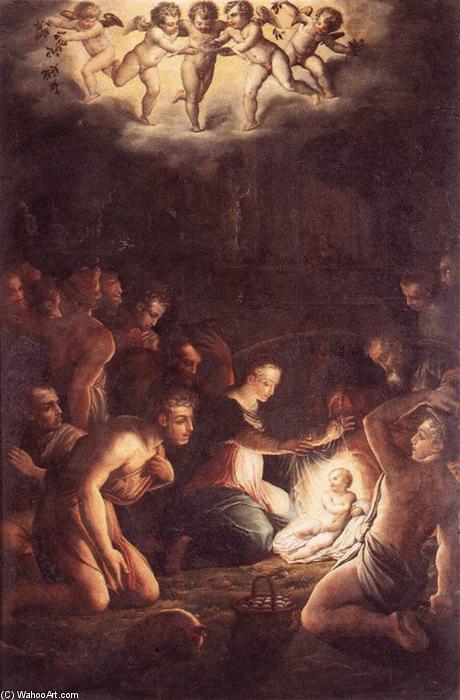
Experience the dramatic chiaroscuro of Vasari's 1546 Nativity, a masterpiece capturing Renaissance faith and divine light; bring this timeless art home.
Giorgio Vasari (1511-1574): Italian Renaissance painter, architect & art historian. Author of 'Lives of Artists,' a cornerstone of art history, and designer of the Uffizi Gallery.
Explore the Galleria Borghese in Rome! Discover masterpieces by Bernini, Raphael & Caravaggio within Villa Borghese's stunning Baroque setting. Book your timed tickets now!
A Testament to Renaissance Faith: Giorgio Vasari’s “The Nativity”
Giorgio Vasari's "The Nativity," housed within the Galleria Borghese in Rome, transcends mere depiction; it embodies the very soul of the High Renaissance – a period defined by humanist ideals intertwined with profound religious devotion. Painted in 1546, this monumental oil on canvas isn’t simply a visual record of biblical narrative; it's an artistic statement brimming with symbolic resonance and masterful execution that continues to captivate viewers centuries later.
Style and Technique: Mastering Chiaroscuro
Vasari’s approach is rooted in the principles championed by Leonardo da Vinci and Michelangelo – a deliberate embrace of chiaroscuro, the dramatic interplay between light and shadow. This technique isn't merely decorative; it serves as an integral component of conveying emotion and enhancing the narrative depth. Notice how Vasari skillfully sculpts form through shading, emphasizing the figures’ musculature and drapery while simultaneously creating an atmosphere of solemn reverence. The dark sky acts as a counterpoint to the luminous angelic presence and the radiant glow emanating from Christ Child, guiding the viewer's gaze and amplifying the scene’s spiritual significance.
Historical Context: Patronage and Artistic Renaissance
The painting emerged during a time of fervent artistic fervor in Florence under Medici patronage – a period where artists sought to elevate human experience through beauty and contemplation. Vasari’s work reflects the humanist preoccupation with portraying biblical stories with accuracy and emotional intensity, aligning perfectly with the broader intellectual currents shaping European culture. The Galleria Borghese itself stands as a testament to this legacy, showcasing an impressive collection of Renaissance masterpieces intended to inspire awe and foster artistic appreciation.
Symbolism: Angels, Light, and Innocence
Beyond its technical brilliance lies a rich tapestry of symbolism. The three cherubs adorning the canvas represent purity and divine grace – archetypal figures embodying innocence and joy. Their upward gaze symbolizes aspiration towards God, mirroring the central theme of the Nativity itself: humanity’s yearning for salvation. Furthermore, the radiant light emanating from Christ Child signifies divine illumination and embodies the promise of eternal life—a cornerstone of Christian faith during Vasari's time.
Emotional Impact: A Moment Frozen in Time
“The Nativity” doesn’t merely recount a biblical tale; it evokes a powerful emotional response. The artist’s masterful use of composition draws the viewer into the scene, fostering a sense of intimacy and contemplation. The palpable reverence conveyed by the figures surrounding Jesus Christ speaks to the enduring human desire for spiritual solace and reminds us of the transformative power of faith. It's a painting that invites reflection on themes of humility, compassion, and divine grace—qualities that continue to resonate deeply within audiences today.