A Moment of Divine Intervention: Exploring Vasari’s “The Prophet Elisha”
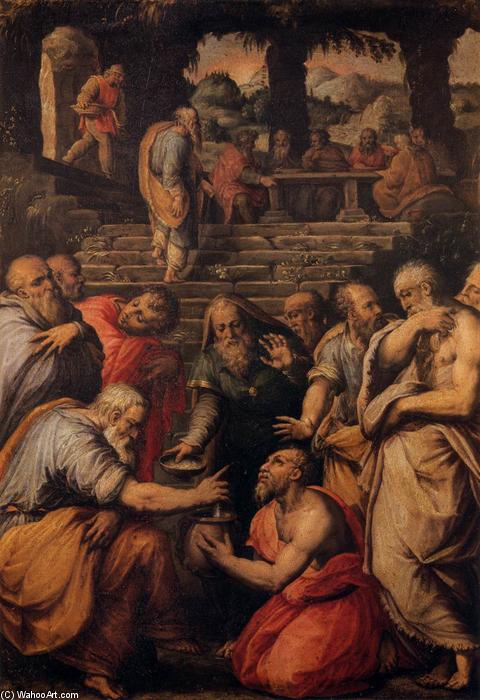
Giorgio Vasari's "The Prophet Elisha," painted in 1566 and now residing within the hallowed halls of the Uffizi Gallery in Florence, is more than simply a depiction of a biblical narrative; it’s a carefully constructed tableau brimming with Renaissance artistry and profound spiritual resonance. Measuring just 40 x 29 centimeters, this intimate canvas belies the monumental story it conveys – a scene plucked from the life of Elisha, a pivotal figure in the Hebrew Bible renowned for his miraculous feats and unwavering faith. Vasari masterfully captures a fleeting moment of divine intervention, a palpable sense of anticipation hanging in the air as Elisha addresses an unseen recipient.
The painting’s composition is a testament to Vasari's skill in orchestrating visual drama within a confined space. The central figure, Elisha himself, is rendered with remarkable attention to detail – the furrowed brow suggesting contemplation, the posture conveying authority and wisdom. His gesture, pointing towards an unseen element, invites the viewer’s imagination to fill the void, creating a dynamic interaction between the depicted scene and our own interpretation. The supporting figures—the man with the lute, the attentive listener—add layers of context, hinting at a gathering, perhaps a council or a celebration following a miraculous event. The muted palette – dominated by earthy browns, ochres, and subtle blues – contributes to an atmosphere of solemnity and reverence, while strategically placed light and shadow sculpt the forms and heighten the sense of depth.
Renaissance Symbolism and Religious Narrative
“The Prophet Elisha” is deeply rooted in the artistic conventions of the Italian Renaissance. Vasari’s approach aligns with the period's fascination with classical antiquity, evident in the figures’ balanced compositions and their idealized forms. However, unlike purely classical depictions, this work imbues its subject matter with a distinctly Christian sensibility. Elisha, as a prophet who performed miracles attributed to God, embodies faith, divine power, and the promise of salvation – themes central to Renaissance religious art. The lute-playing figure can be interpreted as representing musical devotion or perhaps the celebration of a recent miracle. The scene itself echoes biblical accounts, offering viewers a visual representation of a crucial moment in Elisha’s life and reinforcing the importance of faith and divine guidance.
Technique and Artistic Mastery
Vasari's mastery is evident in his meticulous rendering of textures and materials. The folds of the garments are rendered with astonishing realism, showcasing his deep understanding of human anatomy and drapery. The use of oil paint allows for a rich, luminous quality, particularly noticeable in the subtle gradations of light and shadow that define the figures’ forms. Vasari's technique is characterized by a delicate balance between observation and idealization – he faithfully captures the details of his subjects while simultaneously elevating them to a level of timeless beauty. The painting demonstrates a sophisticated understanding of perspective and spatial relationships, creating a convincing illusion of depth within the small canvas.
A Legacy Preserved: Vasari’s Contribution to Art History
Beyond its artistic merits, “The Prophet Elisha” holds significant historical importance as one of Giorgio Vasari's early works. It exemplifies his burgeoning talent and foreshadows the monumental architectural achievements that would later define his career – most notably, the design of the Uffizi Gallery itself. Vasari’s meticulous documentation of artists in his “Lives,” which he began during the creation of this painting, cemented his legacy as a pivotal figure in shaping our understanding of the Renaissance art world. Reproducing this piece allows us to appreciate not only Vasari's artistic skill but also his crucial role in preserving and celebrating the achievements of his predecessors. Today, it stands as a powerful testament to the enduring power of faith, artistry, and human ingenuity.