A Dramatic Triumph: Giorgio Vasari’s “The Resurrection”
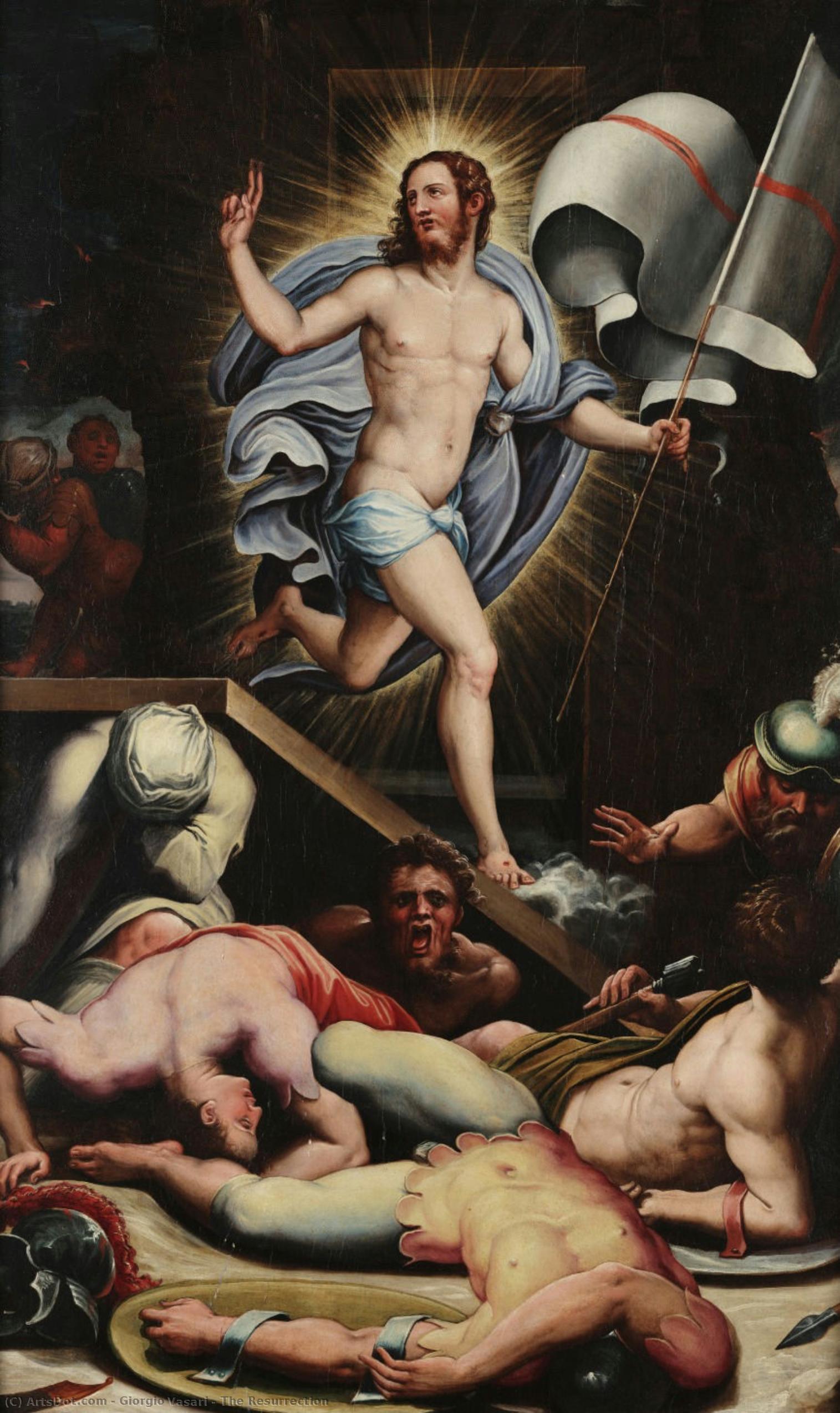
Giorgio Vasari's "The Resurrection," painted in 1545, isn’t merely a depiction of a biblical event; it’s a visceral embodiment of faith and the promise of rebirth. Created during the height of the Italian Renaissance, this oil-on-canvas work transcends simple religious illustration, plunging the viewer into a world of intense drama and profound spiritual significance. Vasari, already establishing himself as a pivotal figure in art history through his “Lives of Artists,” infused this piece with the hallmarks of the Baroque style – dynamic composition, theatrical lighting, and an overwhelming emotional intensity – elements that would define the era’s artistic language.
The scene unfolds within a cavernous space, rendered not as a literal depiction of the tomb but as a symbolic representation of death and its aftermath. Jesus Christ, bathed in a radiant light emanating from his outstretched hand, emerges triumphant from the darkness, his figure dominating the composition with an undeniable sense of power and grace. The fallen figures below – soldiers, mourners, and witnesses to his sacrifice – are not presented as victims but as conduits for hope; their postures suggest a gradual transition from despair to awe, mirroring Christ’s own journey from death to resurrection.
A Symphony of Color and Light: Technique and Style
Vasari masterfully employs the techniques characteristic of Baroque painting. The color palette is rich and deeply saturated – deep browns, vibrant reds, and shimmering golds—creating a sense of opulent drama. He utilizes strong diagonals, particularly through the descending beam of light and Christ’s upward movement, to generate a powerful feeling of dynamism and motion. This isn't a static representation; it feels like a moment caught in perpetual transformation.
- Impasto Technique: Vasari’s use of impasto – applying paint thickly to the canvas – adds remarkable texture and depth, particularly noticeable in the drapery of Christ and the surrounding figures. This tactile quality invites the viewer to almost feel the weight and volume of the scene.
- Dramatic Lighting: The theatrical lighting is a key element, directing attention to Christ’s central figure and casting dramatic shadows that heighten the sense of drama and mystery. The light isn't diffuse; it’s concentrated, radiating from Christ himself, symbolizing divine grace.
- Flattened Perspective: While rooted in Renaissance principles, Vasari subtly flattens the perspective, prioritizing emotional impact over strict realism – a common characteristic of Baroque art that amplifies the scene’s intensity.
Symbolism and Spiritual Resonance
Beyond its visual drama, “The Resurrection” is laden with symbolic meaning. Christ's outstretched hand represents salvation and offers hope to those below. The light emanating from him symbolizes divine power and grace, illuminating the path towards redemption. The fallen figures embody death and despair, but their postures suggest a gradual shift toward acceptance and faith. The entire composition speaks of overcoming adversity and the triumph of good over evil – a timeless message that continues to resonate with viewers today.
A Legacy of Art Historical Significance
Painted in 1545, “The Resurrection” stands as a pivotal work in Vasari’s oeuvre and a cornerstone of Renaissance art. It exemplifies the artist's skill in blending religious subject matter with dramatic composition and emotional intensity. Furthermore, it reflects the burgeoning interest in portraying biblical narratives with heightened realism and psychological depth – qualities that would become increasingly prominent throughout the Baroque period. Reproductions of this powerful artwork offer a window into the artistic and spiritual landscape of 16th-century Italy, inviting contemplation on themes of faith, hope, and the enduring power of human resilience.