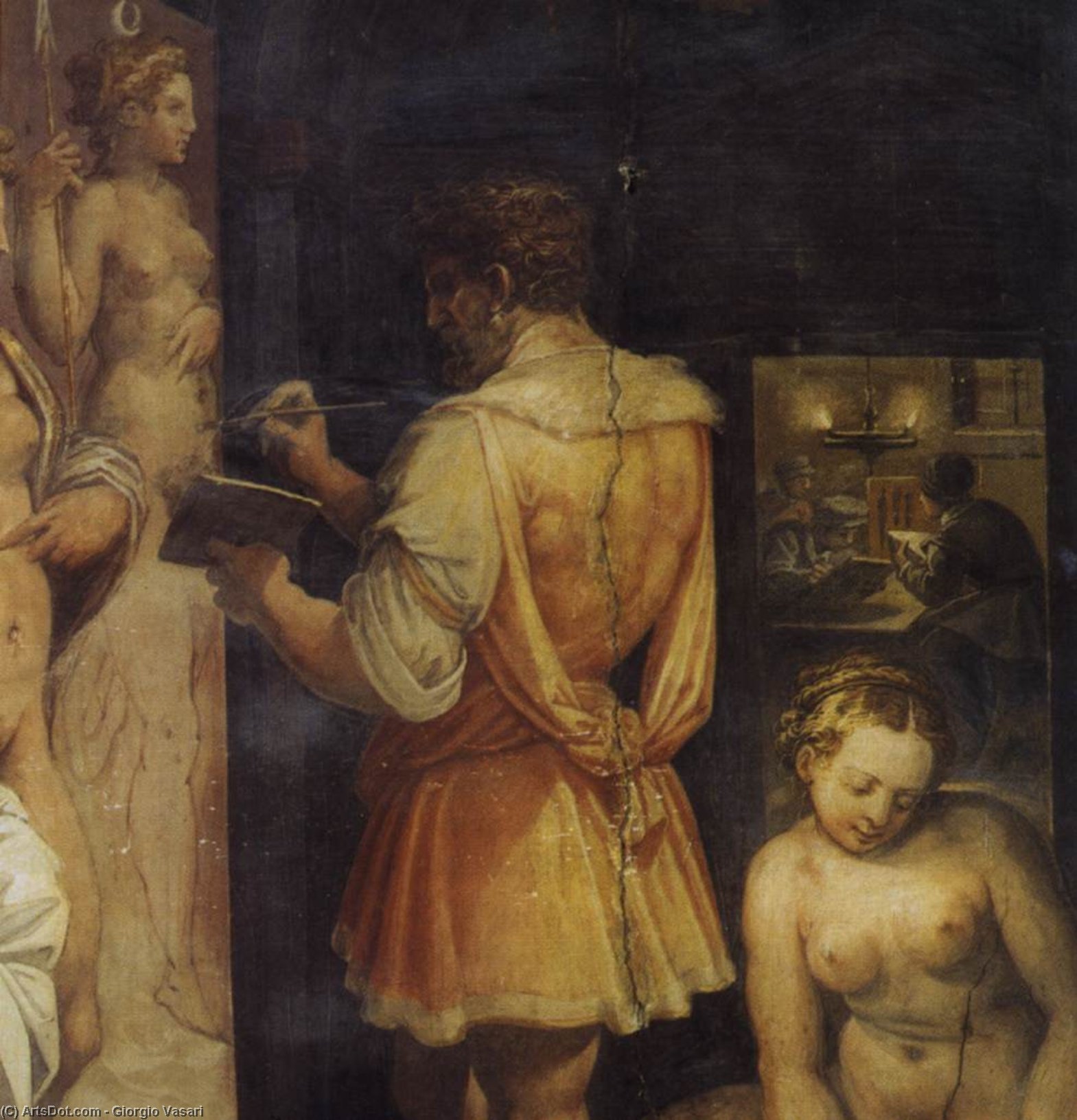
A Glimpse into Creation: The Studio of the Painter by Giorgio Vasari
Giorgio Vasari’s “The Studio of the Painter,” a fresco executed in 1563, isn't merely a depiction of an artist at work; it’s a meticulously crafted window into the heart of Renaissance creativity. Painted for his own home in Florence, this intimate scene transcends simple portraiture, offering a profound meditation on the process of artistic creation and the very essence of the burgeoning humanist spirit that defined the era. The painting immediately draws the viewer in with its carefully orchestrated composition – an artist, poised yet contemplative, stands slightly removed from a partially completed canvas, bathed in the warm, directional light characteristic of Vasari’s masterful technique.
Vasari's genius lies not just in his technical skill—evident in the subtle modeling of forms, the delicate rendering of textures like the rough linen cloth and the smooth surface of the plaster – but also in his ability to infuse the scene with a palpable atmosphere. The studio itself is spare yet richly suggestive: a table laden with tools, a grinding stone hinting at the preparation of pigments, and a few scattered books speak volumes about the artist’s dedication and intellectual curiosity. The muted palette, dominated by earthy tones and ochres, creates a sense of quiet intensity, focusing attention on the central figure and his work.
A Master's Perspective: Vasari's Biography and Artistic Vision
Understanding “The Studio of the Painter” requires appreciating Giorgio Vasari’s unique position as both an artist and a historian. He wasn’t simply documenting art; he was actively shaping its narrative, establishing a canon of artistic achievement that would profoundly influence Western art history for centuries to come. His seminal work, *Lives of the Most Excellent Painters, Sculptors, and Architects*, served not only as a biographical record but also as a carefully constructed argument for the superiority of Florentine artists. Within this context, “The Studio of the Painter” can be seen as a self-portrait – Vasari presenting himself as the embodiment of this ideal, a dedicated craftsman and a passionate advocate for his fellow artists.
The painting’s historical significance extends beyond its biographical content. It reflects the growing importance of the artist's workshop during the Renaissance. The studio wasn't just a place to produce art; it was a center of learning, experimentation, and collaboration. Vasari’s depiction captures this dynamic environment, suggesting that artistic creation is not a solitary endeavor but one deeply intertwined with intellectual discourse and the exchange of ideas.
Symbolism and the Humanist Ideal
Several symbolic elements enrich the painting's meaning. The artist’s slightly averted gaze suggests a moment of reflection – perhaps contemplating the challenges of capturing beauty on canvas, or considering the broader implications of his work. The unfinished painting in the foreground serves as a potent reminder of the creative process itself: an ongoing journey of exploration and refinement. It also subtly alludes to Vasari's own ambition to document and preserve the legacy of past masters – a task he undertook with unwavering dedication throughout his life.
Furthermore, the inclusion of books within the studio speaks to the humanist values that underpinned Renaissance art. Artists were increasingly encouraged to study classical literature, philosophy, and science, seeking inspiration from the wisdom of antiquity. Vasari’s own extensive knowledge of these subjects is reflected in his meticulous documentation of artistic techniques and biographies.
A Timeless Reflection on Creativity
“The Studio of the Painter” remains a remarkably evocative work, offering a glimpse into the mind of a pivotal figure in art history. It’s more than just a portrait; it's a meditation on the nature of creativity, the role of the artist, and the enduring power of human imagination. Reproductions of this fresco capture its intimate atmosphere and nuanced details, allowing viewers to experience firsthand the quiet intensity and profound beauty of Vasari’s masterpiece – a testament to the Renaissance spirit and a timeless reflection on the creative process.