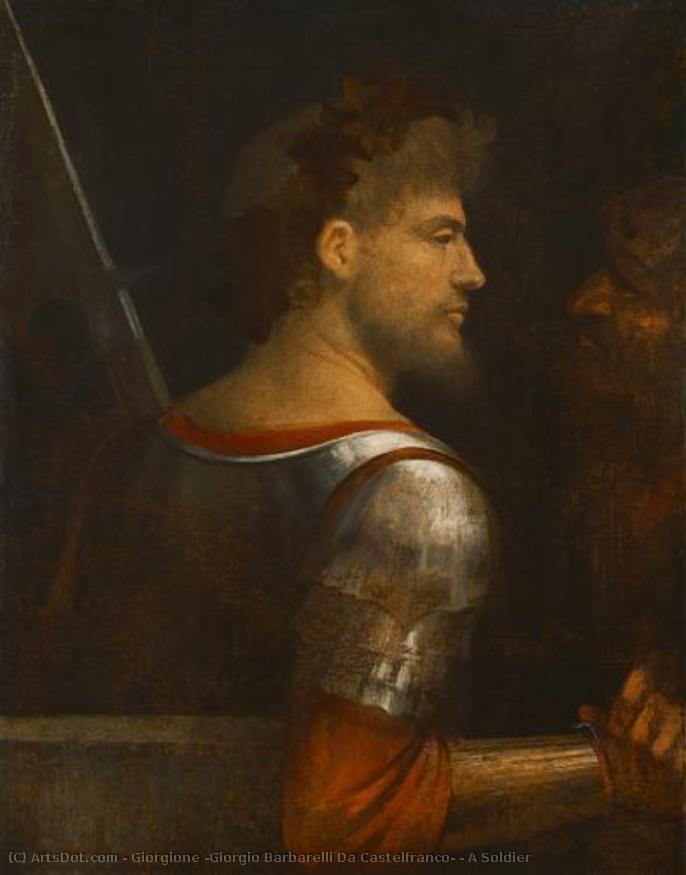
A Soldier: An Enigma of Venetian High Renaissance
Giorgione’s “A Soldier,” painted circa 1505–1510, stands as one of the most perplexing and celebrated canvases emerging from Venice during its golden age. More than just a portrait—though undeniably so—it embodies the spirit of the High Renaissance's fascination with ambiguity and layered meaning, captivating viewers centuries later.
The painting depicts a man in armor, positioned in a three-quarter pose, gazing intently off to his right. While seemingly simple in composition, every element contributes to an atmosphere of profound contemplation. The artist’s masterful use of color—primarily muted reds and browns—creates a subdued palette that contrasts sharply with the luminous flesh tones of the figure’s face and torso. This technique aligns perfectly with Giorgione's signature style: prioritizing atmospheric perspective and capturing fleeting moments of emotion rather than striving for photographic realism.
- Subject Matter & Symbolism: The soldier, dressed in Venetian armor—a symbol of authority and protection—appears to be observing something beyond the frame. Scholars debate whether he represents a noble warrior or simply an ordinary man caught in contemplation. Some interpret his gaze as directed towards divine grace, reflecting the humanist ideals prevalent at the time.
- Technique: Giorgione employed oil paint on canvas, utilizing glazing techniques to achieve remarkable depth and luminosity. The subtle blending of colors—particularly evident in the armor’s surface—demonstrates an unparalleled level of artistic skill.
- Historical Context: Venice during the early 16th century was a crucible of artistic innovation, fueled by patronage from wealthy merchants and nobles who championed humanist ideals. Giorgione's work reflects this cultural dynamism, aligning with the broader trend toward exploring psychological complexity and capturing the beauty of the natural world.
- Emotional Impact: The painting’s stillness—coupled with the soldier’s enigmatic expression—invites viewers to ponder questions of identity, purpose, and faith. Giorgione's ability to convey emotion through subtle gestures and tonal variations elevates “A Soldier” beyond mere visual representation, transforming it into a powerful meditation on human experience.
Further research suggests that the presence of a sword in the foreground adds an element of tension—a reminder of conflict and mortality—while another figure partially visible on the right side remains elusive, prompting speculation about his role within the narrative.
“A Soldier” continues to fascinate art historians and collectors alike. Its enduring appeal lies not only in its technical brilliance but also in its capacity to provoke contemplation and inspire awe. Reproductions of this masterpiece offer a glimpse into the artistic genius of Giorgione and the profound beauty of Venetian High Renaissance painting.