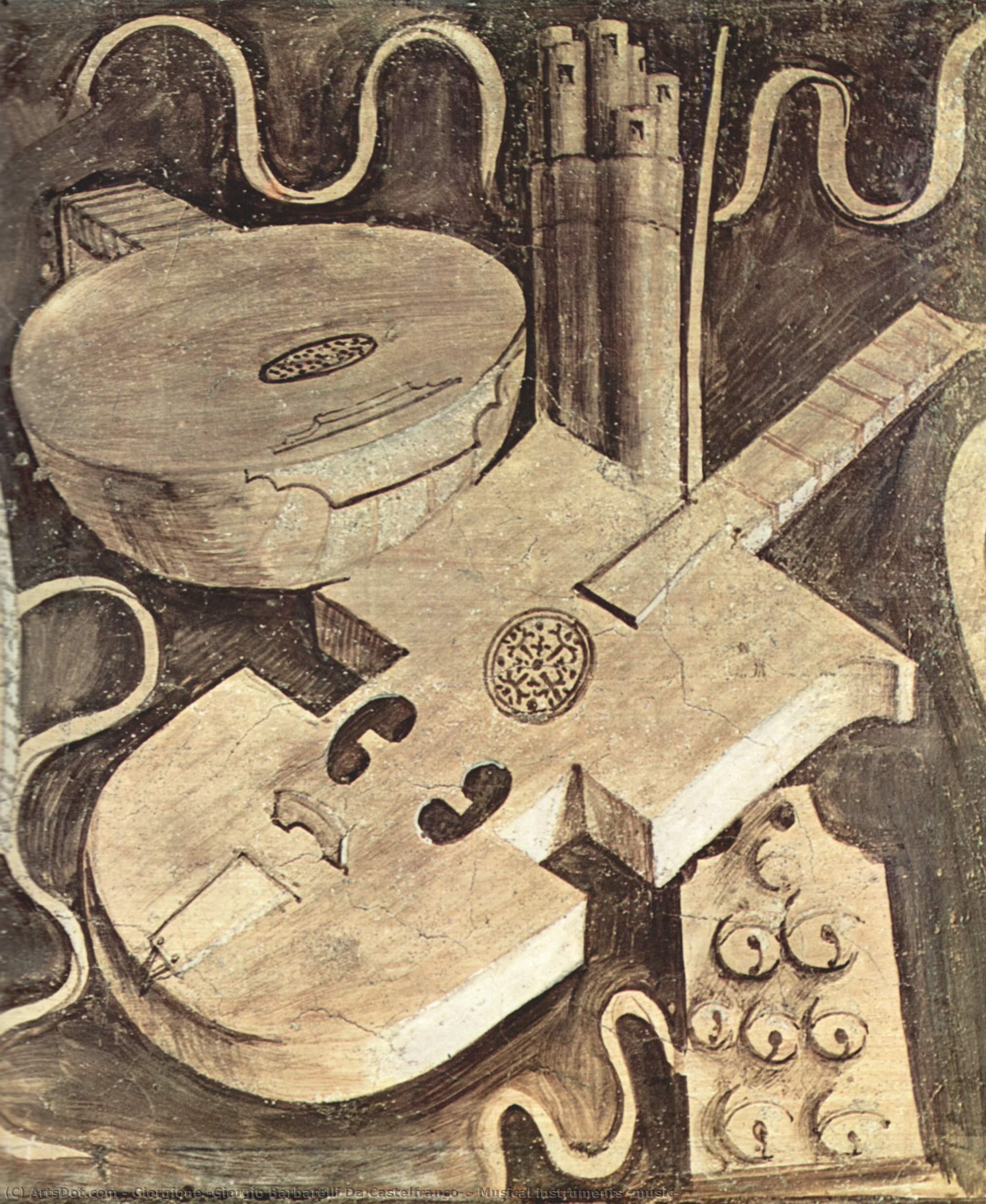
Musical instruments (music) by Giorgione – A Venetian fresco depicting guitars, violins and drums, showcasing vibrant colors and masterful detail. Explore the enigmatic legacy of this Renaissance artist.
Discover Giorgione (1477/8-1510), a key High Renaissance Venetian painter. Explore his poetic works, masterful use of color & atmosphere – like 'The Tempest' & 'Pastoral Concert'.
A Venetian Reverie: Giorgione’s Musical Instruments
The painting “Musical instruments (music)” by Giorgione – a name synonymous with artistic enigma – stands as one of the most celebrated and debated canvases of the High Renaissance. Produced circa 1510, it resides within the Gemäldegalerie Alte Meister in Dresden, Germany, where its luminous palette and subtly rendered forms continue to captivate viewers centuries after its creation. More than just a depiction of musical instruments, Giorgione’s work embodies a profound exploration of beauty, harmony, and the elusive nature of perception – qualities that firmly establish it as a cornerstone of Venetian artistic tradition.
Style and Technique: Fresco Illusion
Giorgione eschewed the meticulous realism favored by many of his contemporaries, opting instead for a style characterized by atmospheric haze and muted colors. This technique—primarily fresco—allowed him to achieve an unparalleled illusion of depth and luminosity. The pigment was applied directly onto wet plaster, fusing it permanently into the wall surface, resulting in a texture that is remarkably tactile and resistant to time. Careful observation reveals subtle gradations of tone and color, creating a mesmerizing interplay of light and shadow that transcends mere representation; it strives to capture not just what is seen but also how it feels – a characteristic hallmark of Giorgione’s distinctive vision. The fresco medium itself speaks volumes about the artist's commitment to capturing fleeting moments of beauty and conveying an emotional resonance far beyond the visual surface.
Historical Context: Venice at Its Zenith
Venice in 1510 was experiencing its golden age, a period marked by unparalleled economic prosperity and artistic flourishing. The city’s republican government fostered intellectual curiosity and encouraged patronage from wealthy families like Dorsoduro and Bembo, creating an environment ripe for groundbreaking innovation. Giorgione's painting reflects this cultural dynamism, aligning with the broader Venetian preoccupation with sensual experience and idealized beauty – themes that were prevalent in humanist thought during the Renaissance. The artwork’s serene composition and harmonious color scheme resonate with the prevailing aesthetic sensibilities of the time, demonstrating a masterful understanding of artistic conventions while simultaneously pushing boundaries toward a more expressive form.
Symbolism: Harmony and Ephemeral Beauty
The instruments depicted—primarily guitars, violins, and drums—are not merely objects of musical performance; they serve as potent symbols representing harmony, balance, and the fleeting nature of beauty itself. The hazy atmosphere surrounding the instruments reinforces this symbolic dimension, suggesting that what is captured on canvas transcends the tangible world. Critics have interpreted the painting’s muted colors as reflecting the melancholic contemplation inherent in artistic creation – a sentiment echoed by Vasari's biographical account of Giorgione. Furthermore, the careful arrangement of the instruments contributes to an overall sense of equilibrium and order, mirroring the humanist ideal of achieving inner harmony through intellectual pursuits and aesthetic appreciation.
Emotional Impact: A Moment Frozen in Time
Ultimately, “Musical Instruments (music)” transcends its formal elements to evoke a profound emotional response in the viewer. The painting’s ethereal quality invites contemplation and encourages us to consider the elusive beauty that resides beyond immediate perception. Giorgione's masterful manipulation of light and color creates an atmosphere of tranquility and wonder—a testament to his ability to capture not just visual information but also intangible feelings. It is a piece that lingers in the memory long after viewing, prompting reflection on themes of artistic inspiration, human experience, and the enduring power of beauty to transcend temporal boundaries. Its timeless appeal ensures its place as an icon of Venetian art and a source of ongoing fascination for artists and connoisseurs alike.