Giorgione
A Venetian Enigma: The Life and Legacy of Giorgione
Giorgio Barbarelli da Castelfranco, known to the world as Giorgione, remains one of the most elusive and captivating figures in Renaissance art. Born in the small town of Castelfranco Veneto near Venice around 1477 or 1478 – the exact year is debated – his tragically short life, ending around 1510 at the age of thirty-two or thirty-thr
A Portrait of Tranquility Amidst the Venetian Landscape
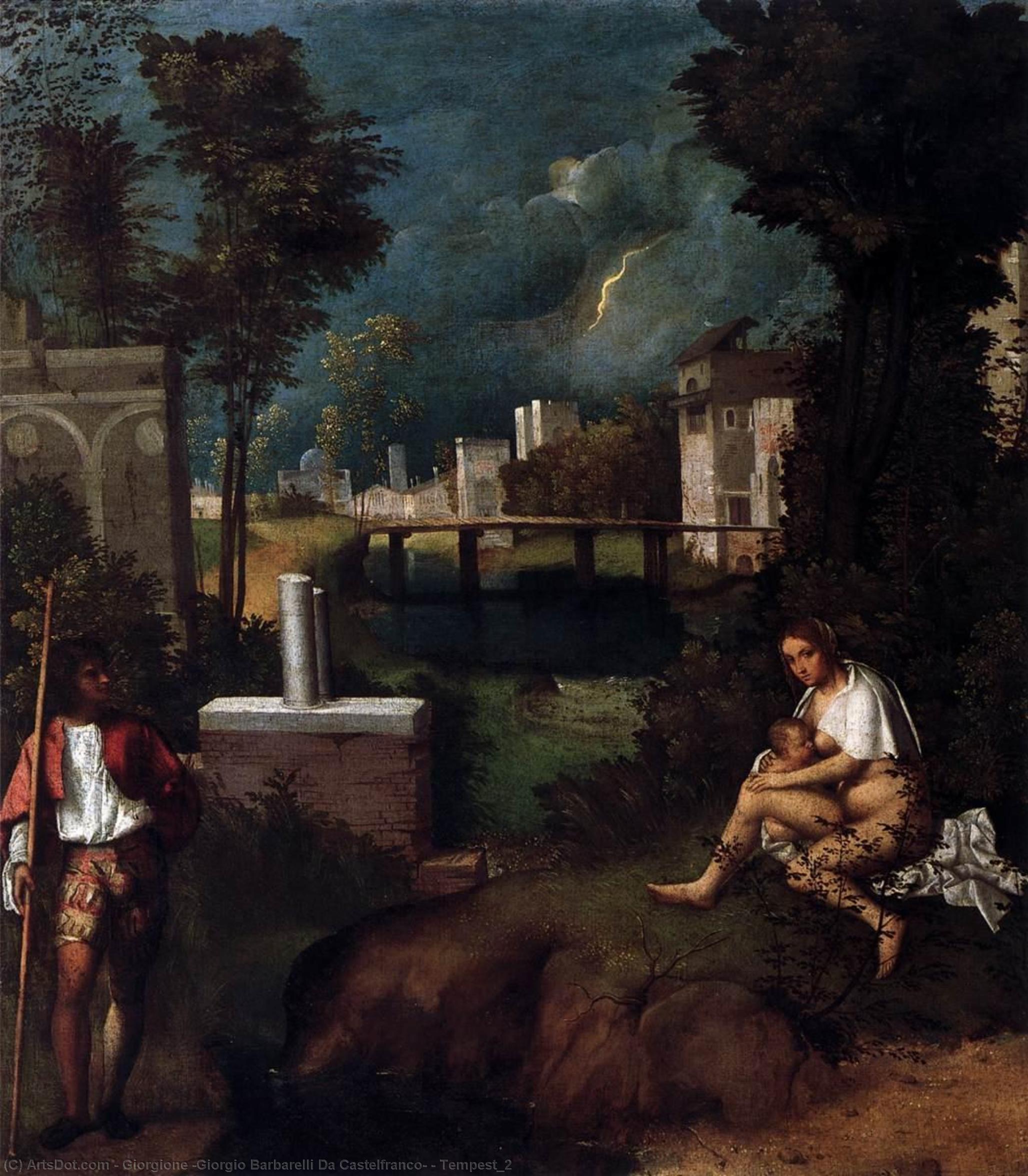
Giorgione’s “Tempest_2,” painted circa 1506-1508, stands as a testament to Venice’s enduring fascination with beauty and contemplation. More than just a depiction of a woman cradling her child by a riverbank – though that serene tableau is undeniably compelling – the painting embodies a profound artistic achievement rooted in Venetian Mannerism.
- Style: Mannerist – Rejecting the idealized forms prevalent in High Renaissance art, Giorgione embraced ambiguity and psychological complexity. Figures are rendered with subtle distortions and muted colors, prioritizing emotional resonance over precise realism.
- Technique: Giorgione employed a masterful glazing technique, layering thin washes of pigment upon thicker underpaintings to achieve luminous effects and atmospheric depth. This method is particularly evident in the depiction of the river’s surface and the distant trees, creating an illusionistic space that transcends mere representation.
- Historical Context: Venice at the turn of the sixteenth century was a crucible of artistic innovation, fueled by wealth, patronage, and intellectual curiosity. Giorgione's work reflects this spirit of experimentation, aligning him with artists like Bellini and Titian who pushed the boundaries of Venetian painting.
Symbolism: Echoes of Myth and Emotion
The composition itself is laden with symbolic significance. The woman’s posture exudes calm confidence, mirroring classical ideals of feminine virtue. Her child represents innocence and vulnerability – a motif frequently explored in Renaissance art to convey spiritual purity. The river symbolizes life's flow and the passage of time, while the bridge serves as a visual link between heaven and earth.
Furthermore, scholars have debated whether the woman’s gaze is directed inward—reflecting contemplation—or outward—acknowledging an unseen presence. This ambiguity contributes to the painting’s enigmatic character and invites viewers to engage in a dialogue with its emotional core.
Emotional Impact: A Moment Frozen in Time
"Tempest_2" transcends mere visual pleasure; it evokes a feeling of profound stillness and melancholic beauty. Giorgione's subtle palette—dominated by earthy tones punctuated by flashes of crimson—captures the fading light of dusk, conveying a sense of wistful nostalgia for vanished moments.
The painting’s enduring appeal lies in its ability to tap into universal themes of motherhood, spirituality, and the contemplation of nature. It remains an exemplar of Venetian Mannerism's expressive power—a reminder that art can communicate emotion far beyond the literal depiction of subject matter.