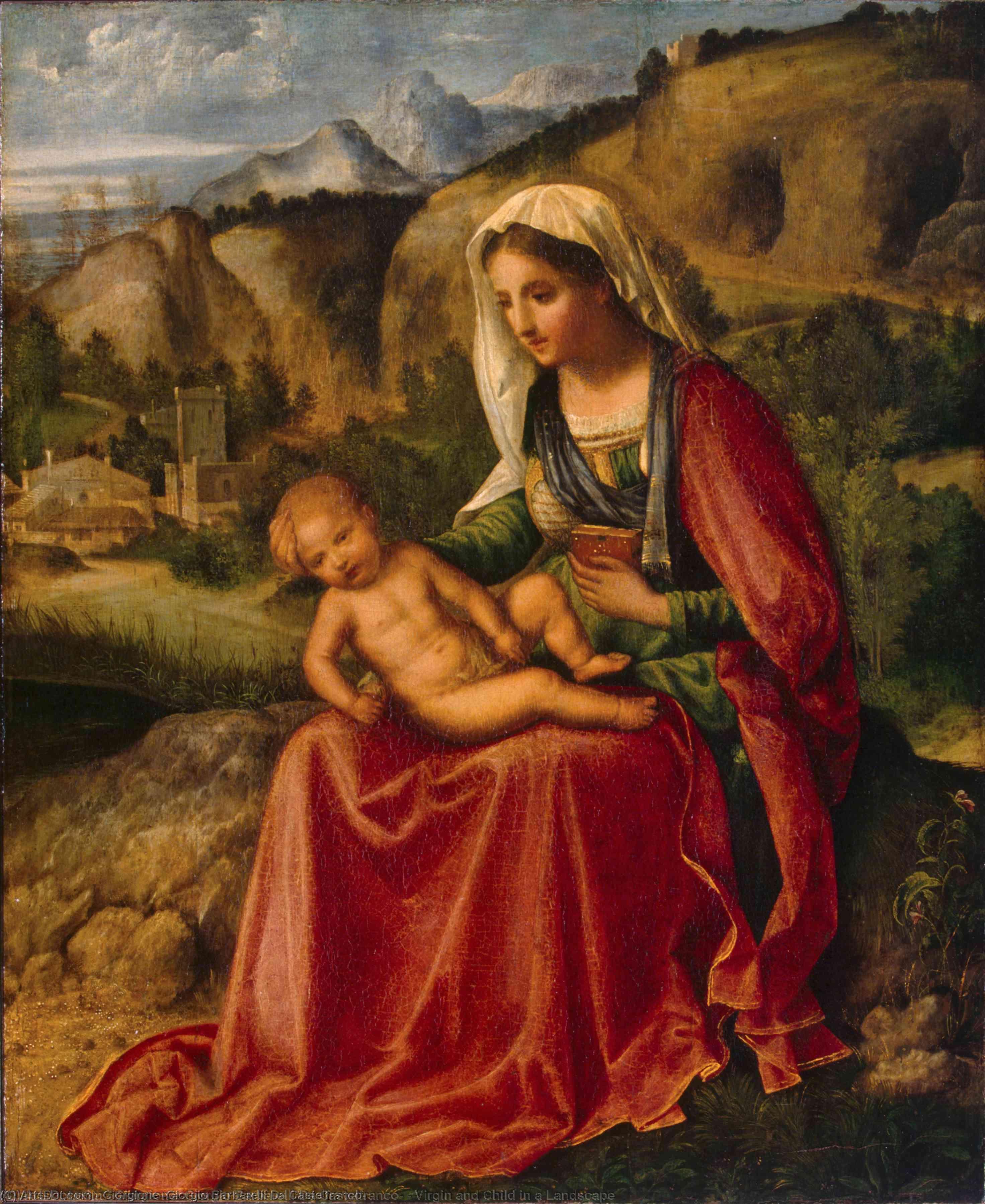
Virgin and Child in a Landscape: An Echo of Venetian Renaissance Serenity
Giorgione’s “Virgin and Child in a Landscape,” painted circa 1500, stands as an emblem of the High Renaissance's profound shift toward humanist ideals intertwined with spiritual contemplation. More than just a depiction of biblical figures—Mary cradling Jesus—it represents a masterful orchestration of observation and imagination, capturing a fleeting moment of pastoral beauty that continues to captivate viewers centuries later.
- Composition & Symbolism: The painting’s central focus is Mary and the infant Jesus seated upon the earth, bathed in diffused sunlight. This deliberate positioning underscores the sanctity of motherhood and innocence—themes prevalent throughout Renaissance art. Notably, Mary wears a vibrant crimson robe, a bold color choice that draws the eye and symbolizes royal dignity and divine grace. Surrounding them is a landscape rendered with remarkable subtlety; distant mountains loom majestically against a hazy horizon, while lush greenery spills across the hillside – elements designed to elevate the scene beyond mere portraiture into an idealized representation of God’s creation.
- Artistic Style: Giorgione's genius resided in his ability to achieve what contemporaries termed “sfumato”—a technique pioneered by Leonardo da Vinci—characterized by hazy, atmospheric perspective. Layers of translucent glaze subtly blend colors and contours, creating an ethereal quality that softens edges and imbues the painting with a dreamlike luminescence. This masterful manipulation of light contributes significantly to the artwork’s emotional resonance, fostering a sense of tranquility and inviting contemplation.
- Historical Context: Venetian art during this period flourished under papal patronage, fueled by burgeoning mercantile wealth and a fervent devotion to Christianity. Artists like Giorgione were deeply influenced by classical ideals—particularly those championed by Plato and Aristotle—which emphasized harmony, balance, and the pursuit of beauty as expressions of divine order. The painting reflects the broader Renaissance preoccupation with capturing the grandeur of nature alongside spiritual significance.
- Emotional Impact: “Virgin and Child in a Landscape” transcends its formal elements to evoke a palpable feeling of serenity and wonder. It speaks to the viewer’s innate desire for connection with something larger than oneself—a yearning for solace amidst the complexities of life. The painting's understated elegance and luminous palette continue to inspire artists and designers alike, demonstrating its enduring power as a masterpiece of humanist art.
Further exploration can be found at The State Hermitage Museum and Virgin and Child in a Landscape by GIORGIONE. Consider commissioning a high-quality reproduction to bring this timeless vision into your home.