A Pivotal Moment in Art History: Giotto’s Crucifixion
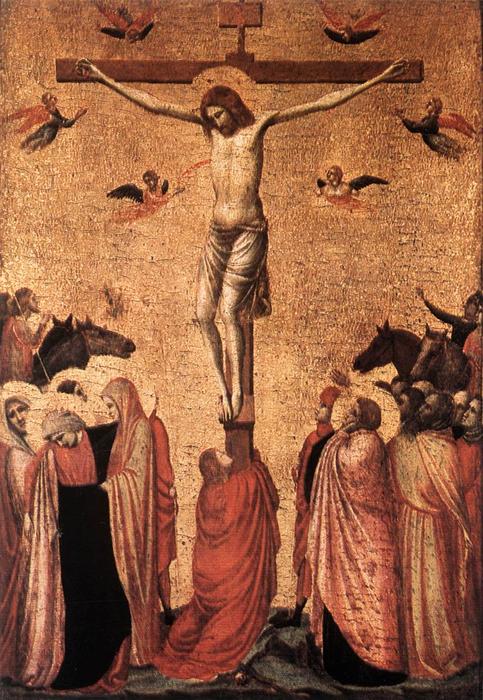
Giotto di Bondone's *Crucifixion*, painted around 1325, stands as a monumental achievement – not merely a depiction of a biblical scene, but a watershed moment in the evolution of Western art. This large-scale tempera painting (343 x 432 cm) transcends the stylized conventions of its time, ushering in a new era of emotional realism and narrative power that would profoundly influence generations of artists to come.
Subject & Composition: A Scene of Profound Grief
The artwork powerfully portrays the crucifixion of Jesus Christ, with his figure centrally positioned on the cross. Surrounding him is a dynamic arrangement of figures – mourning women, grieving disciples, and observing onlookers – all reacting to the agonizing event unfolding before them. Giotto masterfully organizes this complex scene using a pyramidal composition, drawing the viewer’s eye upwards towards Christ's suffering form. The stark, dark background intensifies the drama and focuses attention on the emotional weight of the moment. Angels are depicted above, witnessing the sacrifice with solemnity.
Style & Technique: Breaking from Byzantine Tradition
Giotto’s *Crucifixion* represents a significant departure from the prevailing Byzantine style. While earlier depictions often presented figures as flat and stylized icons, Giotto imbues his characters with volume, weight, and – crucially – genuine emotion. He achieves this through innovative use of *chiaroscuro* (the contrast between light and dark) to model forms and create a sense of depth. The tempera medium, applied with meticulous detail, allows for rich color and nuanced textures. This move towards naturalism was revolutionary, paving the way for the Renaissance emphasis on human anatomy and realistic representation.
Historical Context: The Proto-Renaissance
Created during the Proto-Renaissance period, *Crucifixion* embodies the burgeoning humanist spirit of the era. Giotto’s work reflects a growing interest in portraying human experience and emotion with greater accuracy and empathy. He was commissioned to create this piece for the Basilica di San Francesco in Naples, Italy, a testament to his rising fame and artistic prowess. This period marked a transition from the medieval focus on spiritual symbolism towards a more grounded and relatable depiction of religious narratives.
Symbolism & Emotional Impact
The painting is rich with symbolic meaning. The cross itself represents sacrifice and redemption, while Christ’s body embodies suffering and humanity. The gestures and expressions of the mourners convey a spectrum of grief – from despair to quiet contemplation.
Giotto doesn't shy away from depicting raw emotion, making the scene deeply moving and relatable even centuries later.
The overall effect is one of profound sorrow, but also of hope and spiritual significance.
Key Features & Lasting Legacy
- Innovative Composition: The pyramidal structure creates a sense of stability and directs the viewer’s gaze.
- Emotional Realism: Giotto's figures exhibit genuine human emotion, breaking from traditional stylized representations.
- Use of Chiaroscuro: The skillful manipulation of light and shadow adds depth and volume to the forms.
- Narrative Power: The painting tells a compelling story through its dynamic arrangement of figures and expressive gestures.
Giotto’s *Crucifixion* remains a masterpiece that continues to inspire awe and contemplation. Its influence can be seen in the works of countless artists who followed, solidifying Giotto's place as a foundational figure in the history of art – a true pioneer whose vision transformed the landscape of Western painting. A reproduction of this work would serve as a powerful focal point for any space, bringing both artistic beauty and historical significance to its surroundings.