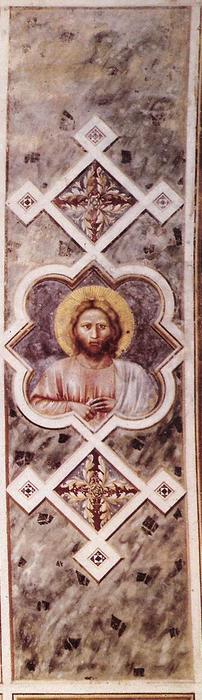
A Window Into Faith: Giotto’s ‘Decorative Band with Figure’ – A Renaissance Awakening
Giotto di Bondone's “Decorative Band with Figure,” painted in 1304, isn’t merely a depiction of religious figures; it’s a pivotal moment in the burgeoning artistic landscape of Florence and a harbinger of the Renaissance. Emerging from the shadows of Byzantine tradition, Giotto dared to infuse his work with an unprecedented sense of realism and emotional resonance – qualities that would forever alter the course of Western art. This painting, though small in scale, pulsates with a quiet intensity, inviting viewers into a world where faith and humanity intertwine.
The scene itself is deceptively simple: a central figure, widely believed to be Jesus Christ, dominates the composition, surrounded by disciples rendered with remarkable attention to individual features. Notice how Giotto abandons the rigid, stylized forms characteristic of Byzantine art. The figures aren’t flattened or idealized; they possess volume, weight, and a palpable sense of physicality. This is achieved through a masterful use of *chiaroscuro*, the dramatic interplay of light and shadow – a technique borrowed from early Renaissance painters but perfected by Giotto to create an astonishingly three-dimensional effect. The figures seem to emerge from the darkness, bathed in a soft, ethereal glow that draws our eye directly to their faces.
The Power of Detail: Technique and Innovation
Giotto’s revolutionary approach extended beyond mere representation. He meticulously observed nature – evidenced by the realistic rendering of drapery, the subtle nuances of expression on the disciples' faces, and the careful depiction of hands. This commitment to detail was groundbreaking at a time when artists primarily focused on conveying spiritual meaning rather than capturing the intricacies of the human form. The use of tempera paint, applied in thin layers, allowed for incredible luminosity and depth, further enhancing the sense of realism. Furthermore, observe how Giotto employs atmospheric perspective – distant figures are rendered with less detail and paler colors, creating a believable illusion of space within the confined confines of the panel.
The “Decorative Band” itself is integral to the composition. It’s not simply an ornamental element; it serves as a framing device, drawing our attention to the central narrative. The figure on this band – often interpreted as John the Baptist or another prominent disciple – adds a layer of symbolic richness, suggesting a connection between earthly and divine realms. The deliberate placement of three crosses within the scene is particularly significant. They aren’t just visual reminders of Christ's sacrifice; they represent the core tenets of Christian faith: belief, hope, and charity.
Symbolism and Spiritual Depth
Beyond the immediate depiction of a religious gathering, “Decorative Band with Figure” speaks to a deeper spiritual yearning. Giotto’s focus on human emotion – the concern etched on the faces of the disciples, the quiet contemplation in Christ's gaze – elevates the scene beyond a purely theological illustration. He is portraying not just *what* happened but *how* it felt, tapping into the viewer’s own capacity for empathy and faith. The muted color palette—earthy browns, deep blues, and subtle greens—contributes to this sense of solemnity and introspection.
This painting represents a crucial step in Giotto's evolution from a Byzantine-trained artist to a pioneer of the Renaissance. It’s a testament to his ability to synthesize traditional techniques with innovative approaches, resulting in an artwork that is both deeply rooted in its historical context and profoundly relevant to contemporary viewers. A reproduction of “Decorative Band with Figure” offers a unique opportunity to experience this pivotal moment in art history – a window into the soul of a master artist and a glimpse of the dawn of a new era.